Star Trek : Discovery S4
From Traditional VFX to Virtual Production | 従来のVFXからバーチャルプロダクションへ
Having worked on Star Trek: Discovery across all five seasons, I witnessed its evolution from traditional VFX to virtual production. The early seasons relied heavily on conventional workflows, but by Season 4, virtual production was integrated, transforming how environments and effects were created. This progression reflected the industry's broader shift, and being part of the transition provided invaluable insight into the changing landscape of filmmaking.
Project Credit
Head of Virtual Art Department & Art Direction
Realtime Environment Supervision & Creation
VFX Concept Art, Environment, Digital Matte Painting Supervision & Creation
Star Trek : Discovery S4
From Traditional VFX to Virtual Production | 従来のVFXからバーチャルプロダクションへ
Having worked on Star Trek: Discovery across all five seasons, I witnessed its evolution from traditional VFX to virtual production. The early seasons relied heavily on conventional workflows, but by Season 4, virtual production was integrated, transforming how environments and effects were created. This progression reflected the industry's broader shift, and being part of the transition provided invaluable insight into the changing landscape of filmmaking.
Project Credit
Head of Virtual Art Department & Art Direction
Realtime Environment Supervision & Creation
VFX Concept Art, Environment, Digital Matte Painting Supervision & Creation
Epic Games Unreal Engine BTS | Virtual Production work by PIXOMONDO
Epic Games Unreal Engine BTS | Virtual Production work by PIXOMONDO
© CONTENT コンテンツ
(MJ-S10-01)
PROJECT BREAKDOWN プロジェクトの詳細
PROJECT BREAKDOWN
PROJECT BREAKDOWN
PROJECT BREAKDOWN
The pandemic forced filmmakers to find new ways of producing movies and TV shows. With many traditional methods suddenly off the table, virtual production quickly became a powerful alternative.
This approach uses computer-generated sets and characters, with actors filmed against massive LED walls. While it comes with challenges, it also offers significant advantages. Sets and locations can be built digitally, often at a fraction of the cost, and filmmakers gain far greater flexibility in shot selection and camera movement.
As a result, virtual production is increasingly shaping the future of filmmaking—and may well become the new standard in the years ahead.
The Start of Virtual Production
Season : Four
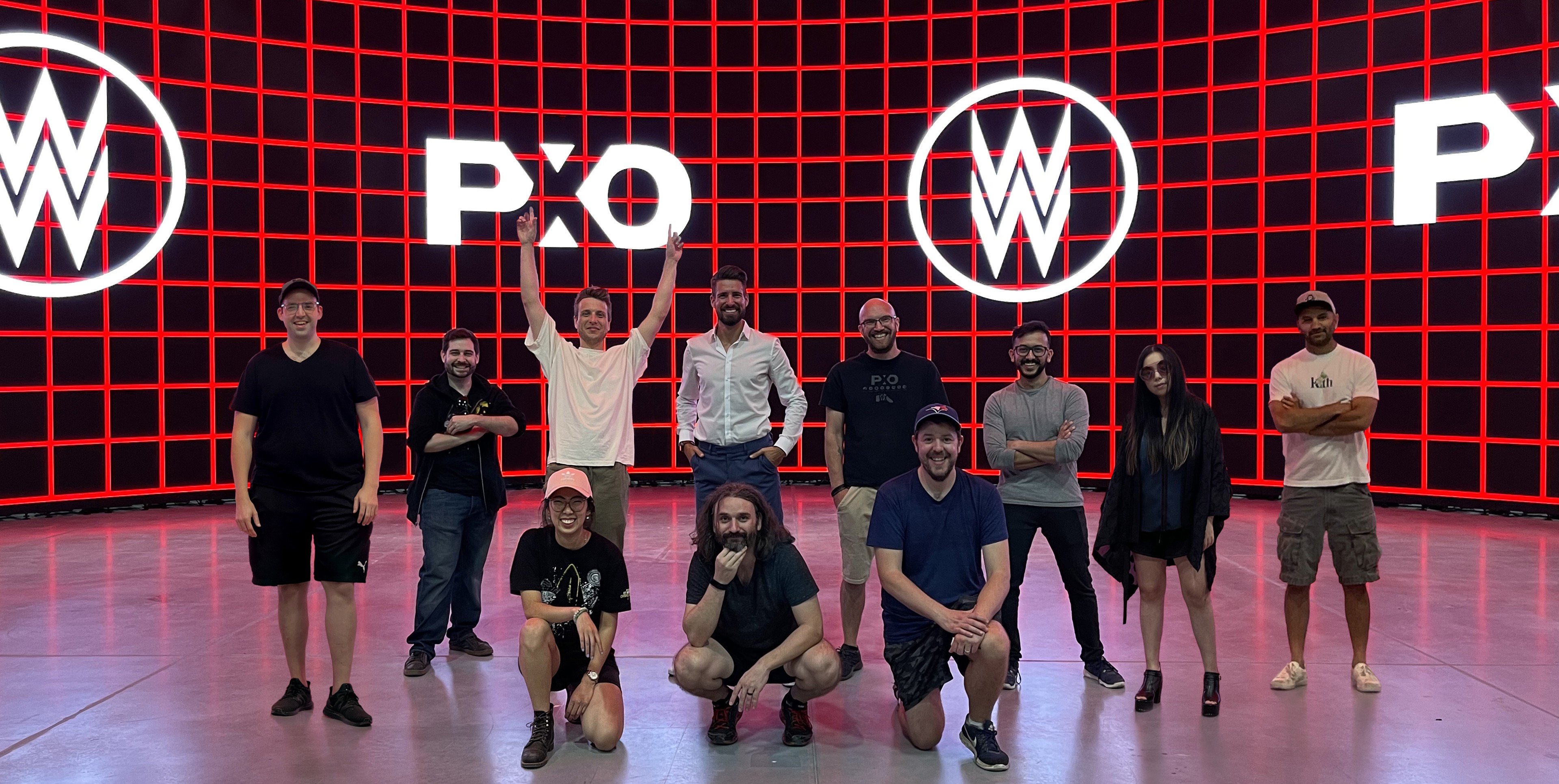
In Season 4 of Star Trek: Discovery, the show breaks new ground both on screen and behind the scenes. PXO took things to the next level. Instead of using traditional blue or green screens, they embraced virtual production—building a massive LED stage powered by Unreal Engine and motion-tracking tech.
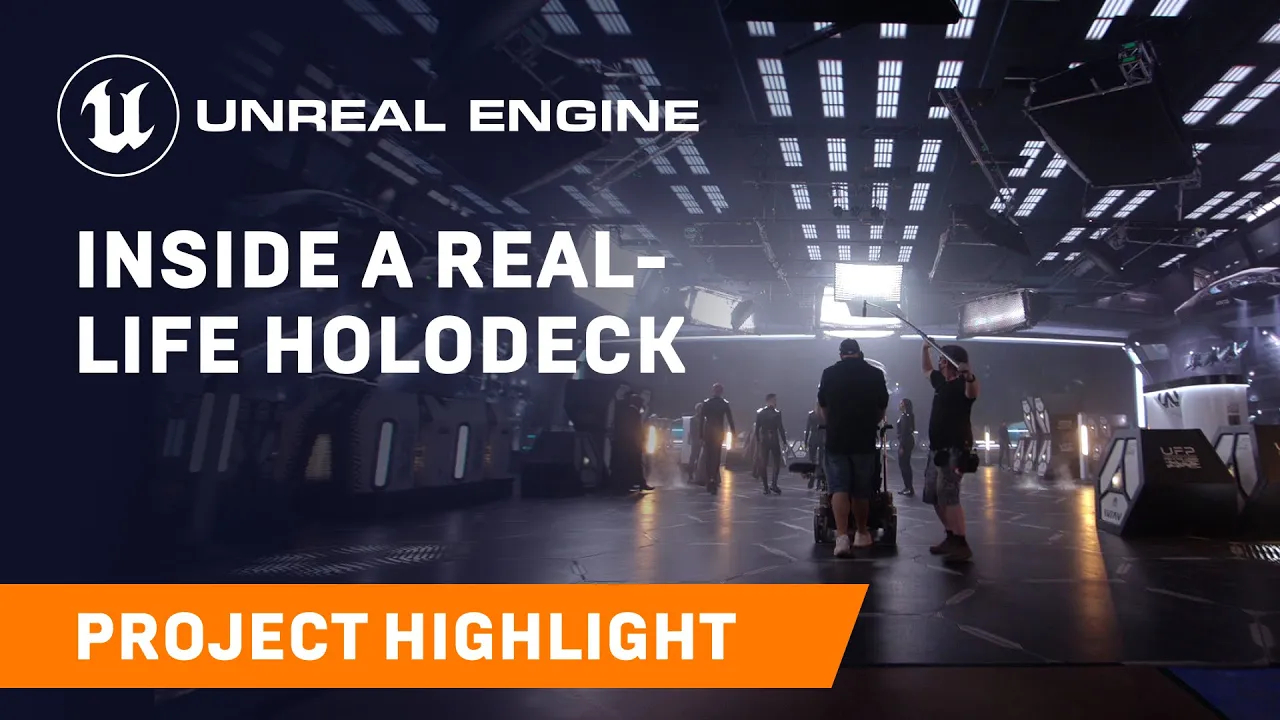
In other words, they created a real-life holodeck. 🖖
Ni’Var Science Institute
ニヴァール科学研究所
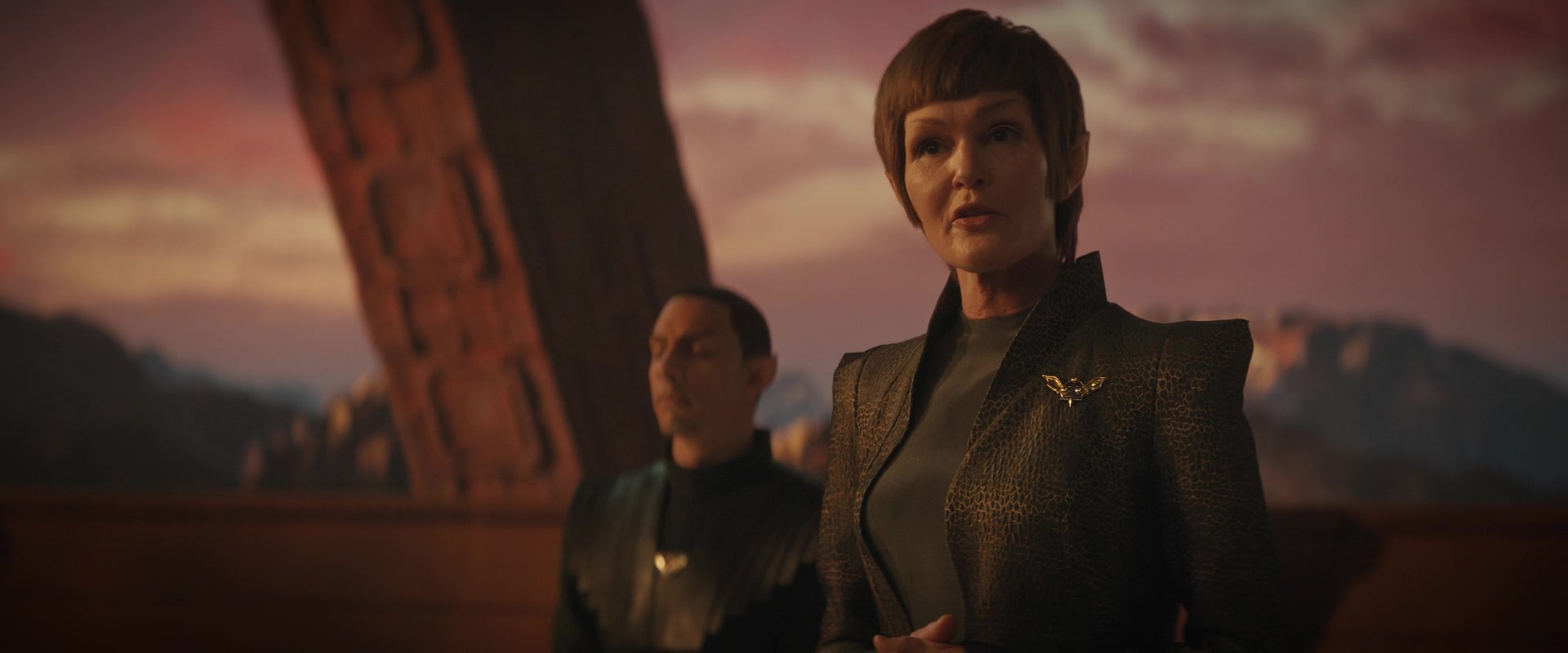
Ni'Var, formerly Vulcan, was an inhabited M-class planet in the Vulcan system of the Alpha Quadrant. Though the planet had no moons, it did form a binary pair with T'Khut and was considered its sister planet.. It was the homeworld of the Vulcans, a warp-capable humanoid species.
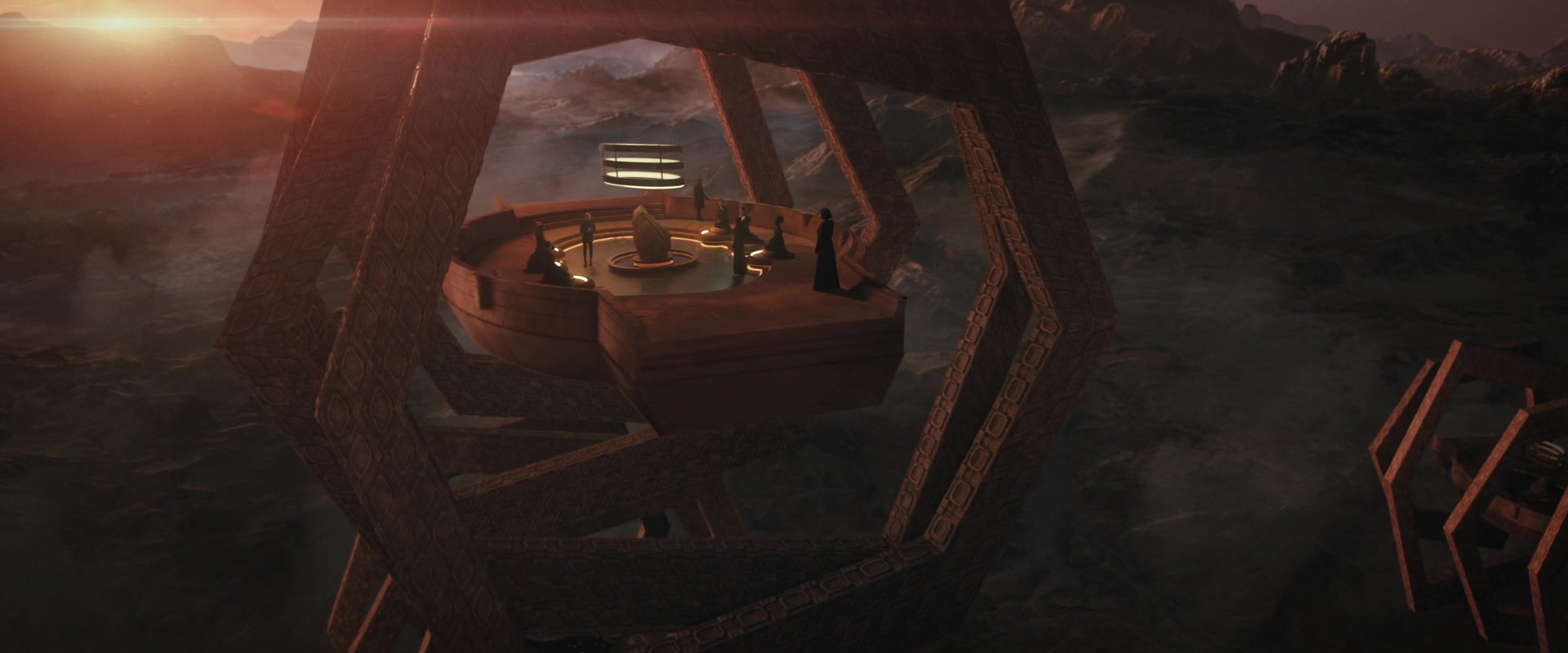
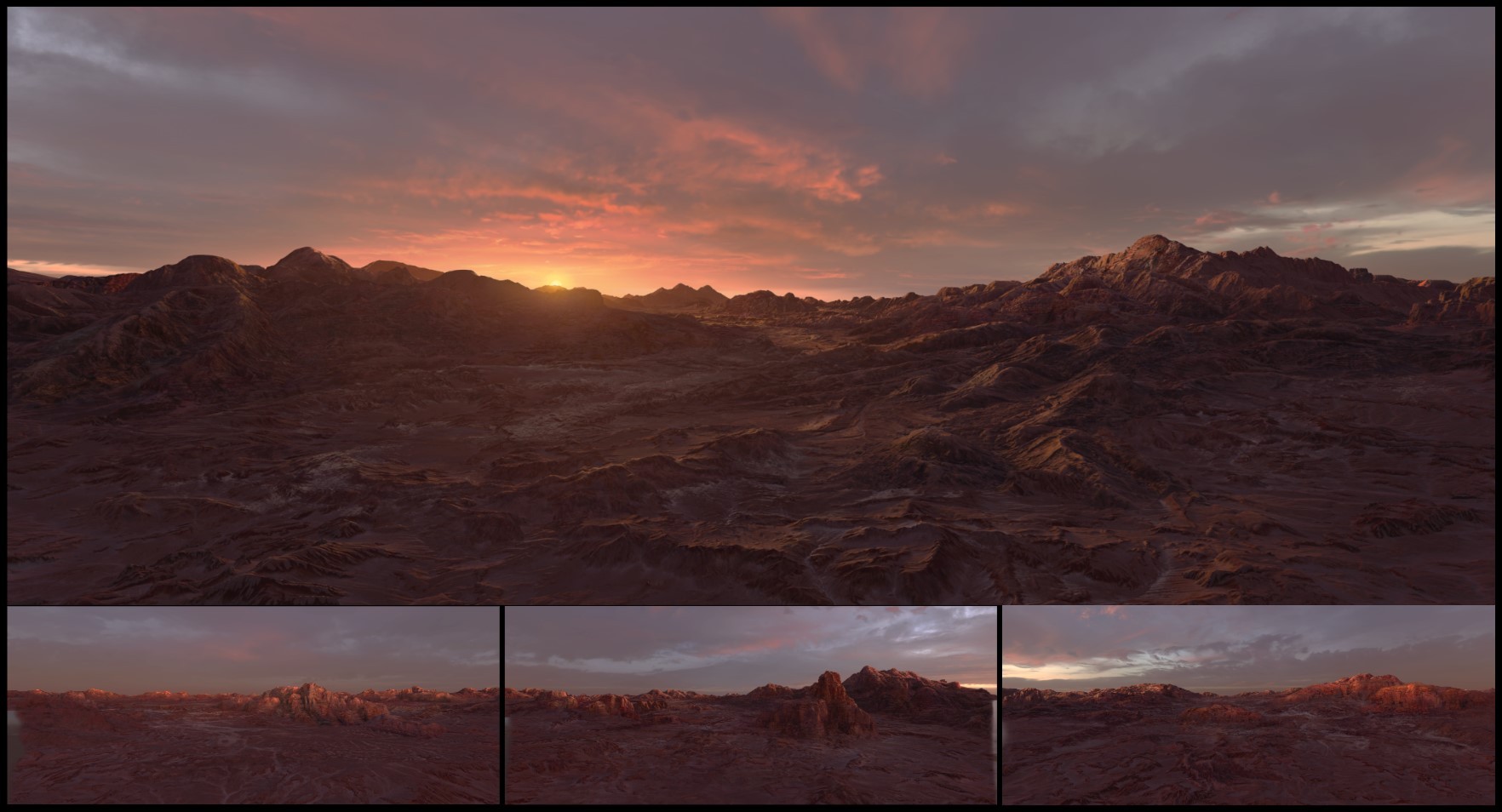
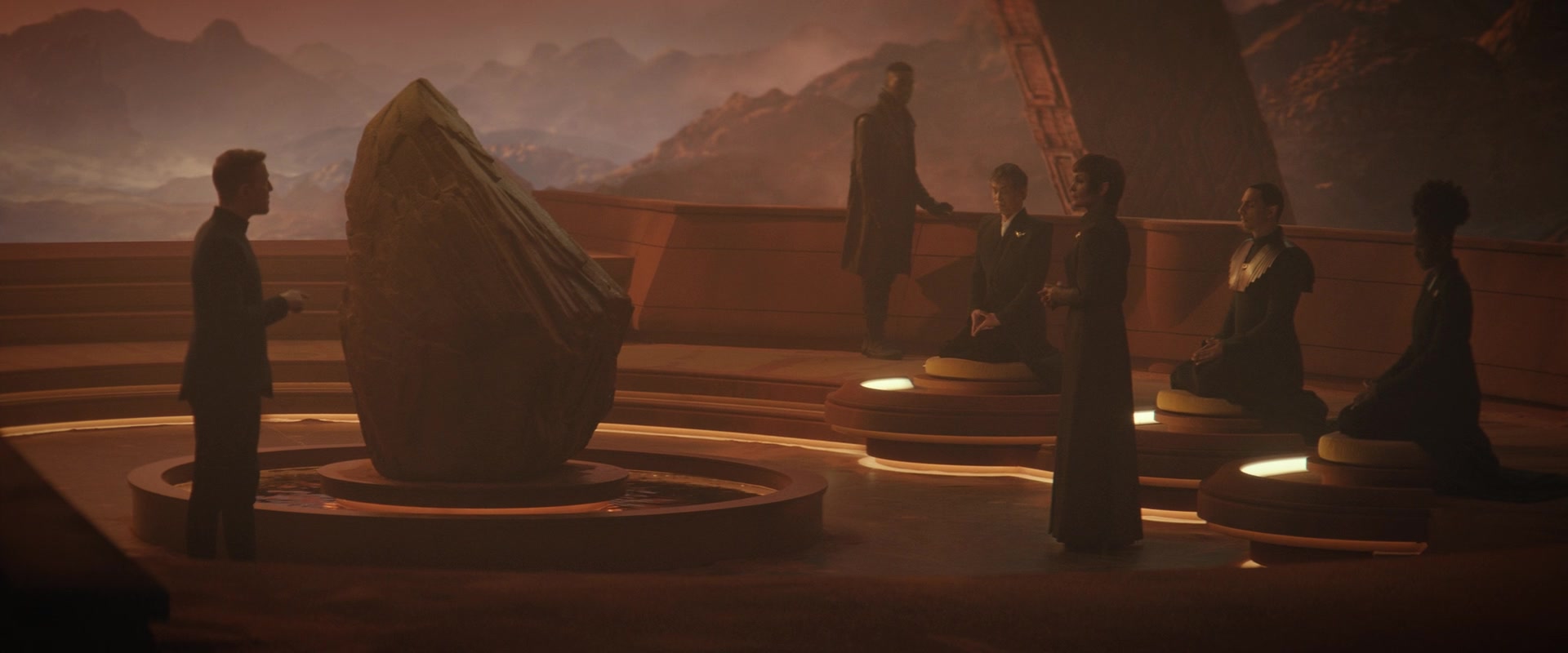
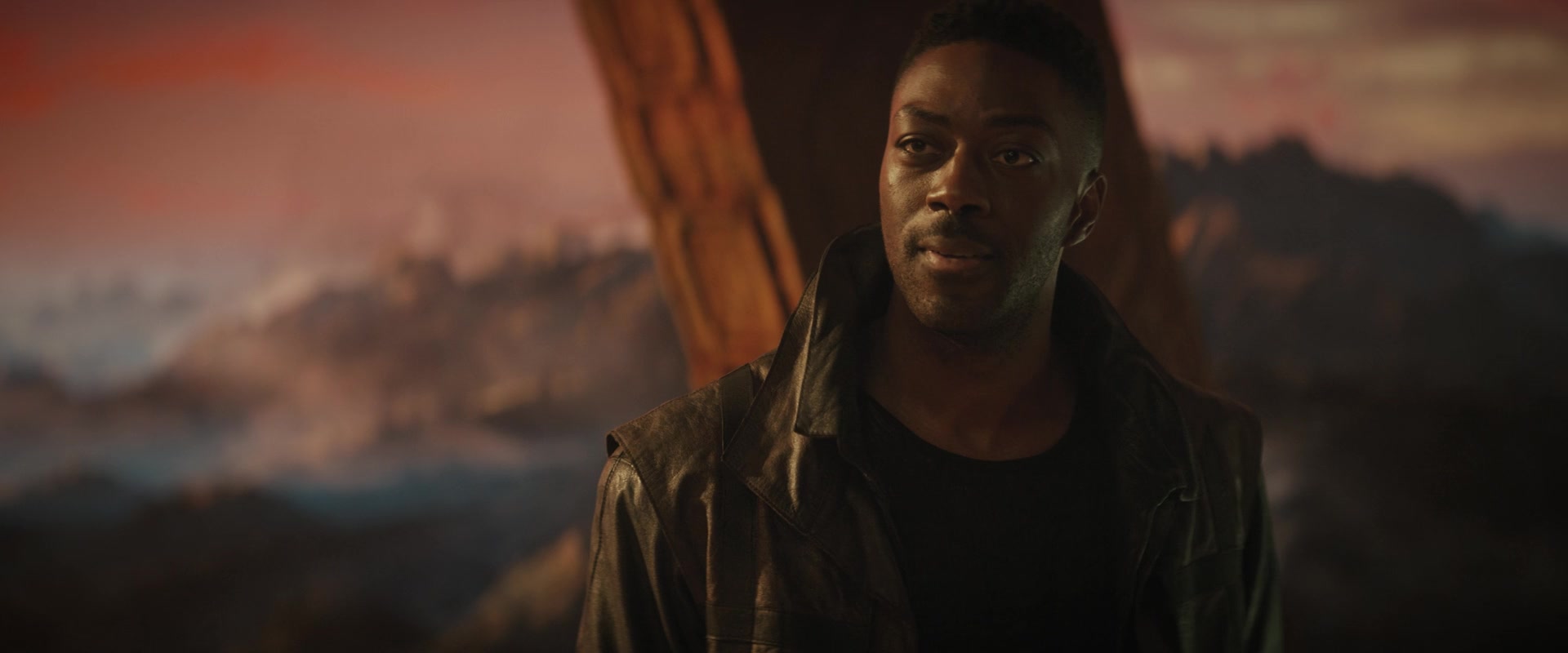
Ni’Var’s landscape is heavily inspired by the desert of Wadi Rum and we have combined scanned mountains with procedural generated landscape from Gaea to create this alien version of this world.
It’s the very first landscape environment done for the LED volume at PXO and one that I first got my hands dirty inside of Unreal Engine. Utilizing the technique of DMP and reprojection onto lower resolution meshes to get the final results.
I created the base and master setup then gotten support from 2 other artists to tak on each direction's detail pass before combining them all and completing the setup in UE. Utilizing the technique of DMP and reprojection onto lower resolution meshes to get the final results..
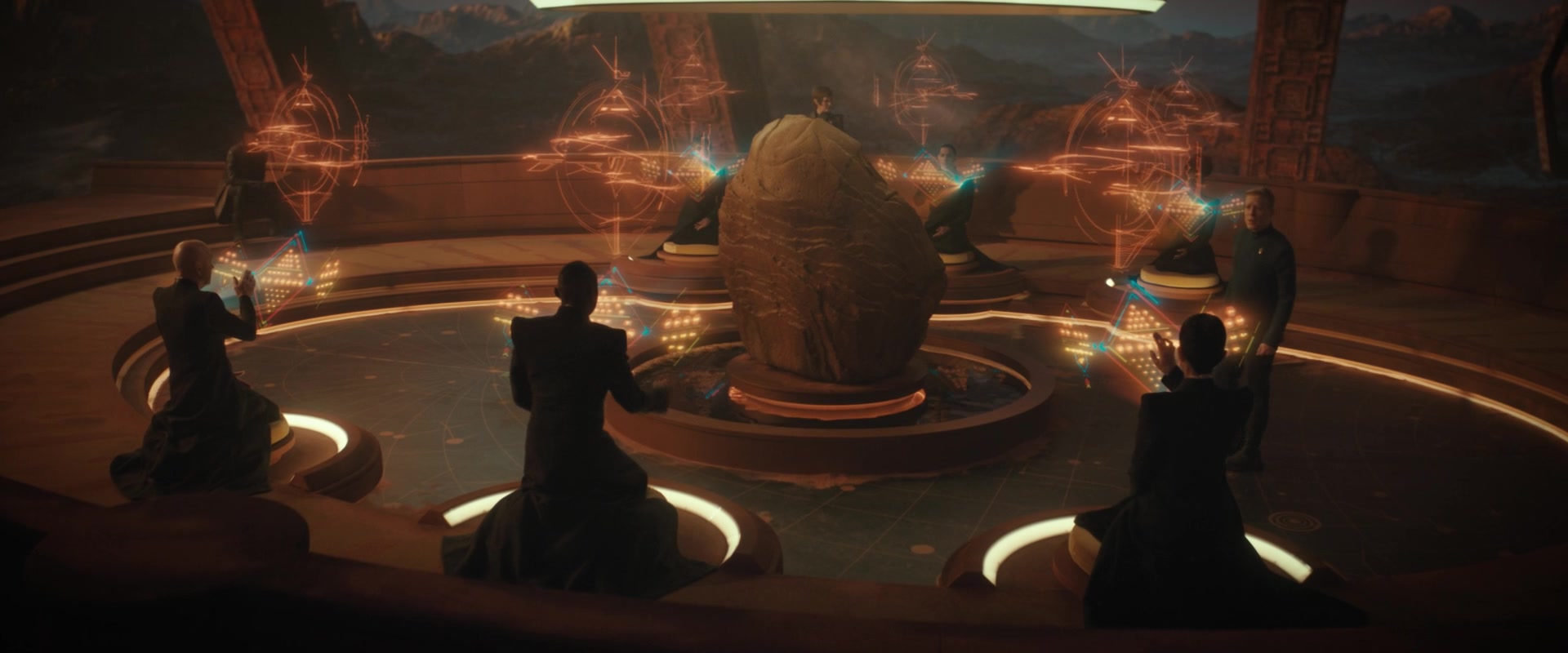
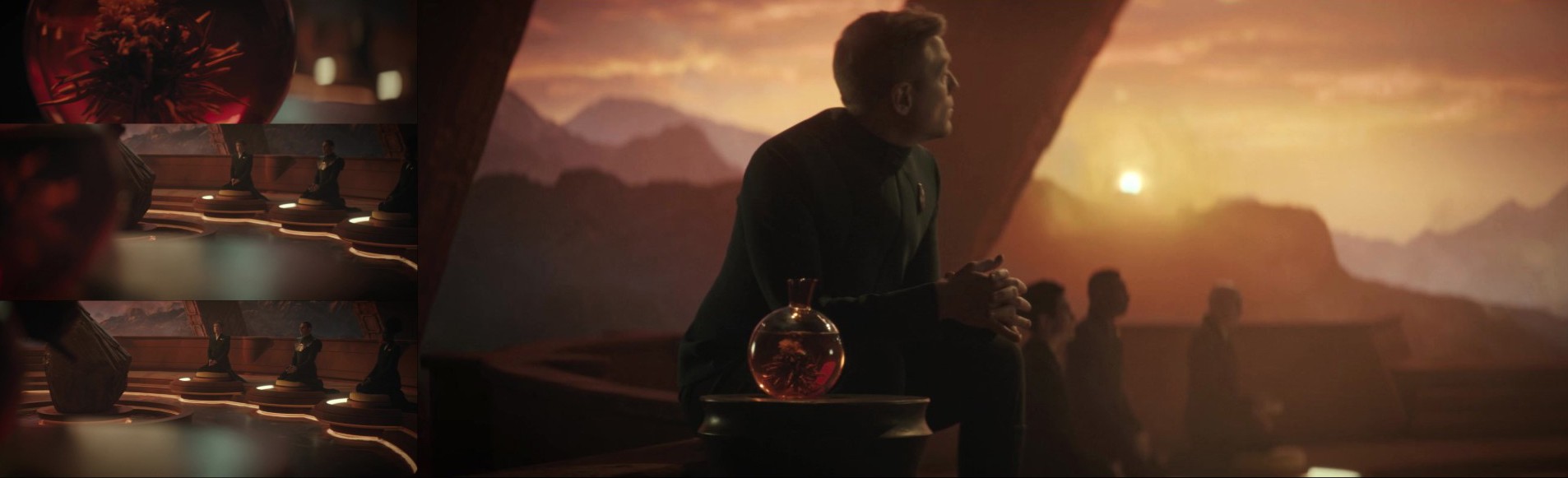
In-Camera Finals were possible with the usage of Virtual Production
Federation HQ Shuttlebay
連邦本部シャトルベイ
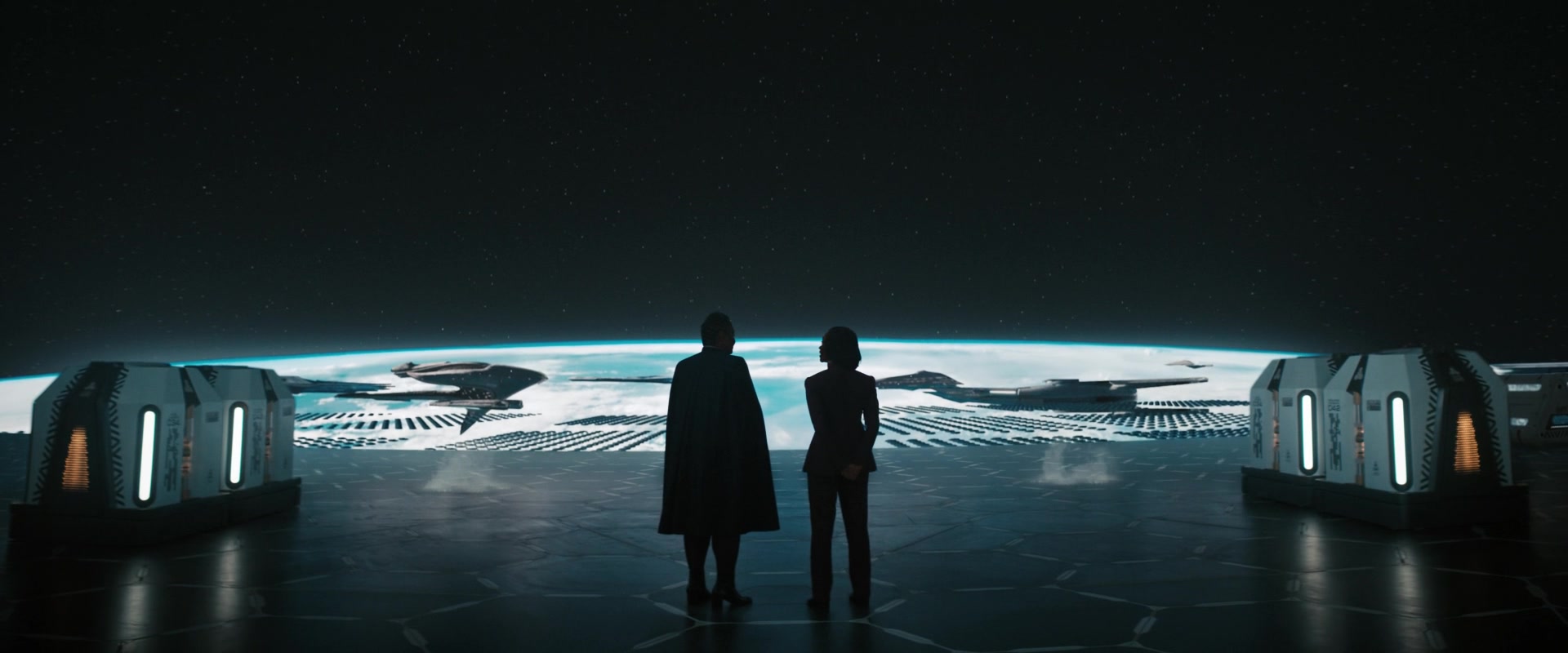
The Federation HQ Shuttlebay in Star Trek: Discovery Seasons 4 and 5 is a sleek, high-tech hangar within the Federation’s mobile starbase, hidden in a nebula after the Burn. It serves as a central hub for shuttle arrivals, mission launches, and diplomatic briefings.
Holodeck Engaged
The Federation HQ Shuttlebay in Star Trek: Discovery Seasons 4 and 5 holds special significance as one of the first environments prepared entirely for real-time virtual production. Developed by Pixomondo (PXO), this set was designed for use on their cutting-edge LED volume stage in Toronto, marking a pivotal shift in the franchise's production techniques.
PXO's virtual production stage, often referred to as a real-life "Holodeck," features approximately 2,000 LED wall panels and 750 ceiling panels, all powered by Unreal Engine's nDisplay system. This setup allows for immersive, real-time environments that actors can interact with during filming, enhancing performance and reducing reliance on post-production compositing. Unreal Engine
The shuttlebay's design reflects the sleek, advanced aesthetic of the 32nd-century Federation, serving as a central hub for shuttle operations, mission briefings, and diplomatic engagements. Its creation using virtual production techniques not only streamlined the filming process but also elevated the visual storytelling, providing a tangible, interactive space that enriched the narrative experience.
This innovative approach to set design and production exemplifies Discovery's commitment to pushing the boundaries of television filmmaking, blending cutting-edge technology with the rich legacy of the Star Trek universe.
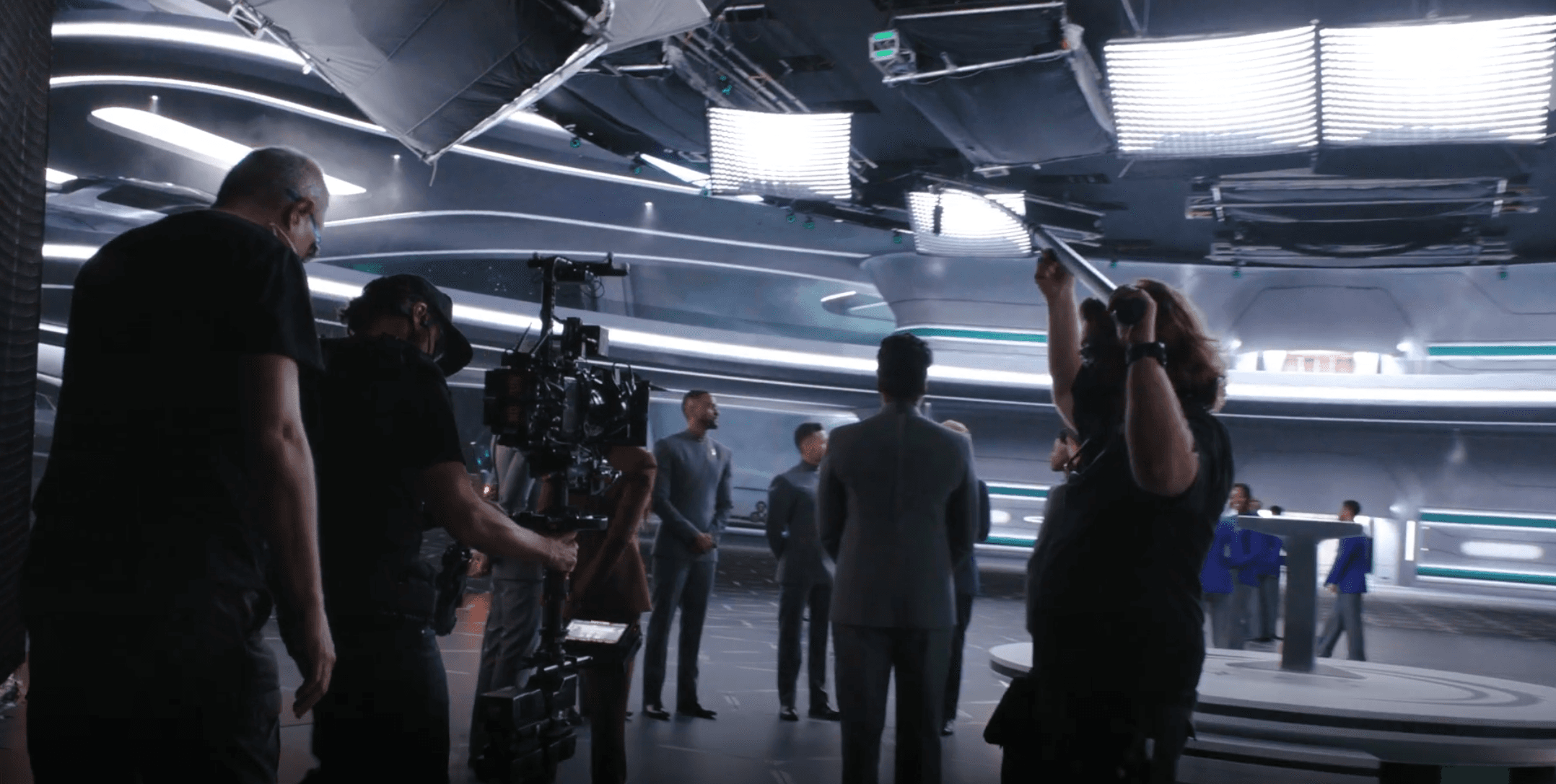
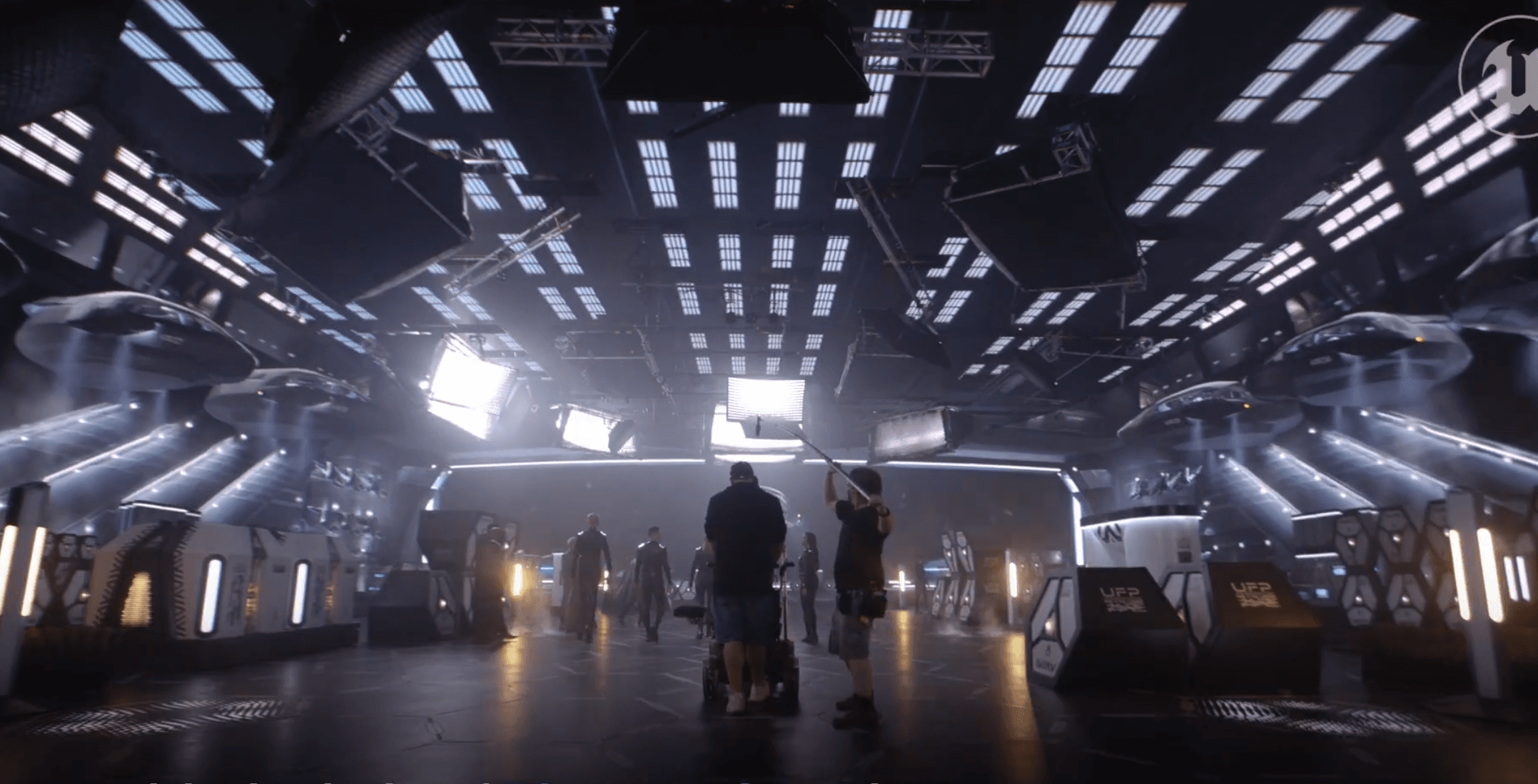
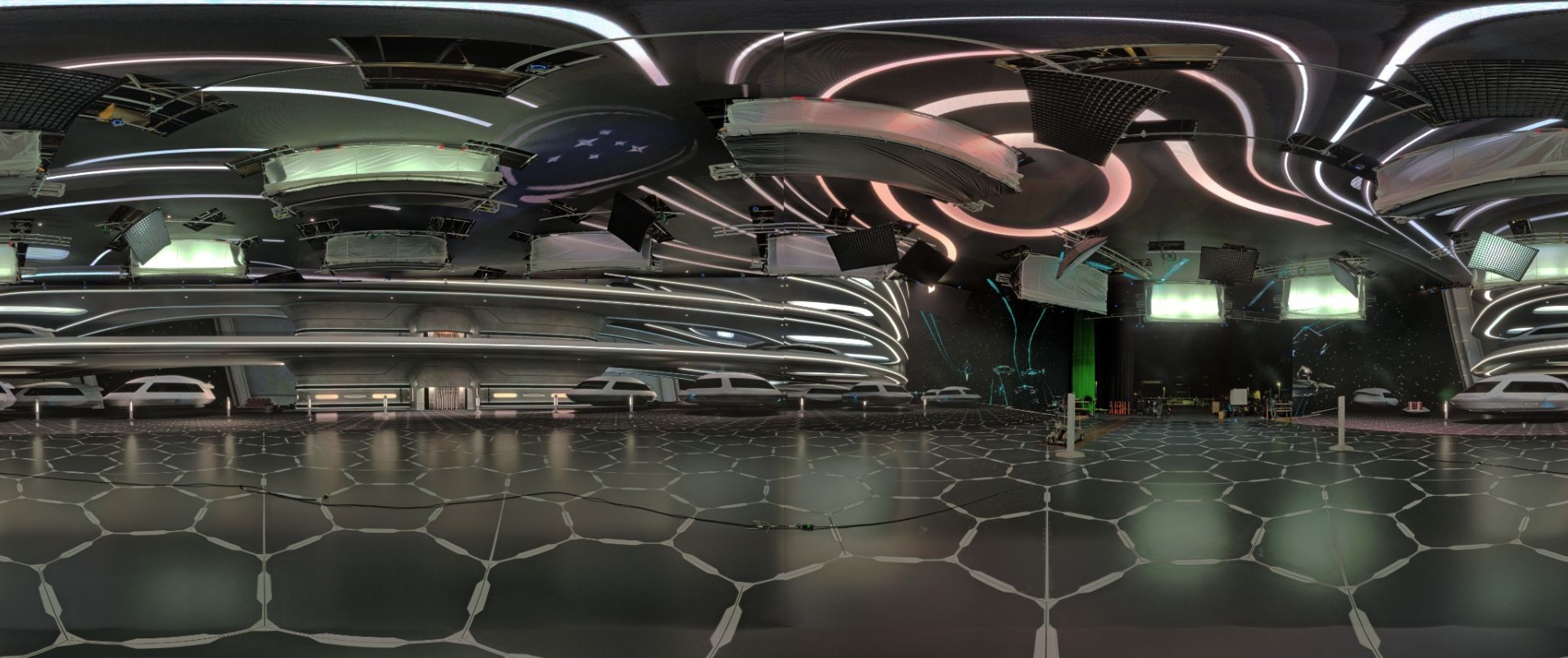
Panoramic view of FedHQ loaded on PXO’ s LED stage, from TV series “Star Trek : Discovery”
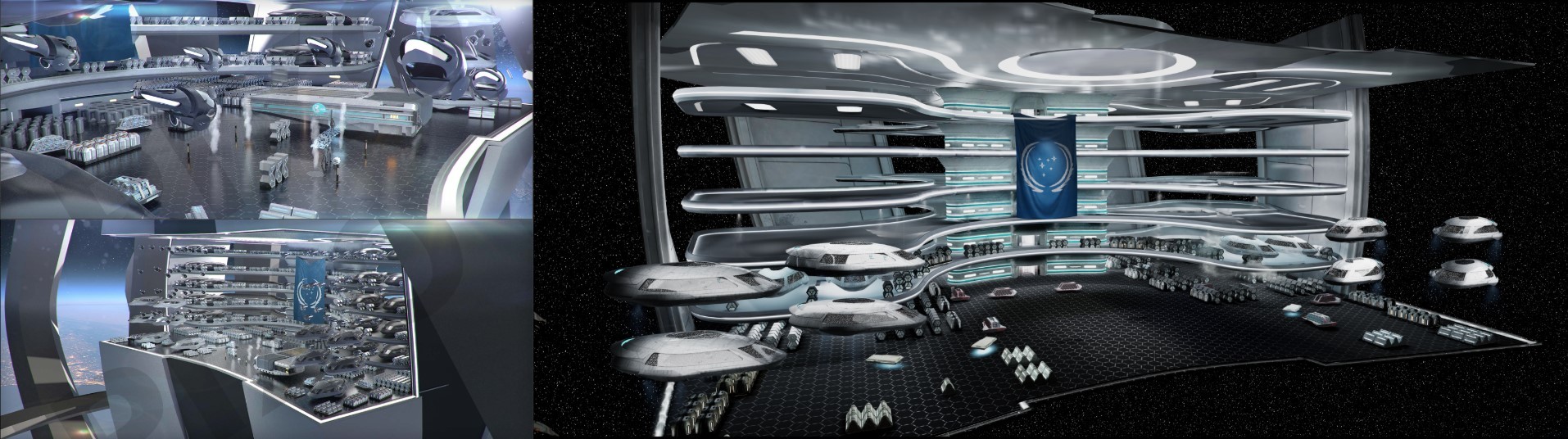
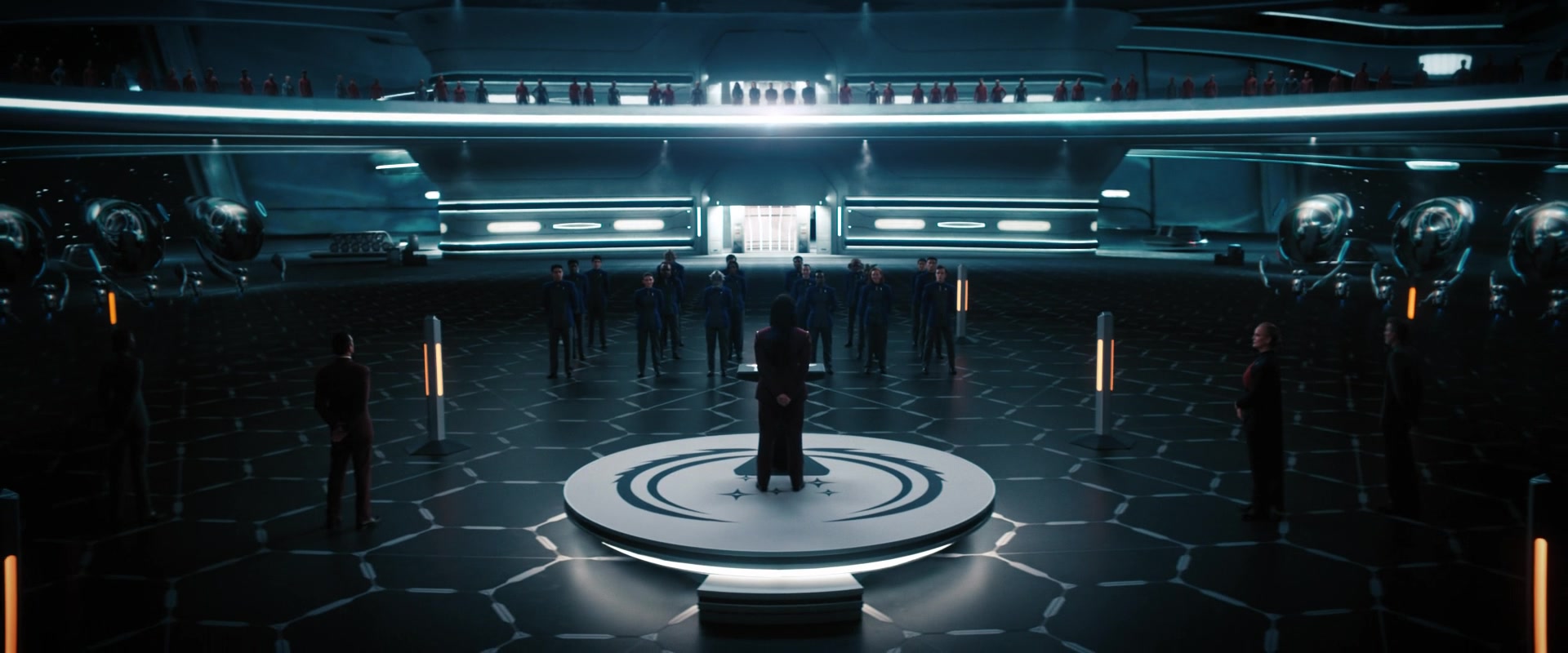
This environment truly demonstrates the power of Virtual Production: build once and revisit many times throughout a series, shooting numerous pages of script on the same set. Although the floor pattern posed significant challenges in matching and alignment, our team executed it seamlessly and the set was successfully utilized across multiple seasons.
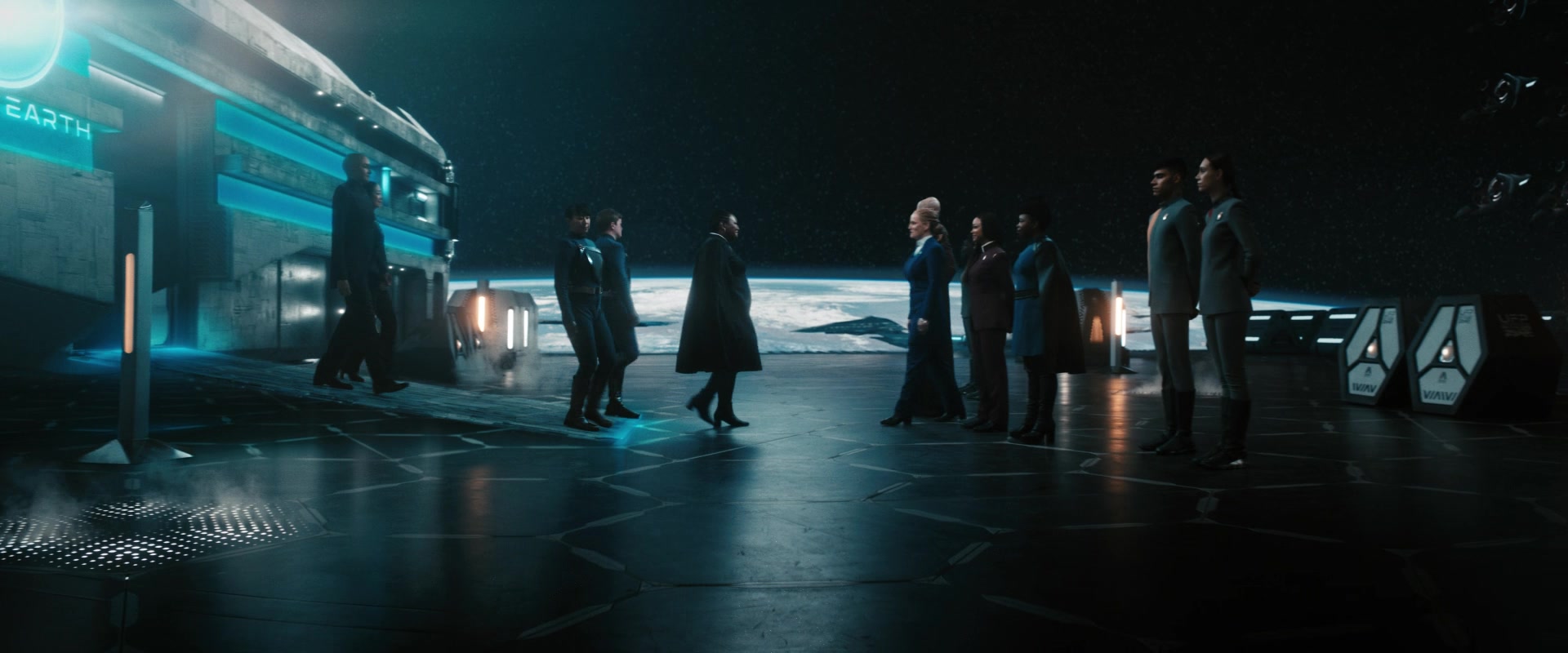
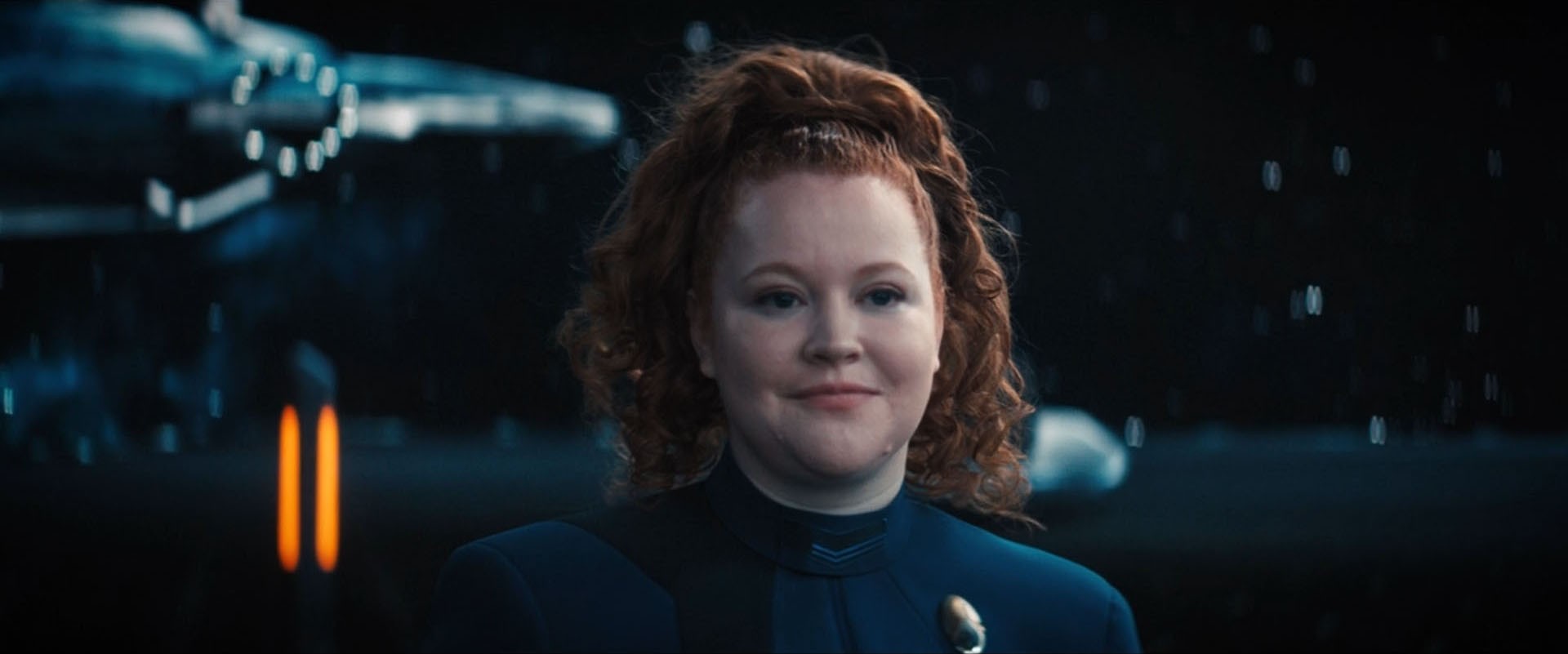
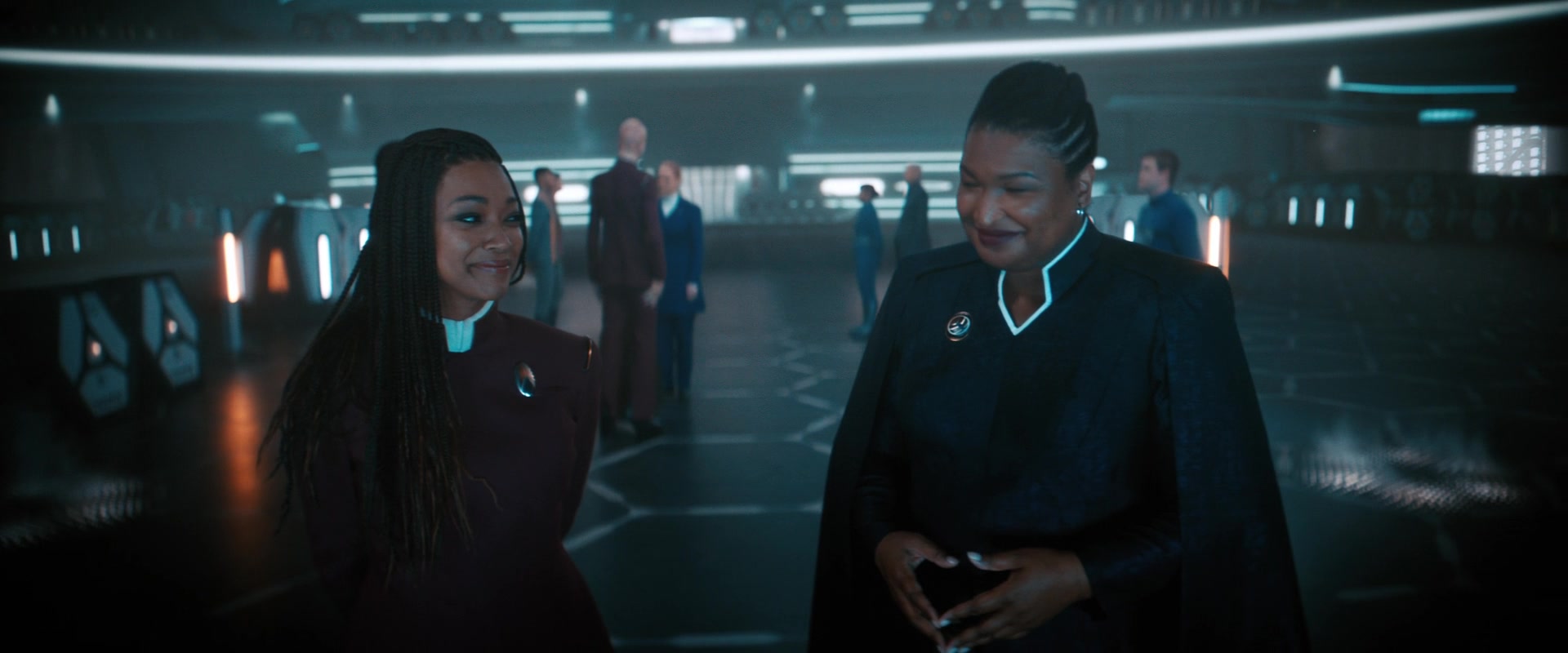
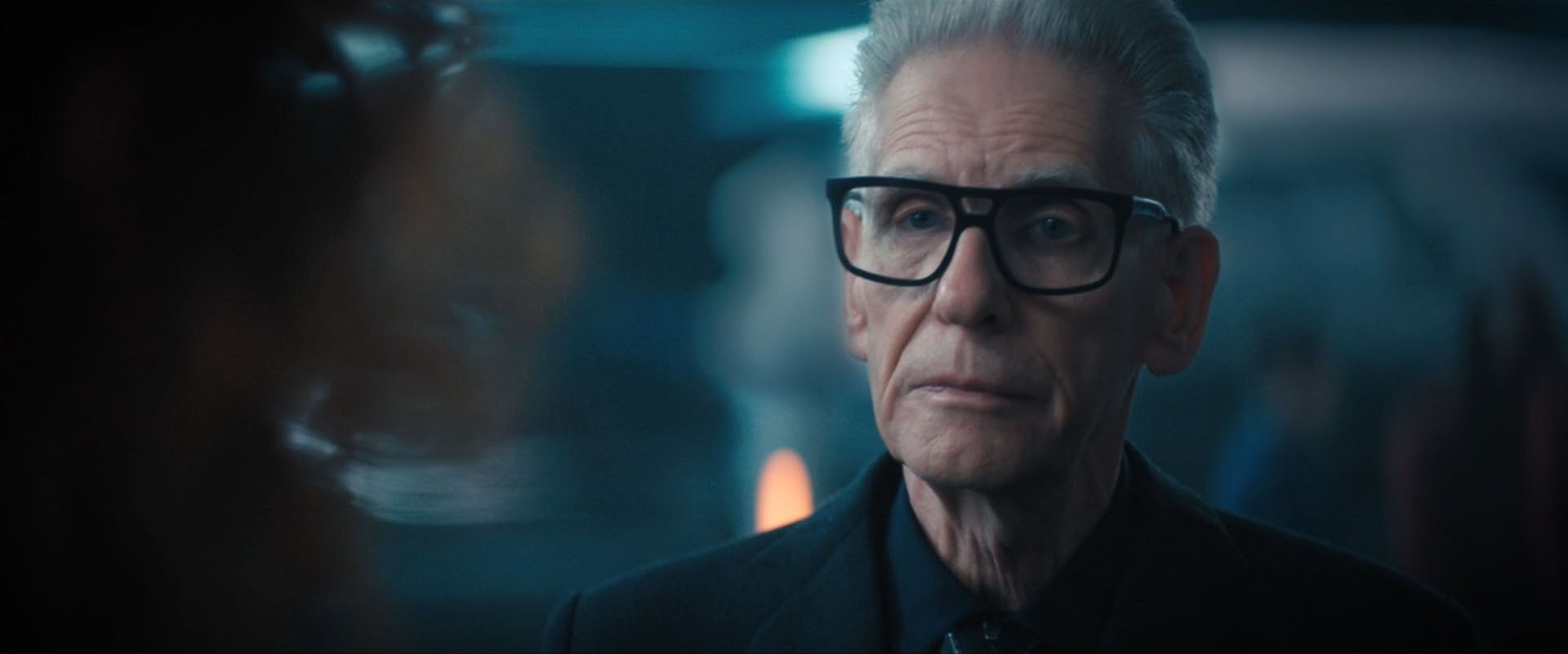
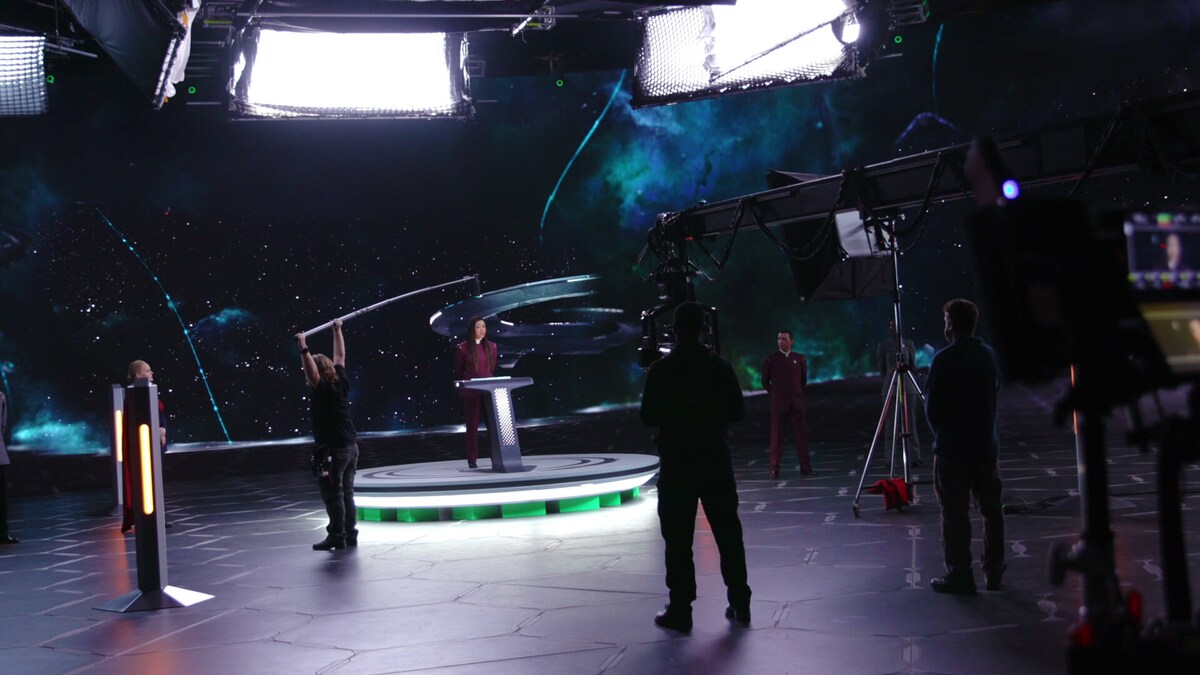
On-set filmming for Star Trek : Discovery Season 4 on PIXOMONDO's Virtual Production Stage in Brampton, ON, Canada
Kaminar Council Chamber
カミナール評議会室
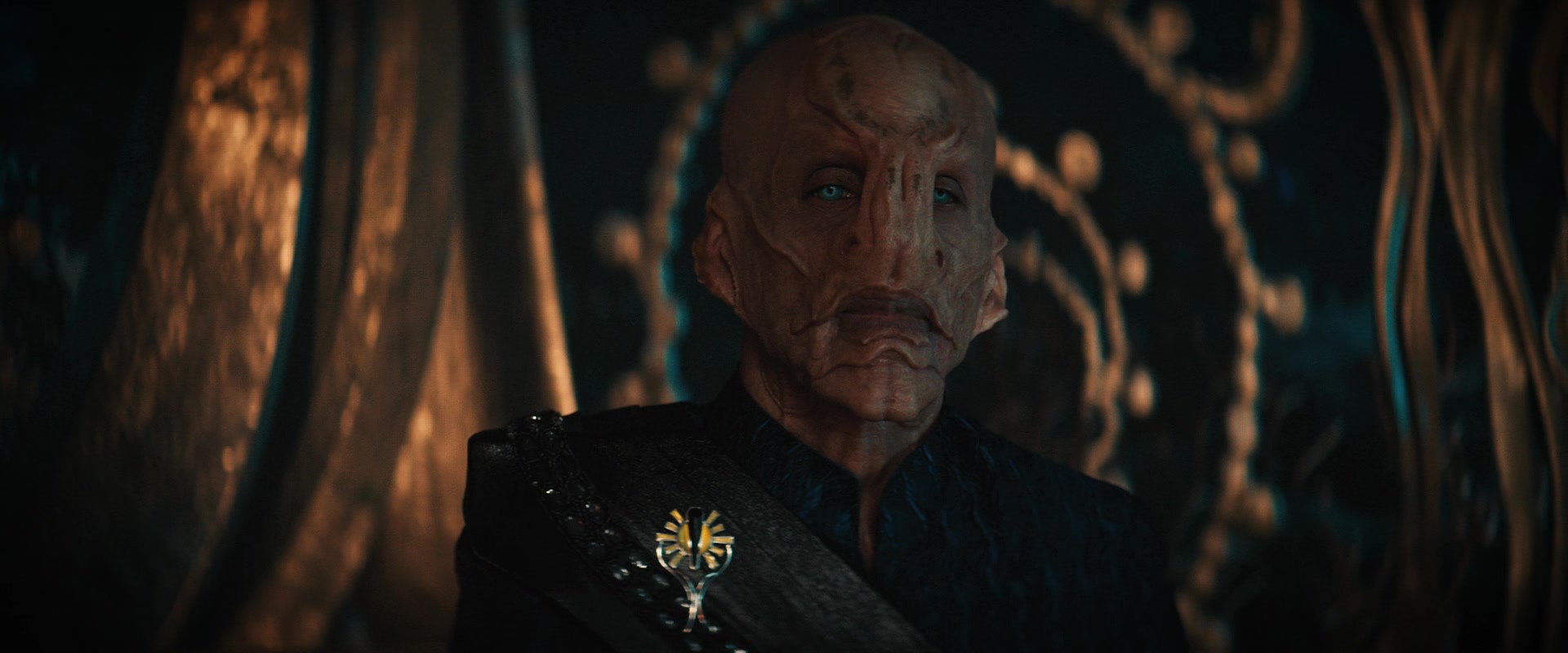
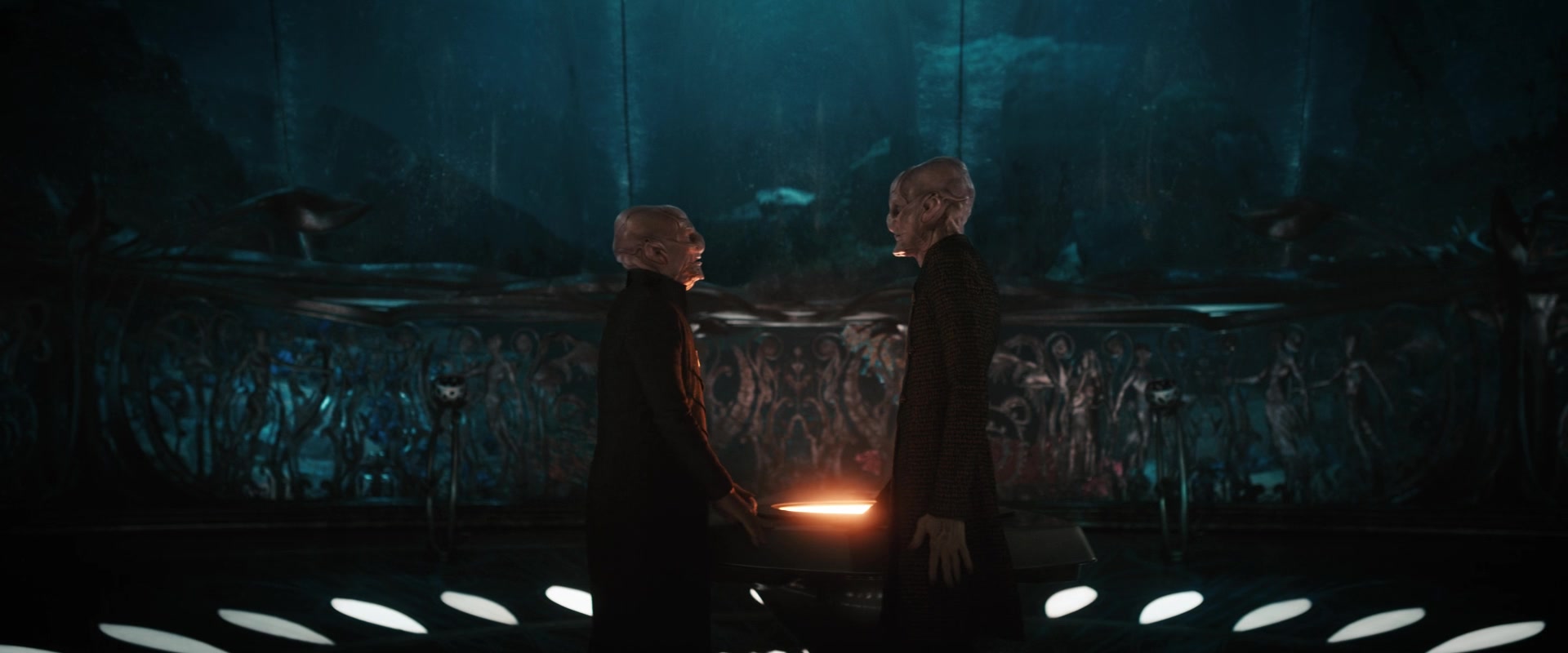
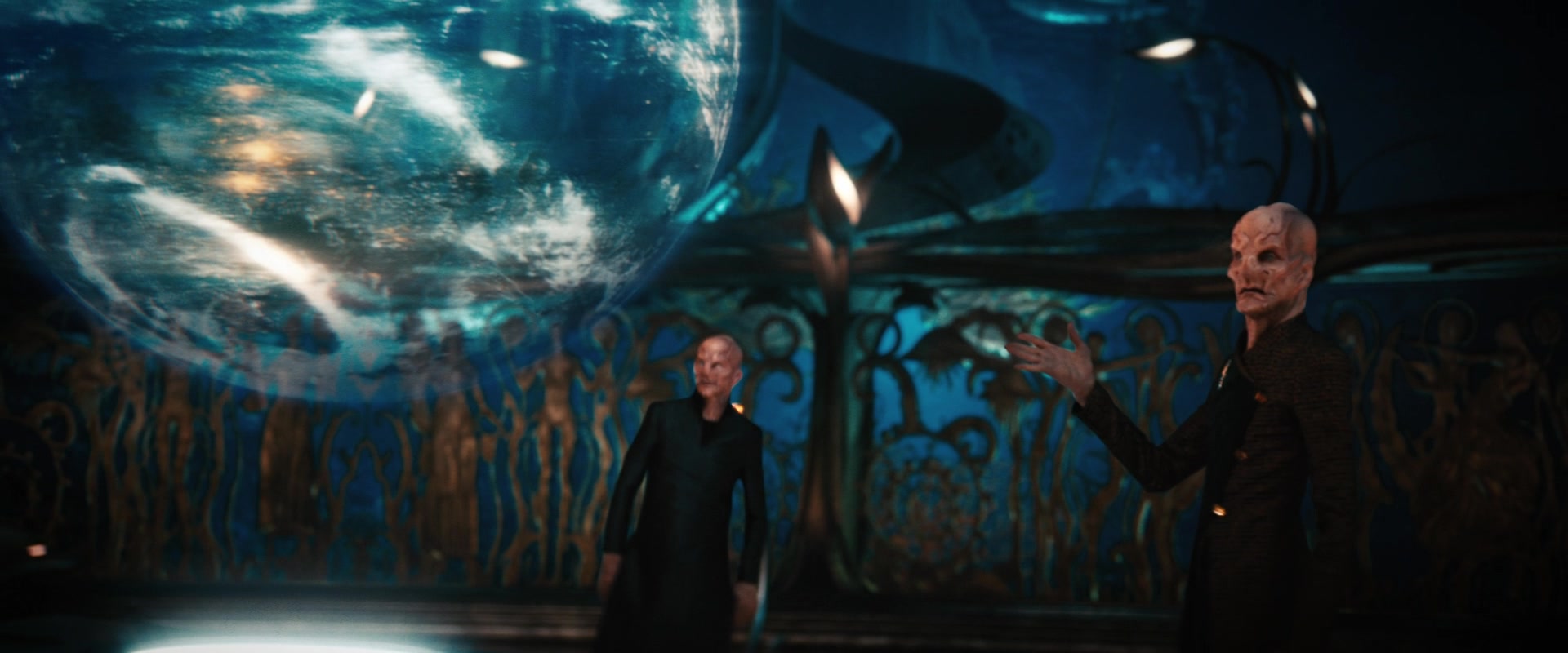
The Kaminar High Council was the governing body of the Kelpien and Ba'ul Alliance on the planet Kaminar in the 32nd century. The councilors met in a large chamber built underwater, with the terrestrial Kelpiens inside and the aquatic Ba'ul outside.
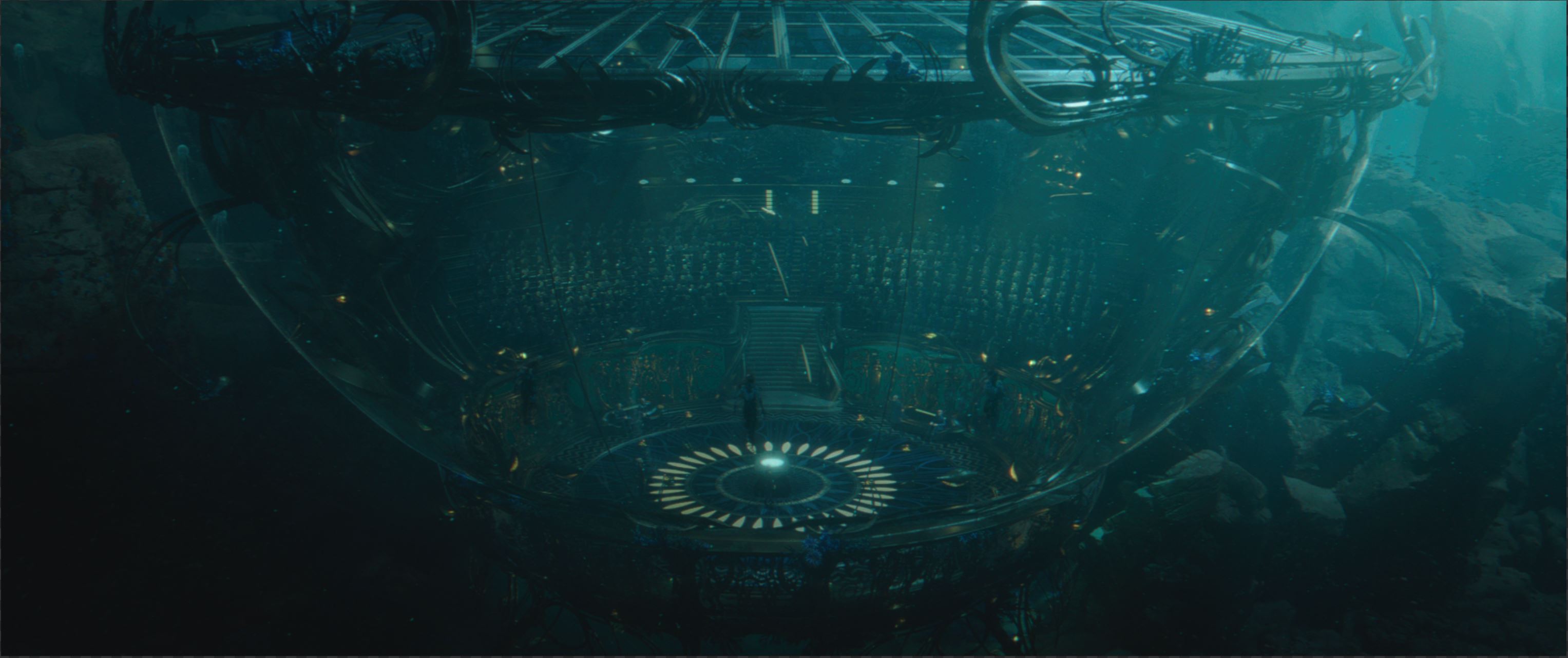
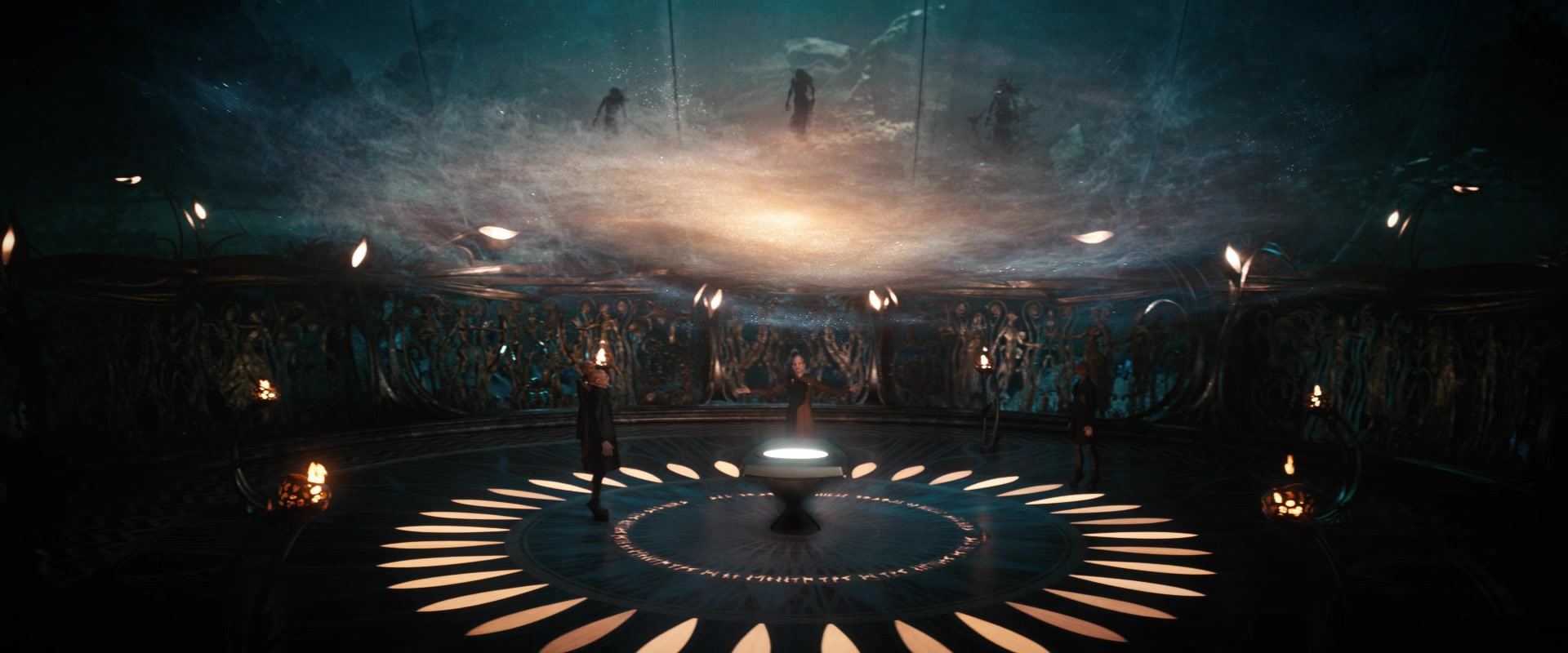
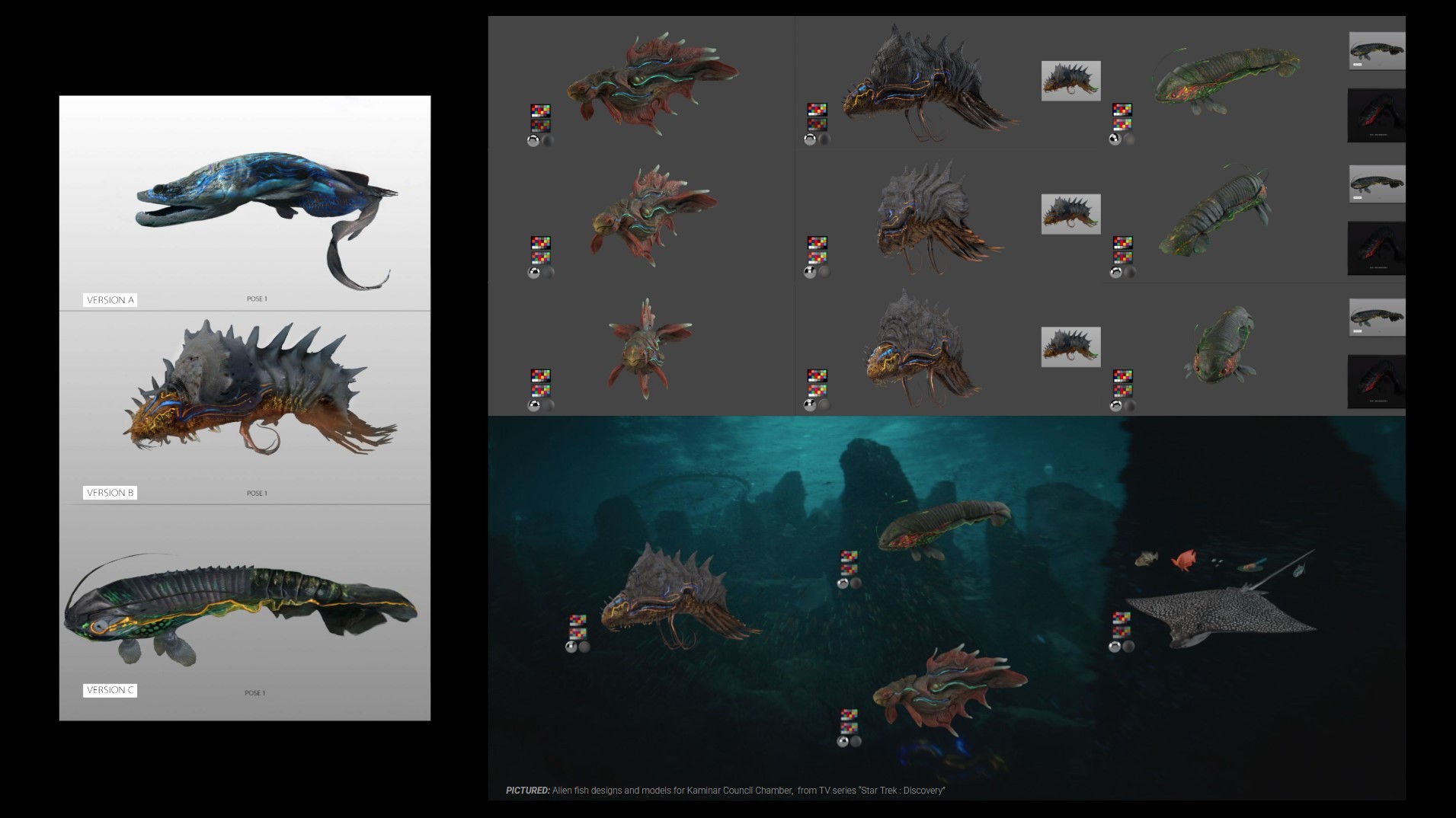
In Season 4 of Star Trek: Discovery, nearly every episode featured scenes filmed on PXO’s LED Volume Stage (AR wall)—from the familiar shuttle bay to the underwater Kaminar Council Chamber.
PXO’s Virtual Art Department began by blocking out environments with Epic Games Marketplace assets, later refined in Unreal Engine by a larger team with production input. Final details were completed about a week before filming, leaving only minor post-shoot touch-ups.
For environments like the Kaminar Council Chamber, we also designed alien fish, carefully shaping their silhouettes to ensure variety and visual interest from every angle.
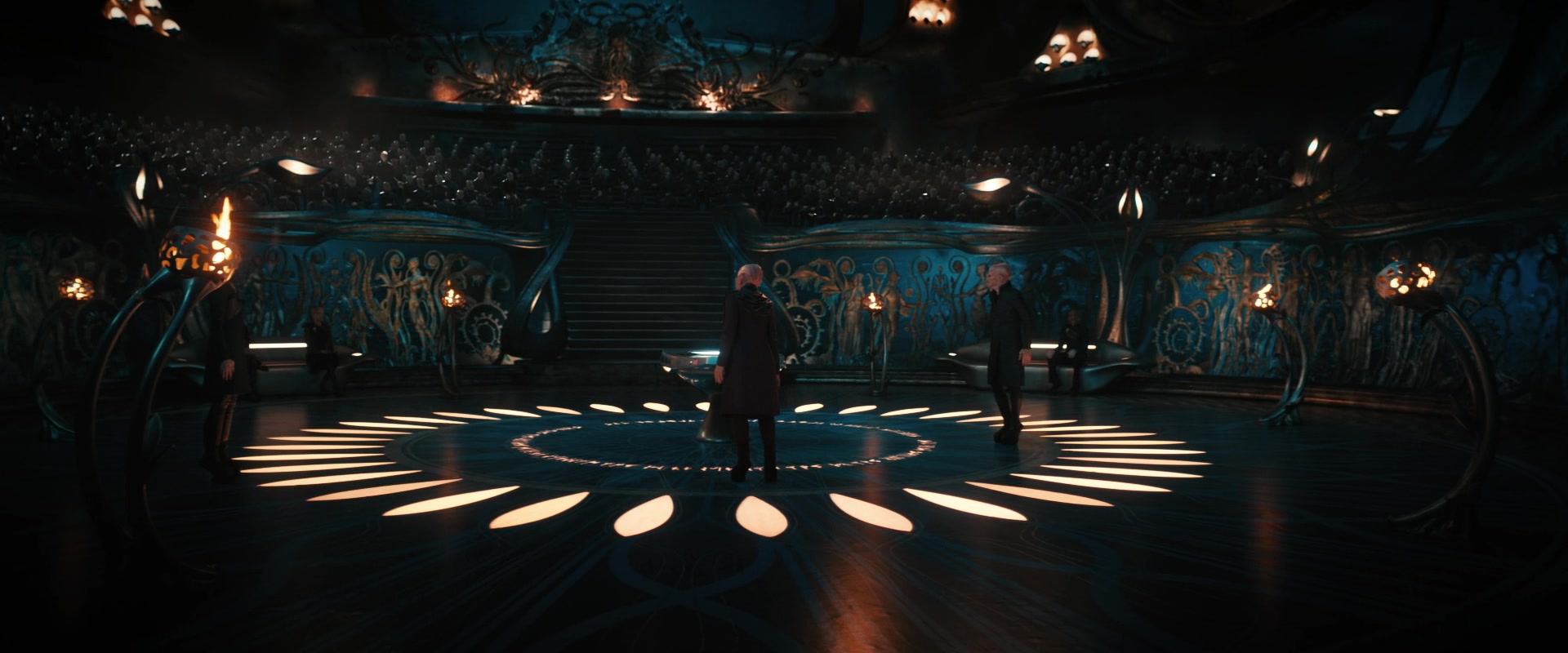
This environment was created using UE4.27, at the time doing large crowds were challenging at the time and had to be comped.
Radvek Prison V Exterior & Interior
ラドヴェク V
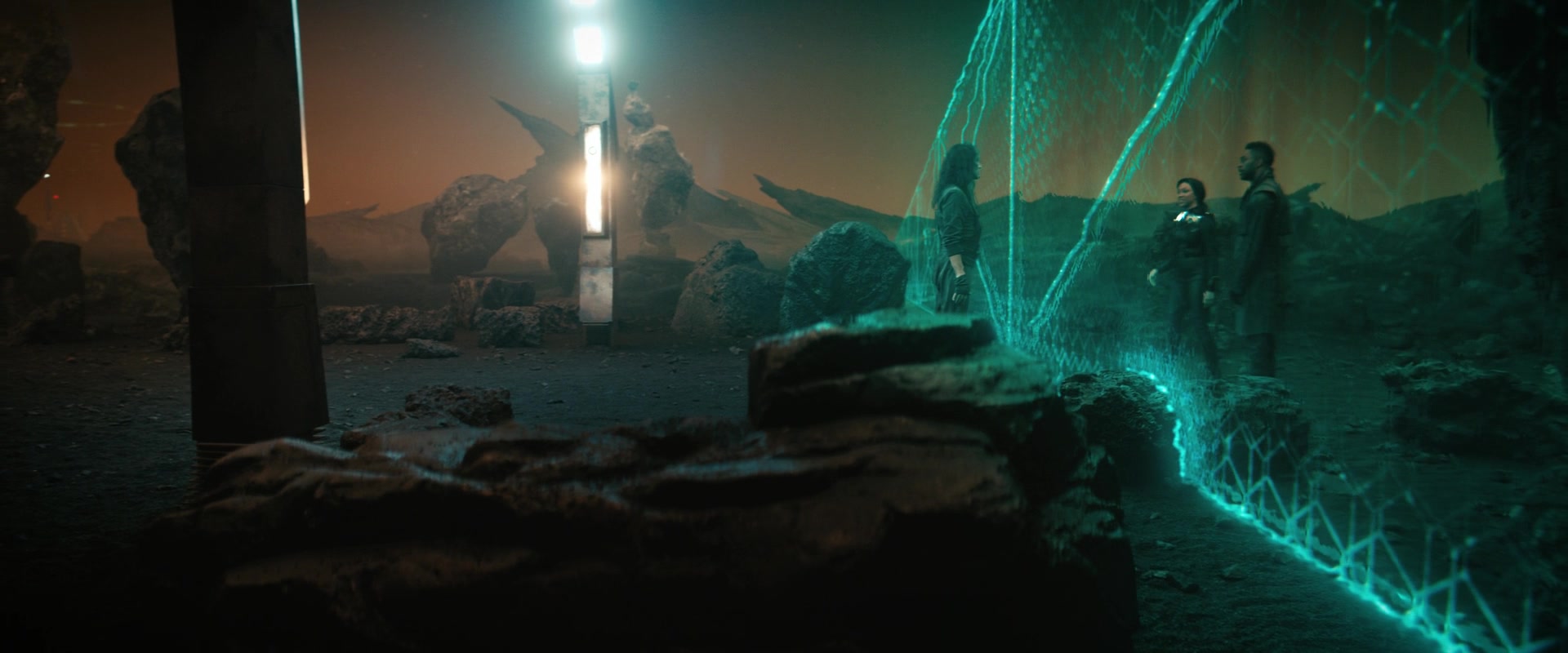
Radvek V, also known as the Radvek asteroid belt or the Radvek chain, was an asteroid belt located in a multiple star system, at coordinates 05.98787.35480.98. It consisted of a series of interconnected asteroids fitted with force field atmospheric domes, and was primarily inhabited by the Akaali.
Radvek Prison V Exterior
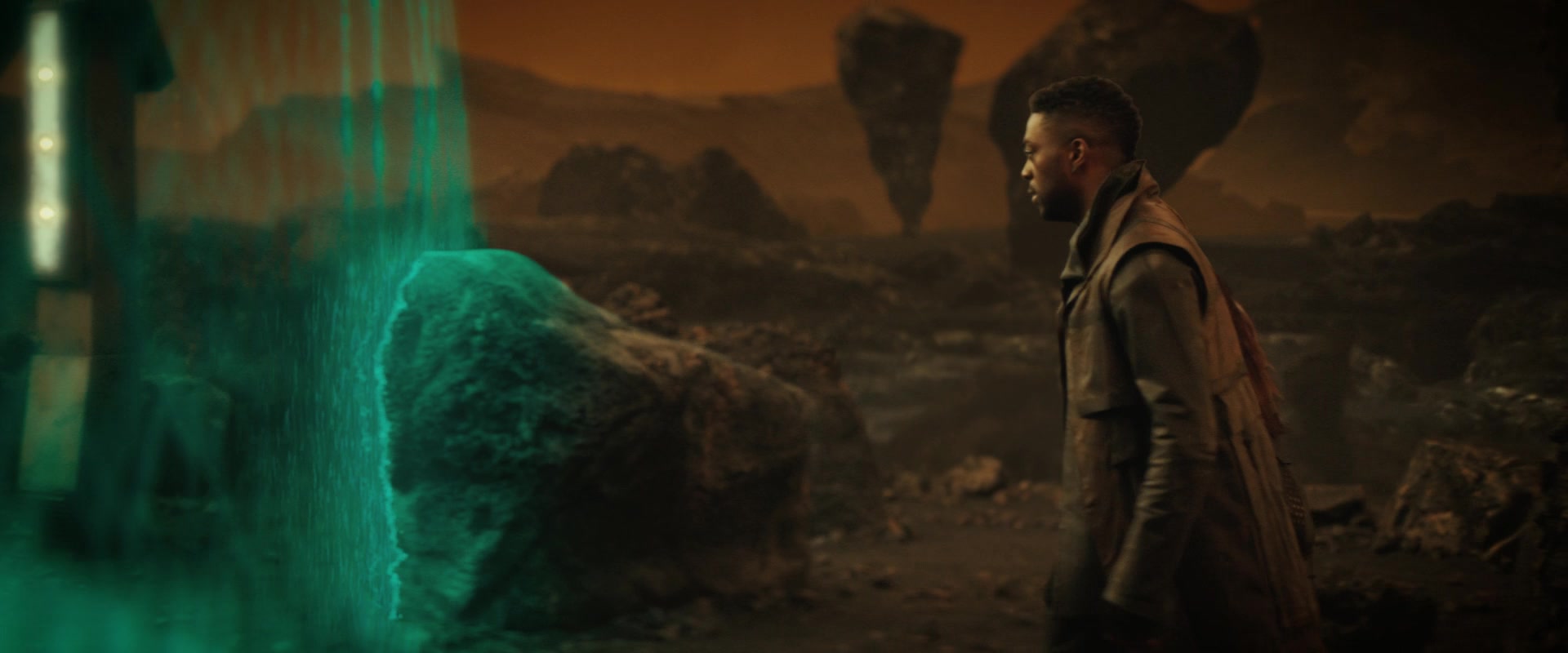
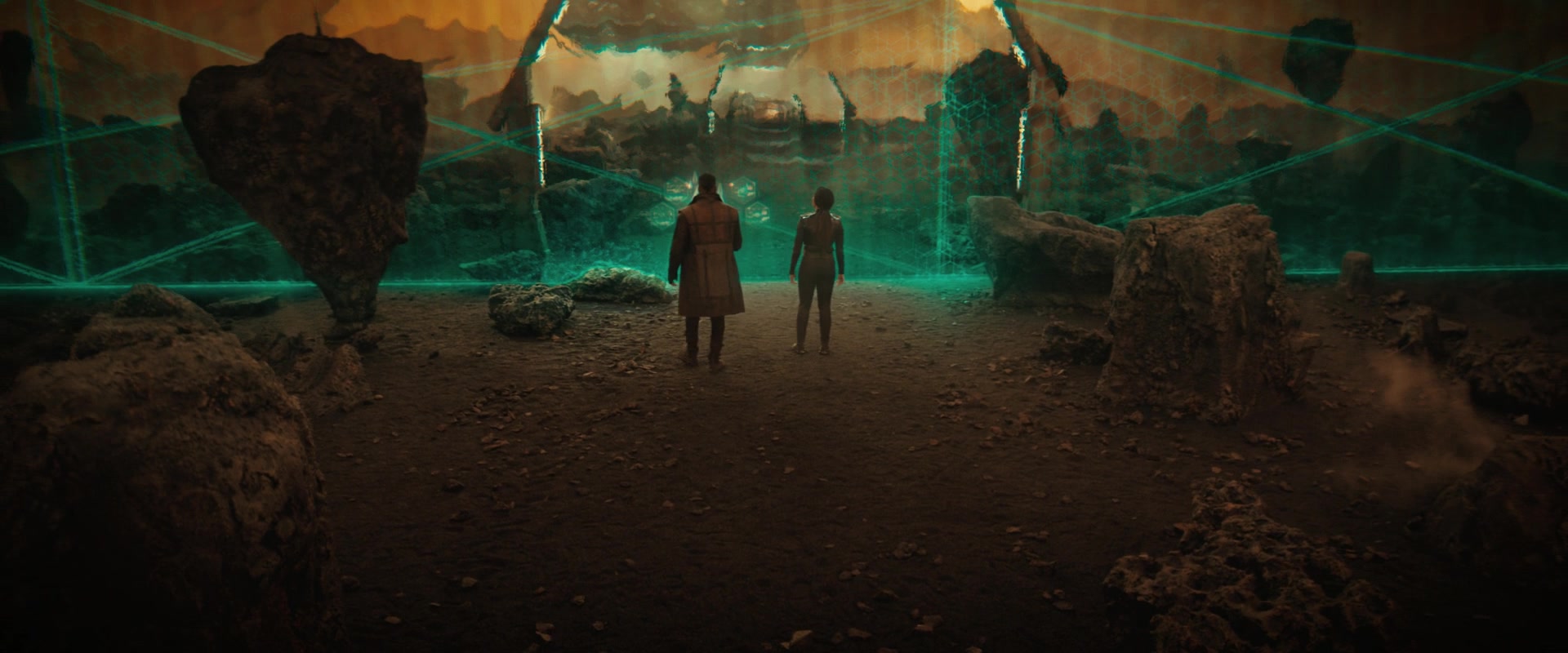
Beyond the obvious advantages, PXO found several hidden benefits in using Unreal Engine for virtual production. Cleanup work was greatly reduced, since many shots could be captured in-camera as finals, with only select effects added in post.
The lighting team saw major gains too: what once took up to 14 hours for a lighting bake could now be done in just 30 minutes using Unreal Engine’s GPU Lightmass Baker.
Another big shift was collaboration. Instead of working on separate tiles and combining them later, artists could now work in the same scene simultaneously—resulting in more cohesive environments, stronger teamwork, and improved organization.
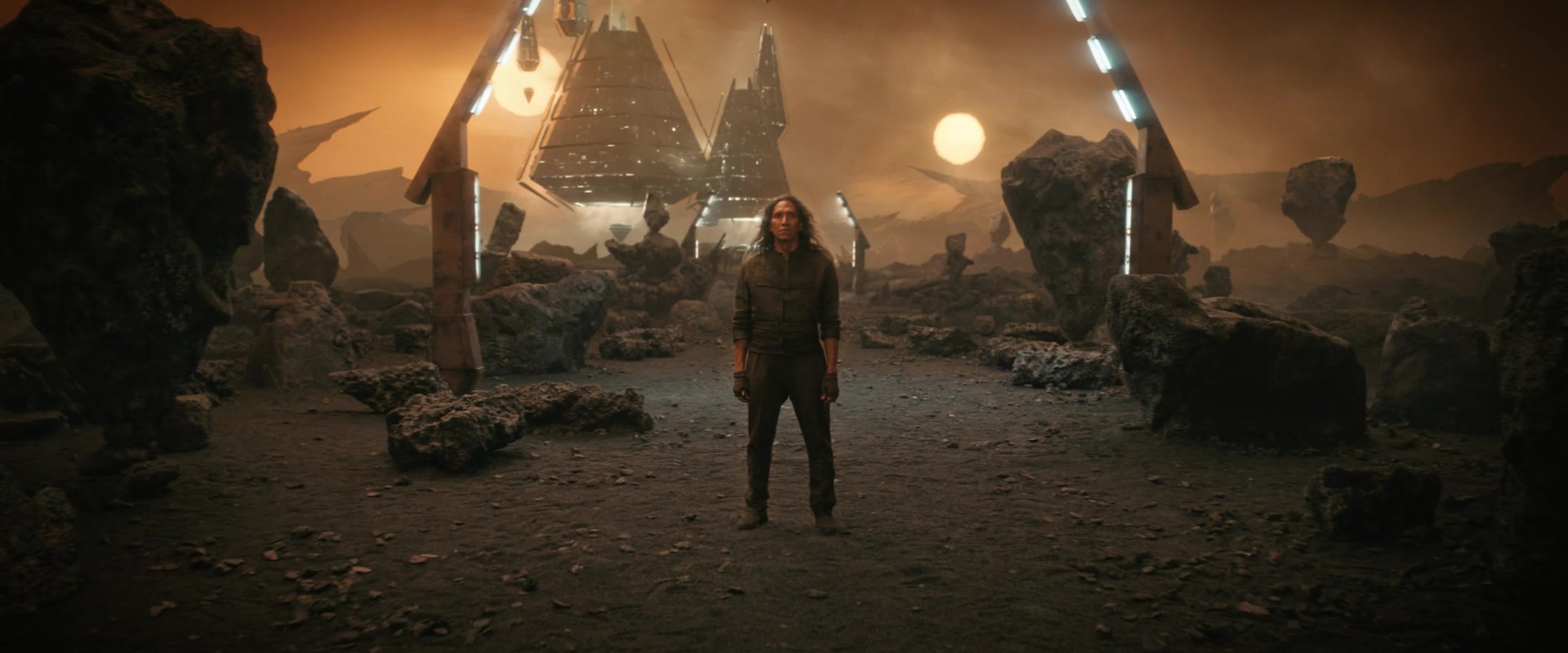
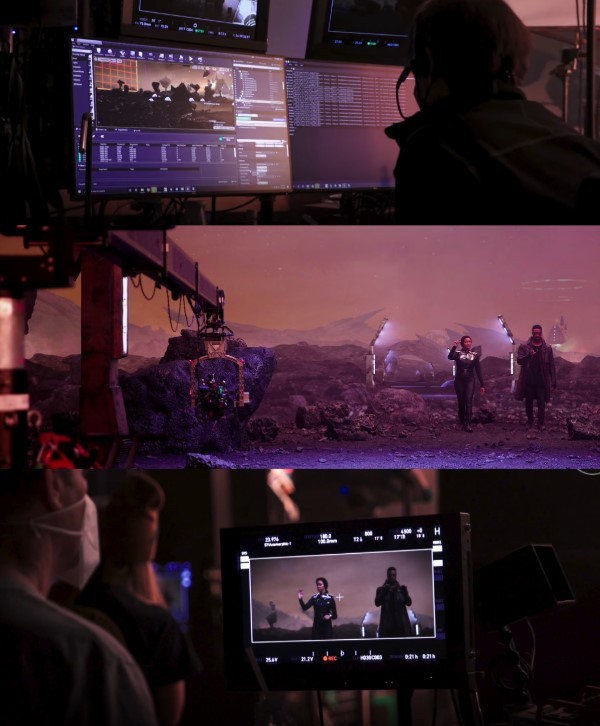
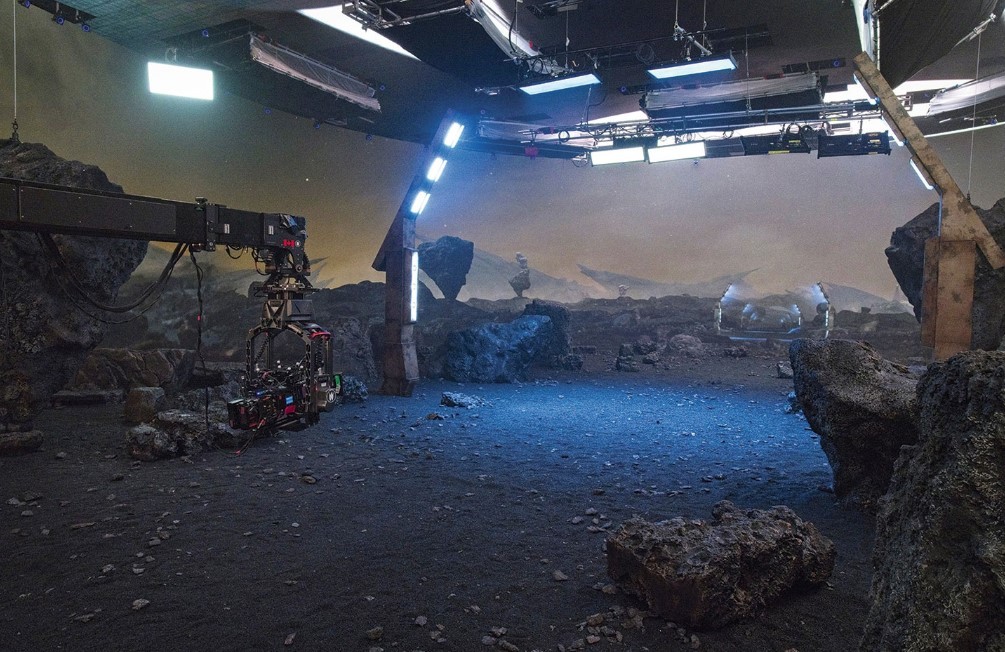
Unreal Engine has played a pivotal role throughout our entire virtual production and VFX pipeline at PXO, there really is no competition in the real-time space that integrates so well into existing industry standard packages. Unreal Engine seemed like an obvious choice.
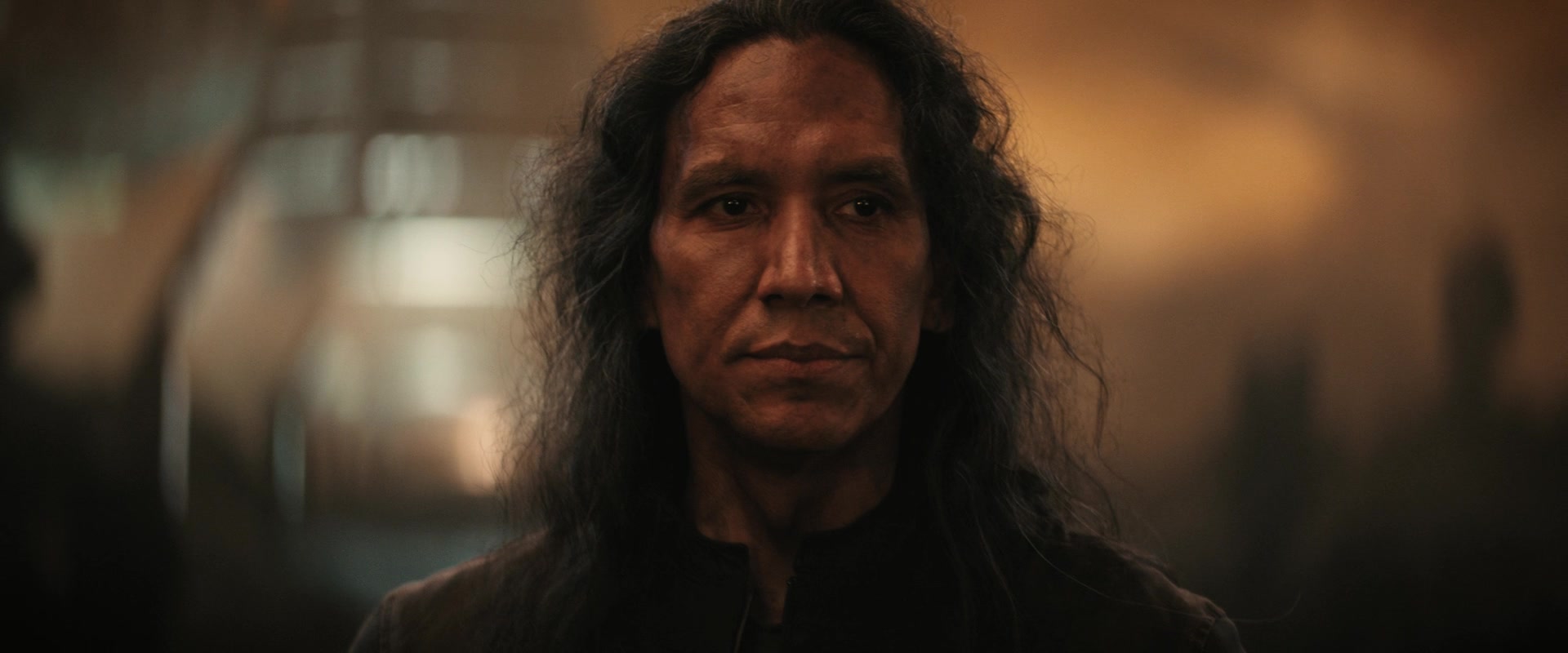
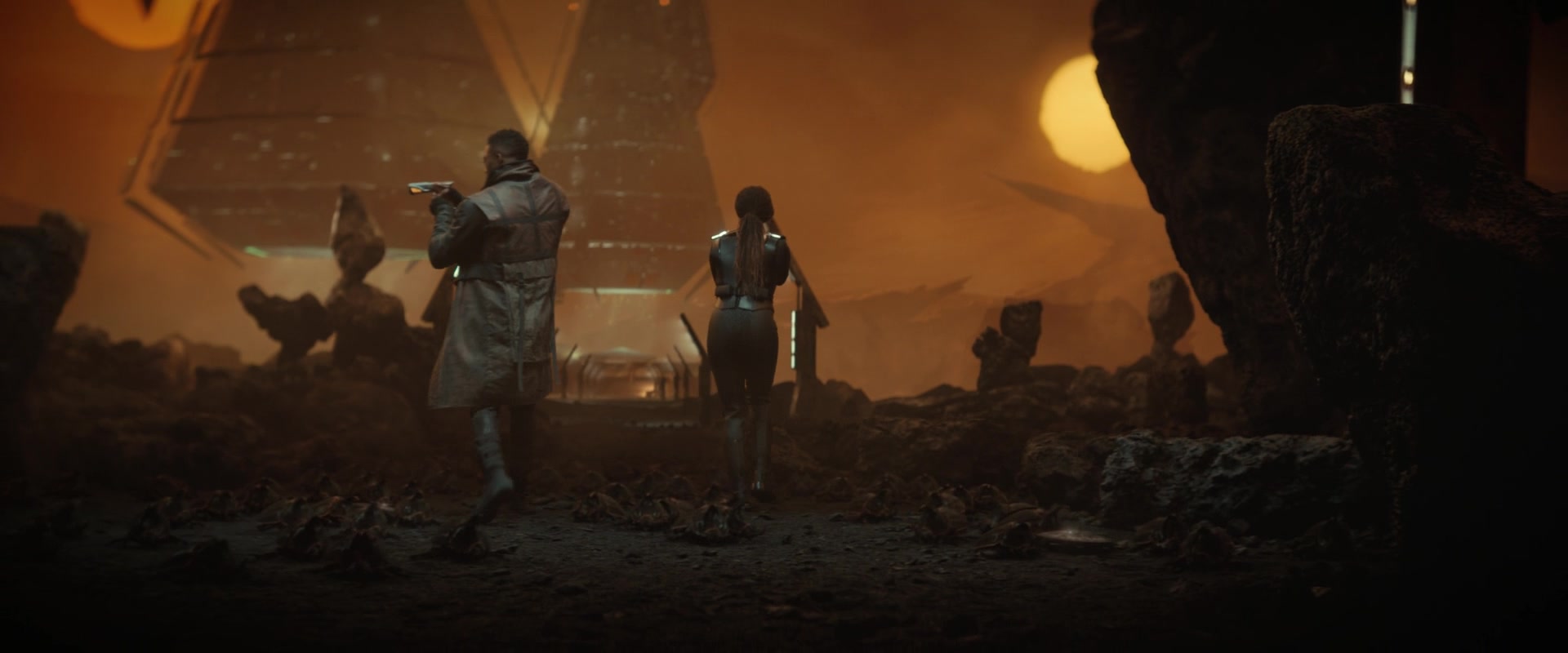
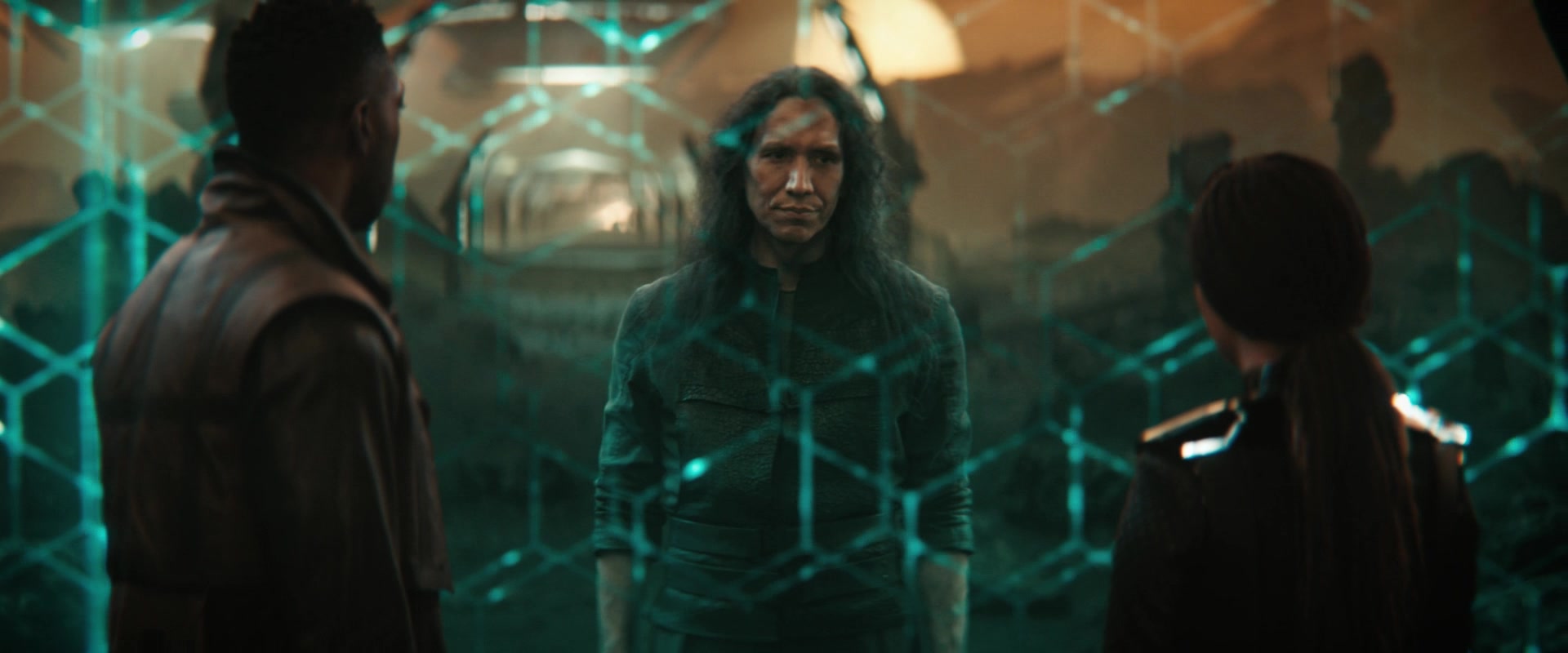
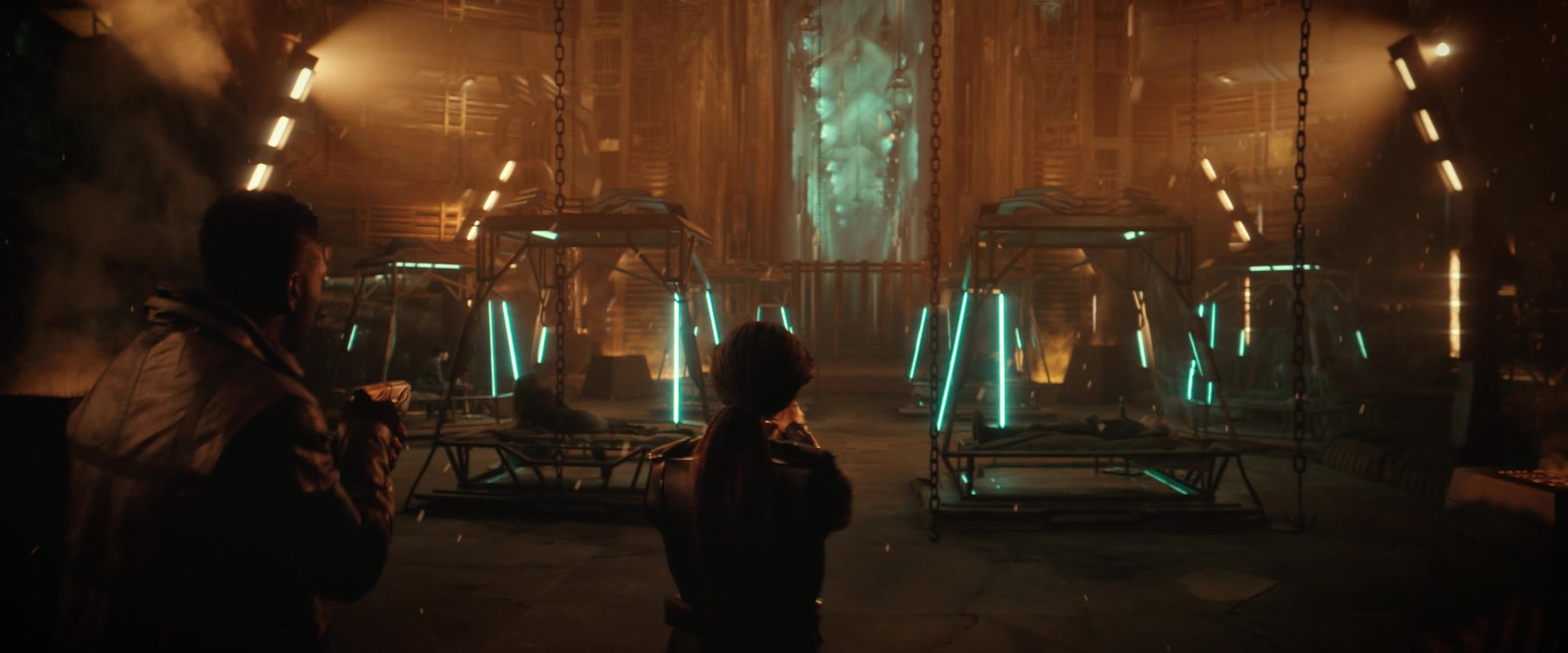
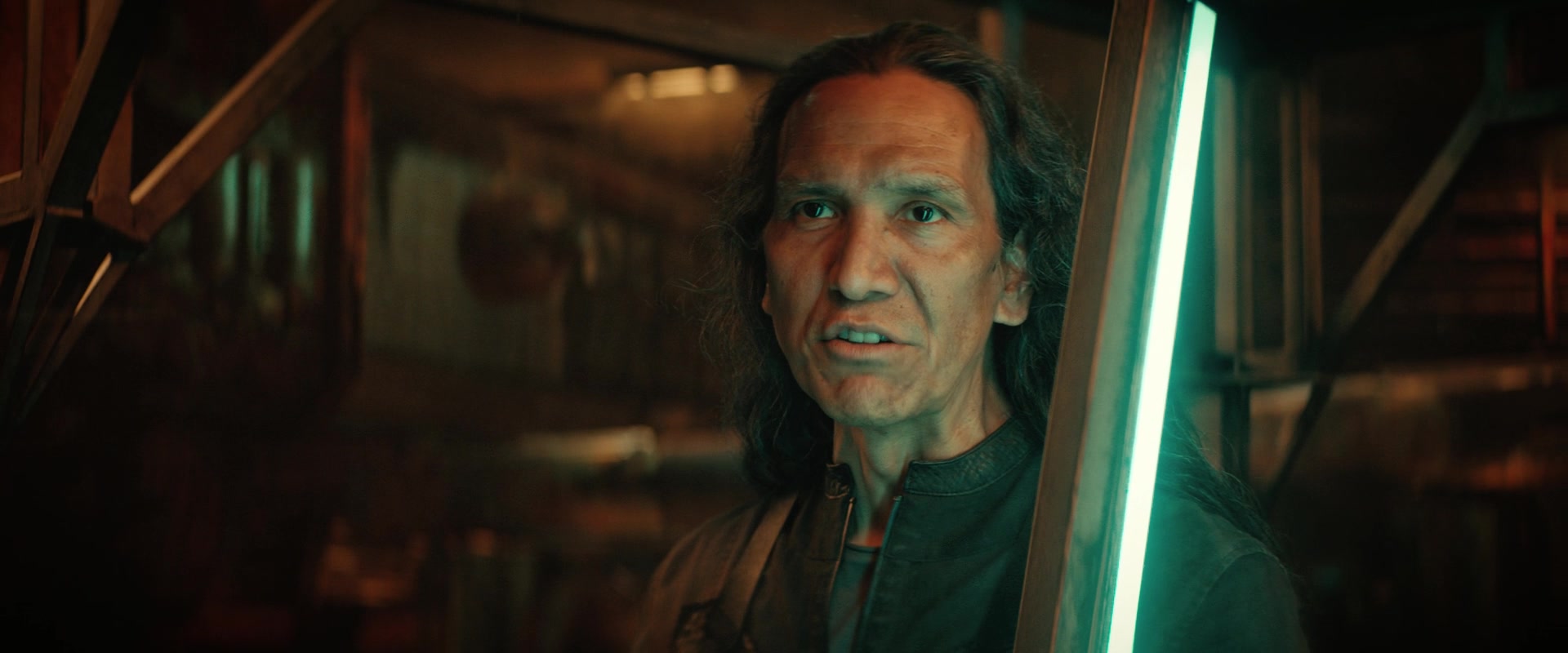
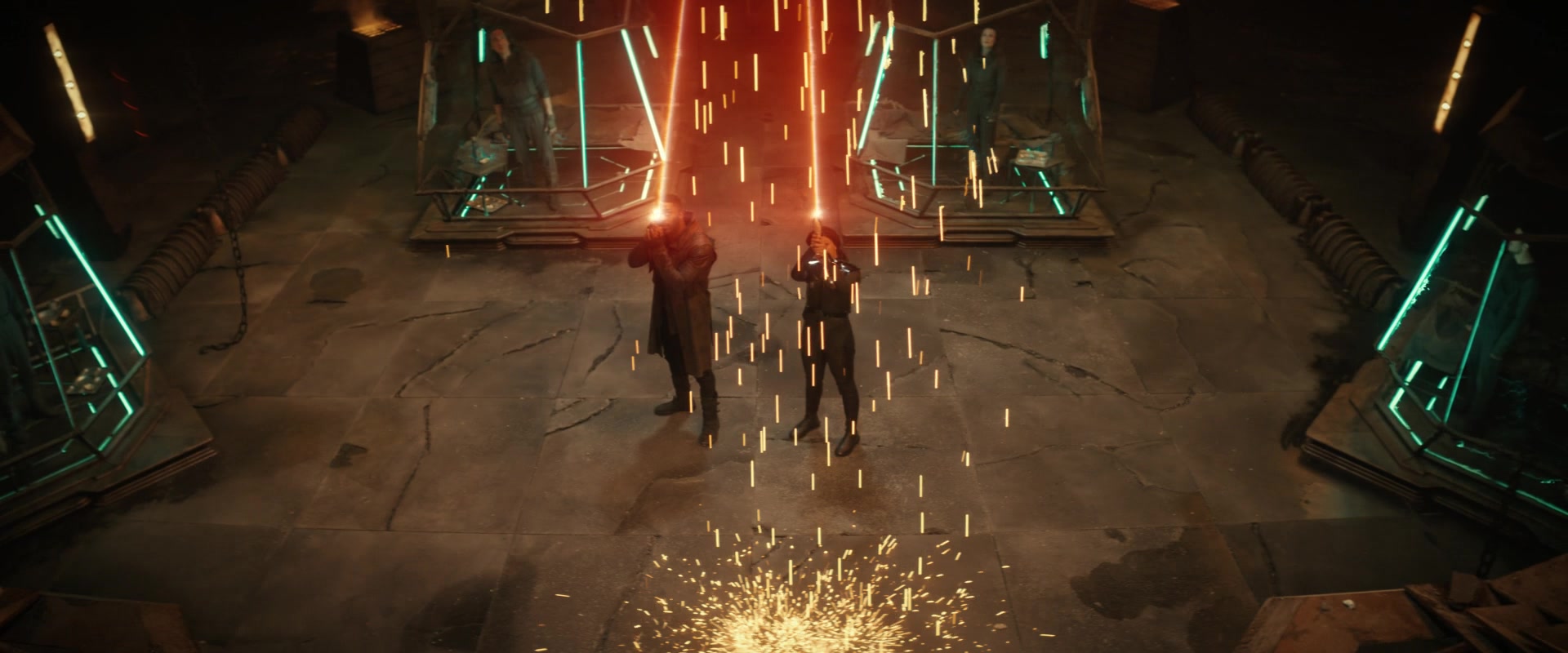
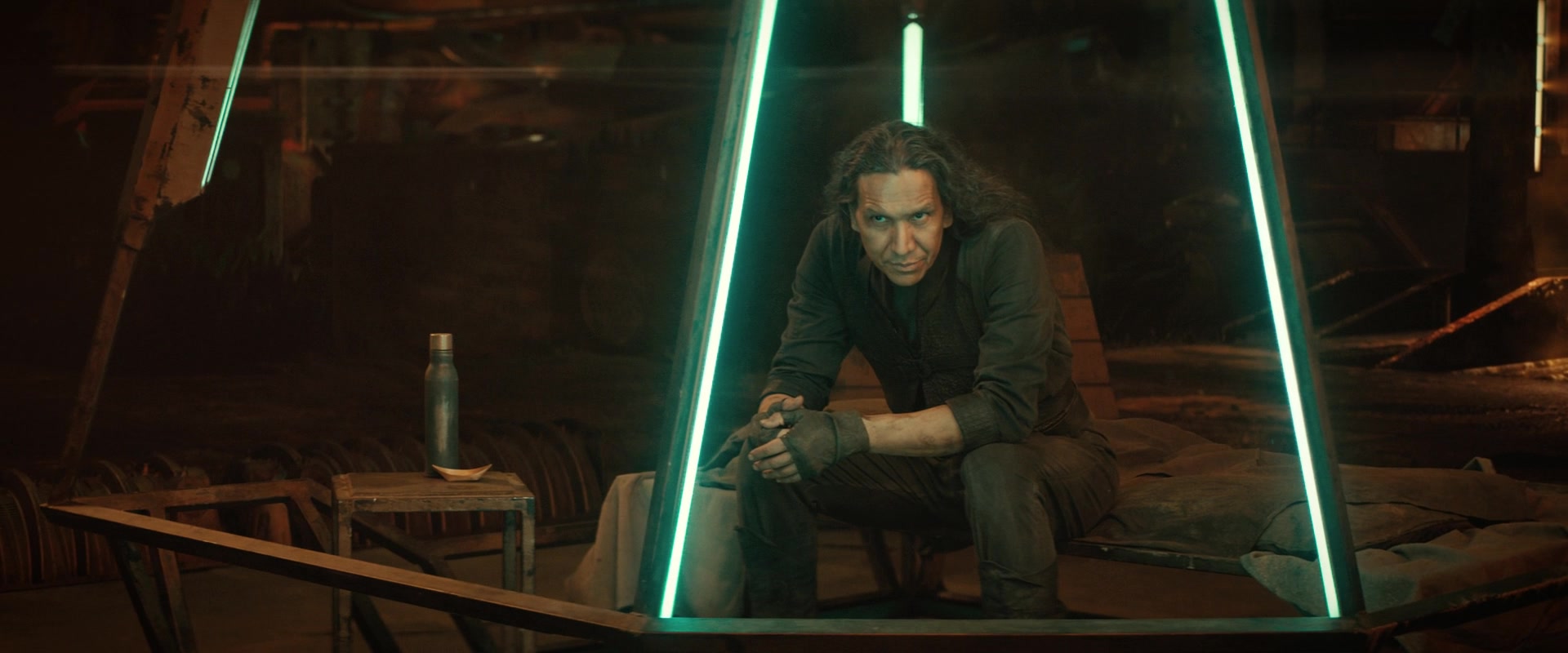
Characters walks inside the prision and sees many cages where the prisoners are kept.
Radvek Prison V Interior
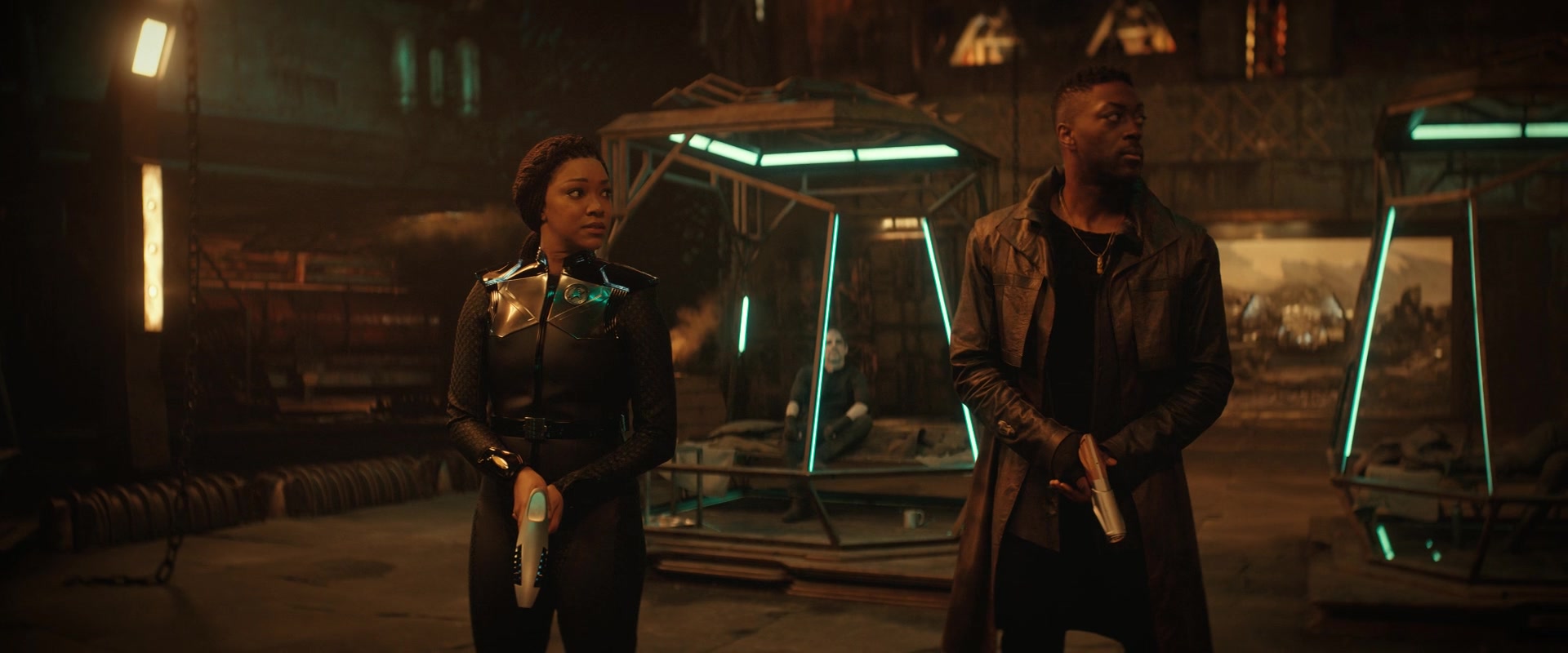
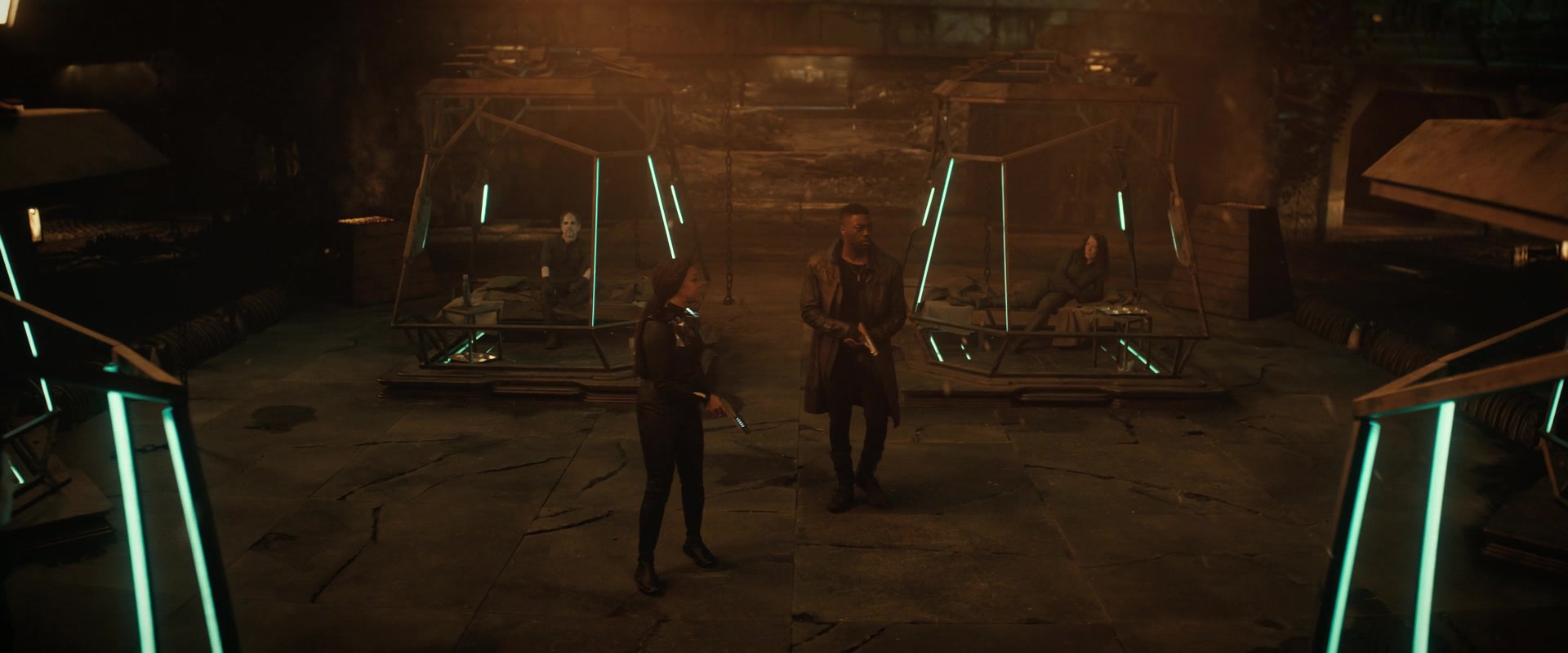
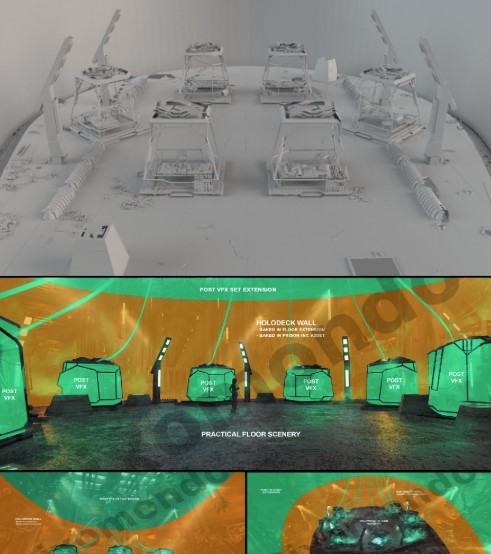
For the Radvek Prision environment, we mapped out exactly what had to be done by working directly with art department. Which section is going to be practically built versus the virtual content that will be loaded on the LED volume as well as the shield FX that will be completed in post VFX.
This environment is a good example of a technique we call "French Reverse" where the physical set is designed to be symmetrical, allowing us to quickly flip the virtual environment 180 degrees and shoot the opposite direction without having to move the physical set and maximizing the shoot efficiency via smart set design. Our Virtual Art Department worked hand in hand with the Art Department and Production Designer to come up with these cost effective ways to utilize Virtual Production.
Moonlet
月霊廟
The Moonlet Mausoleum is presented as a hallowed and ancient resting place, carved into a drifting fragment of a shattered moon. It serves as a sanctuary of remembrance where cultures preserve the memory of their dead in a setting that feels both sacred and alien. Our Virtual Art Department created both 2 key hotspots within the space, achieving one of the most difficult environment of the season that taught us alot about Virtual Production.
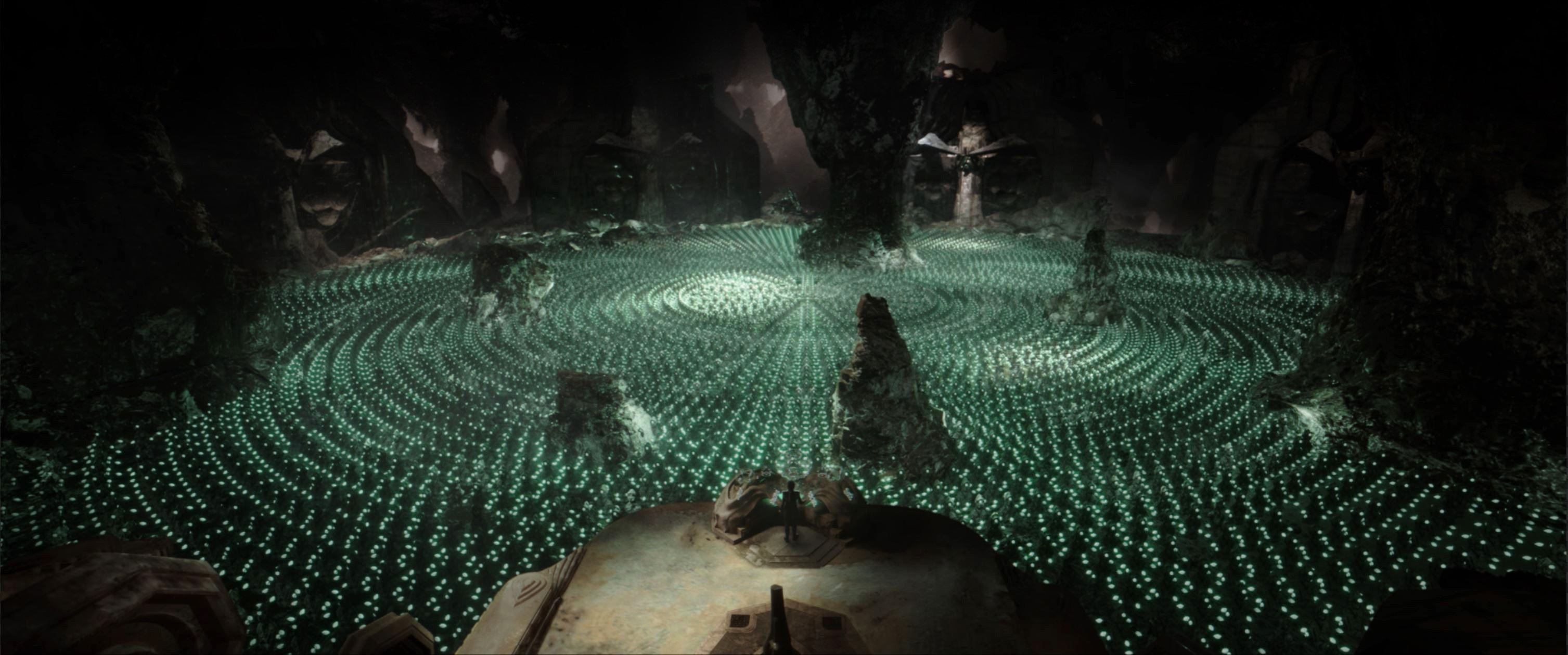
Moonlet Mausoleum Ground Floor
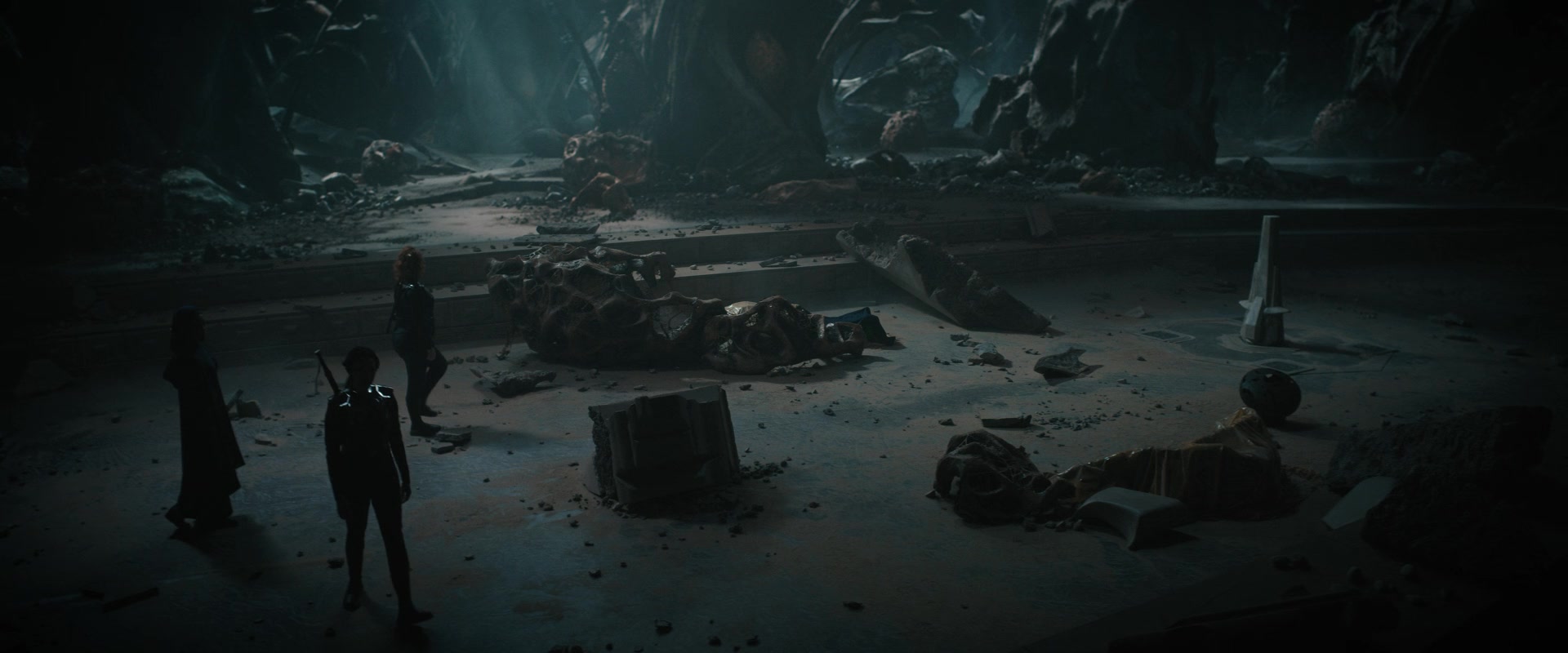
The Moonlet Mausoleum in Star Trek: Discovery Season 4 was a striking example of immersive worldbuilding through virtual production. Designed as a solemn, otherworldly memorial site nestled within a small celestial body, the set combined intricate digital environments with physical staging to evoke both grandeur and intimacy. Its ethereal lighting, vast spatial design, and layered details created a hauntingly beautiful atmosphere, underscoring the emotional weight of the scenes filmed there while showcasing the series’ commitment to cinematic-scale storytelling.
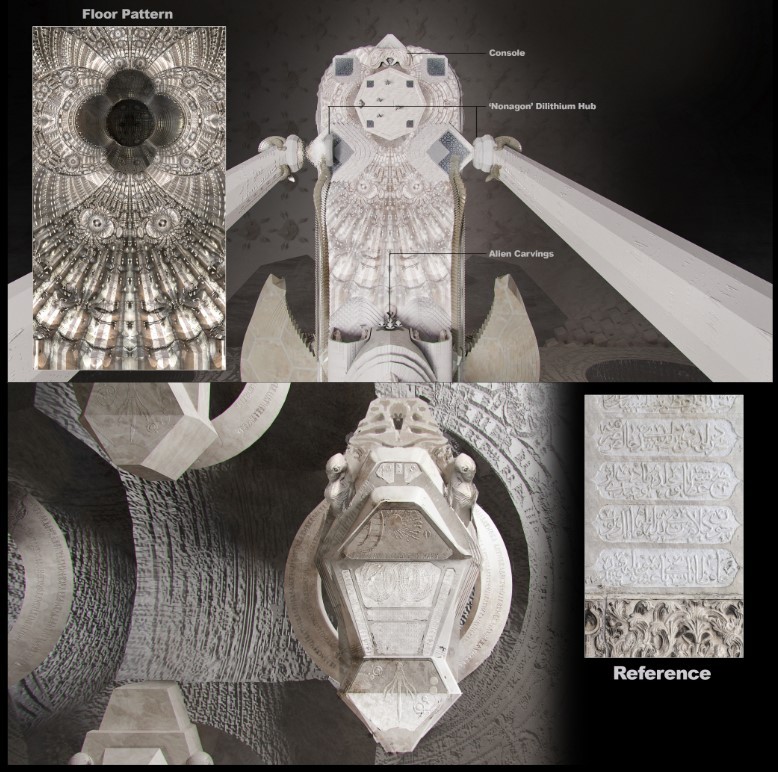
Carvings and details were seen throughout the space on walls, floors etc showcasing the rich ancient history of the location.
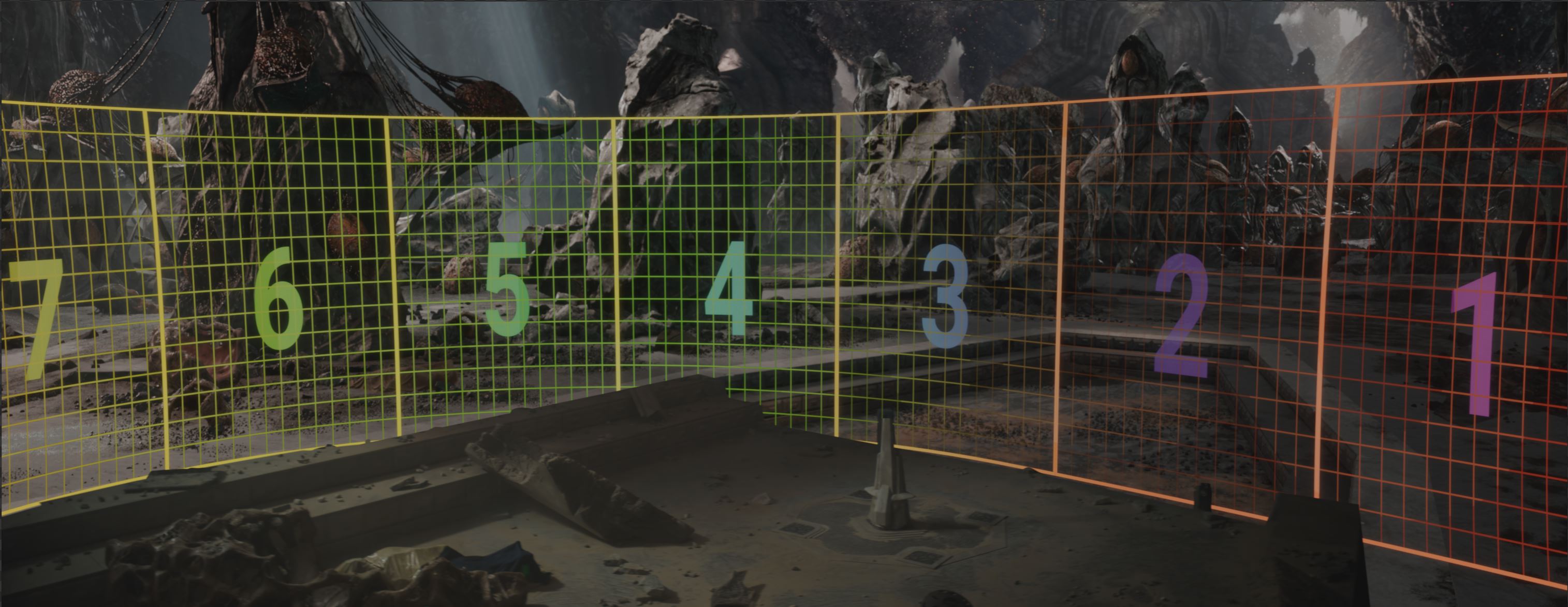
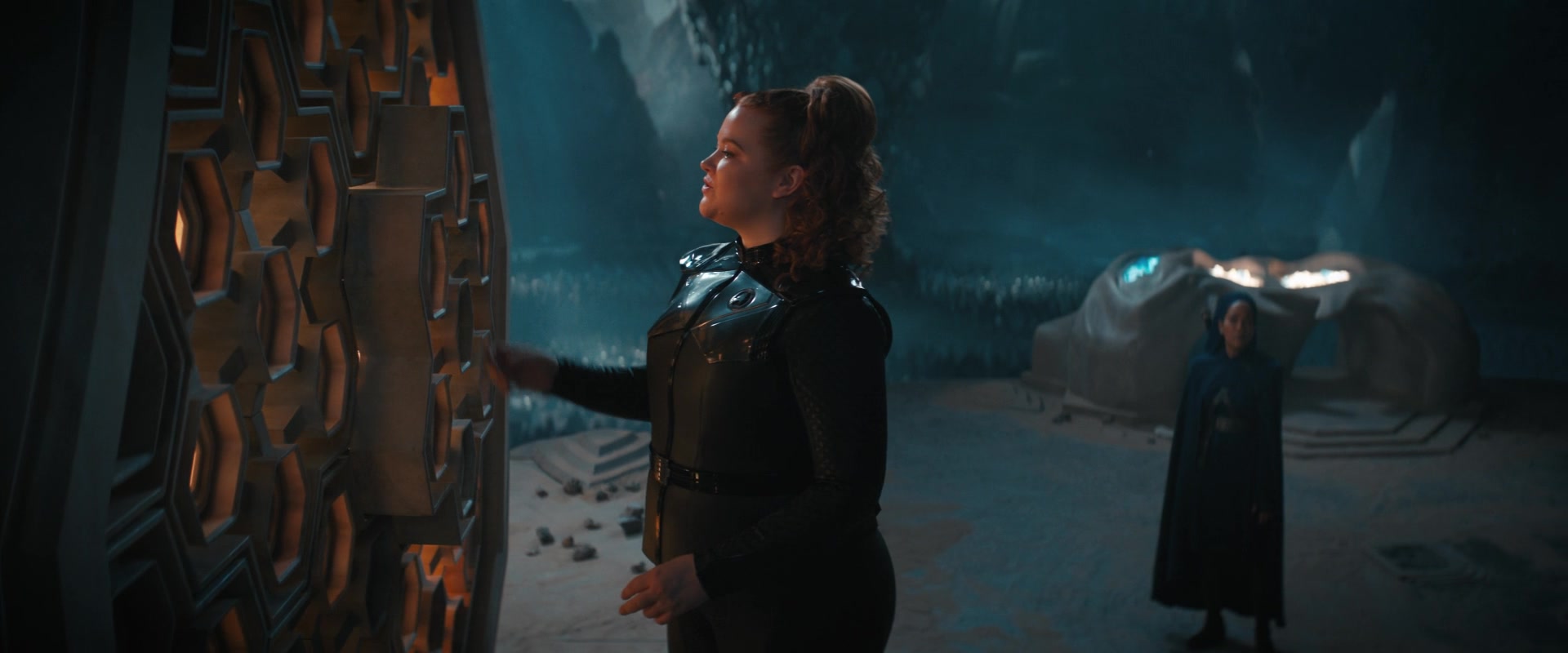
Designing the blend point for Virtual Production can be tricky. In this example we had to extend the steps and ground into the virtual space yet it came with a very intricate pattern carved onto the floor. Thankfully we were able to sprinkle some dust and dirt to help with the blend and essentially masked the seams.
The Moonlet environment was one that we learnt the most on during this season. It posed some of the most challenging issues in virtual production that the team had to overcome.
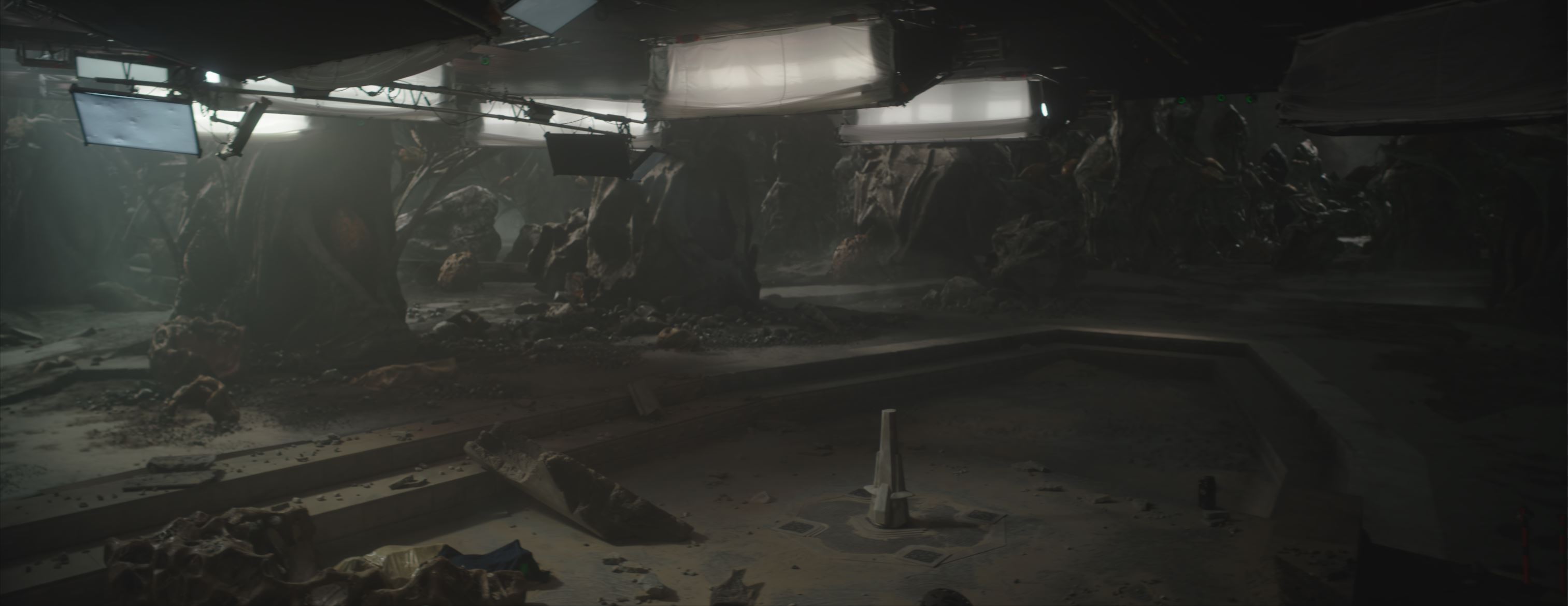
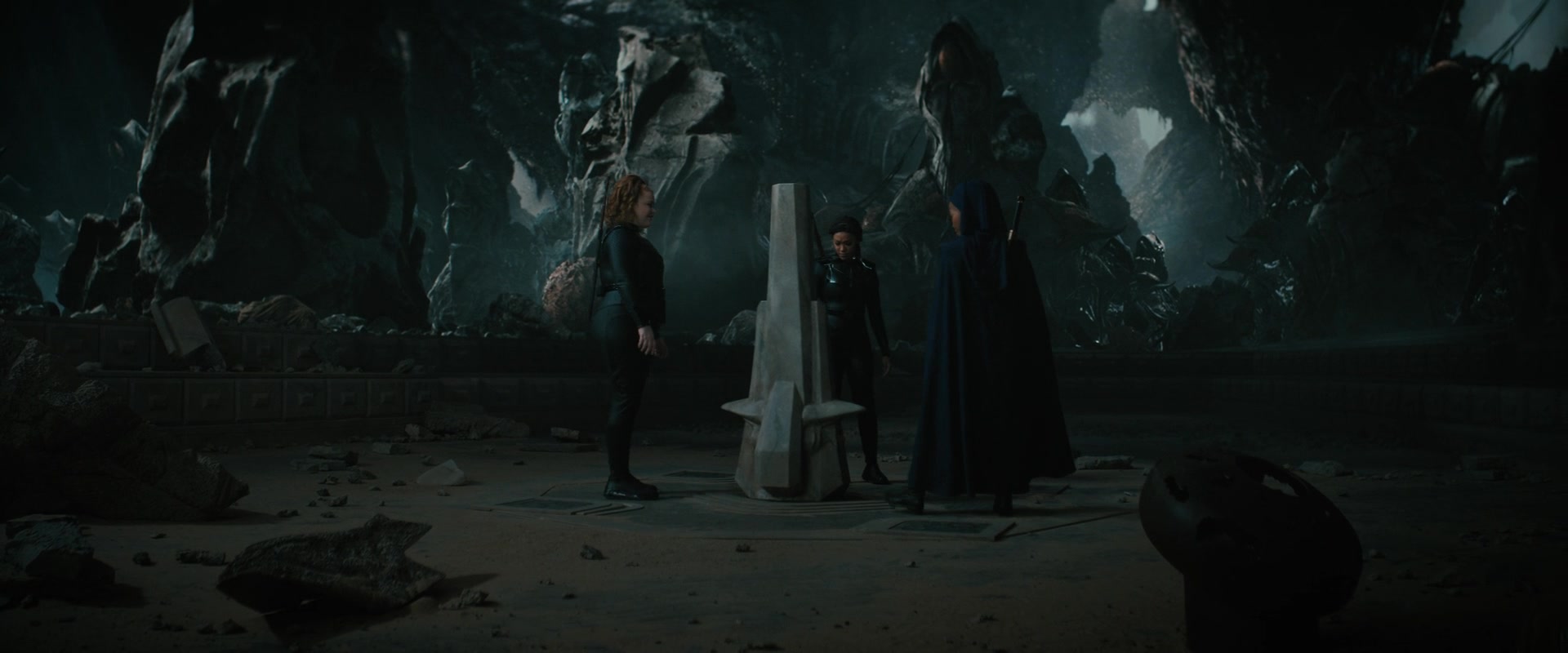
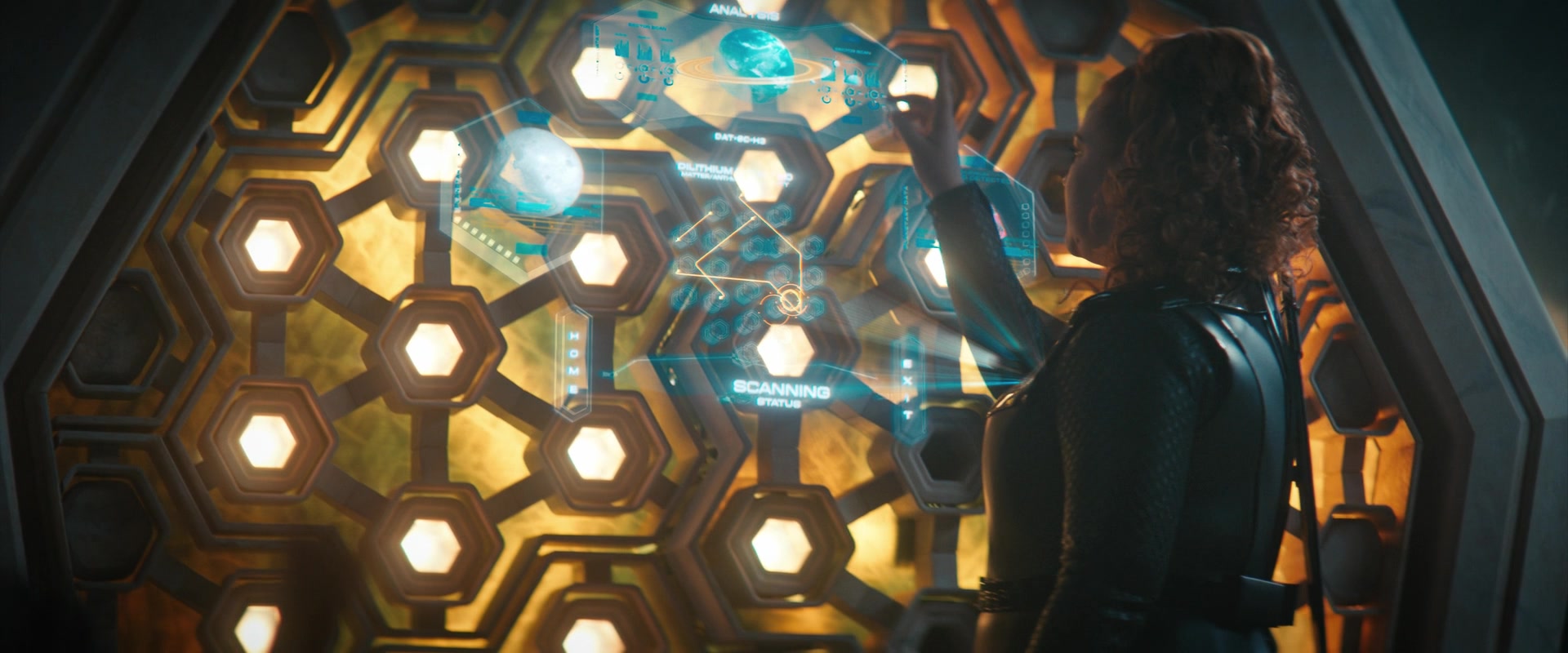
Characters gather in the center and activates the elevator that lift them into the higher levels.
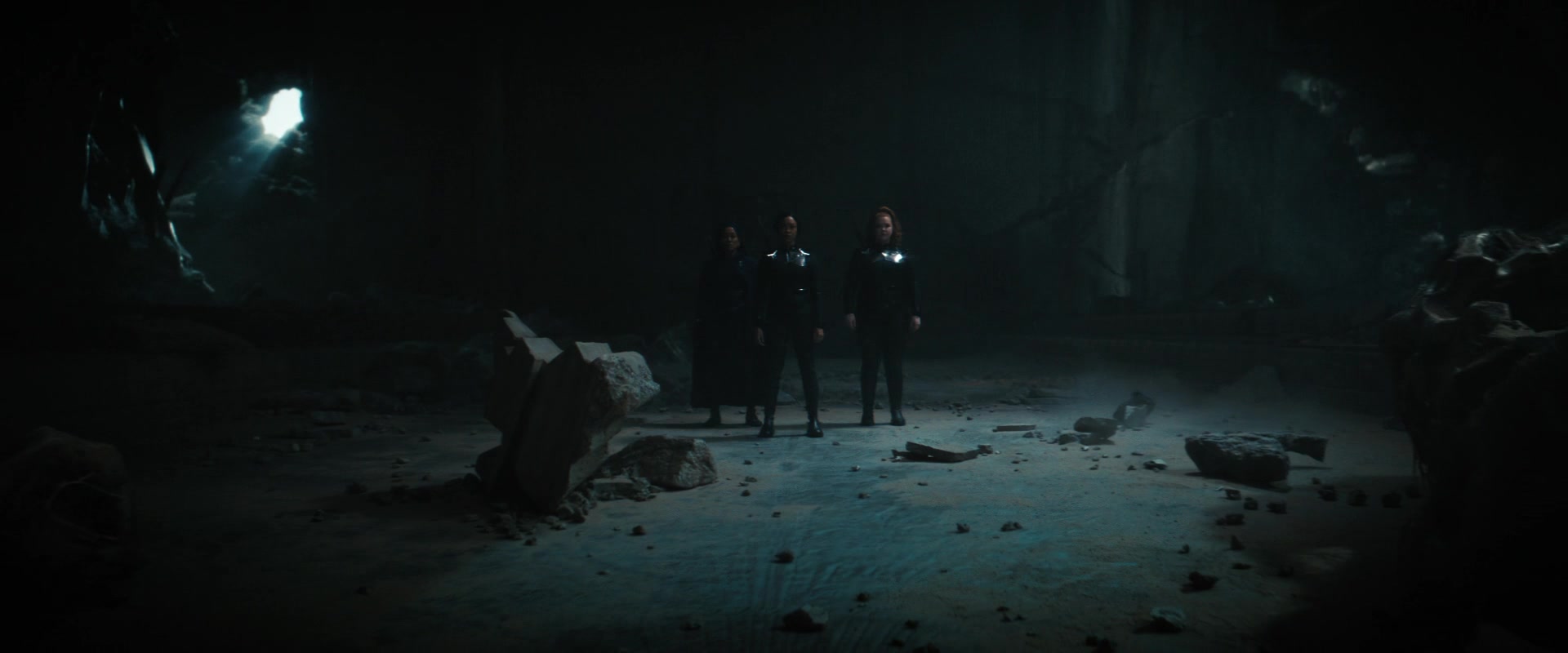
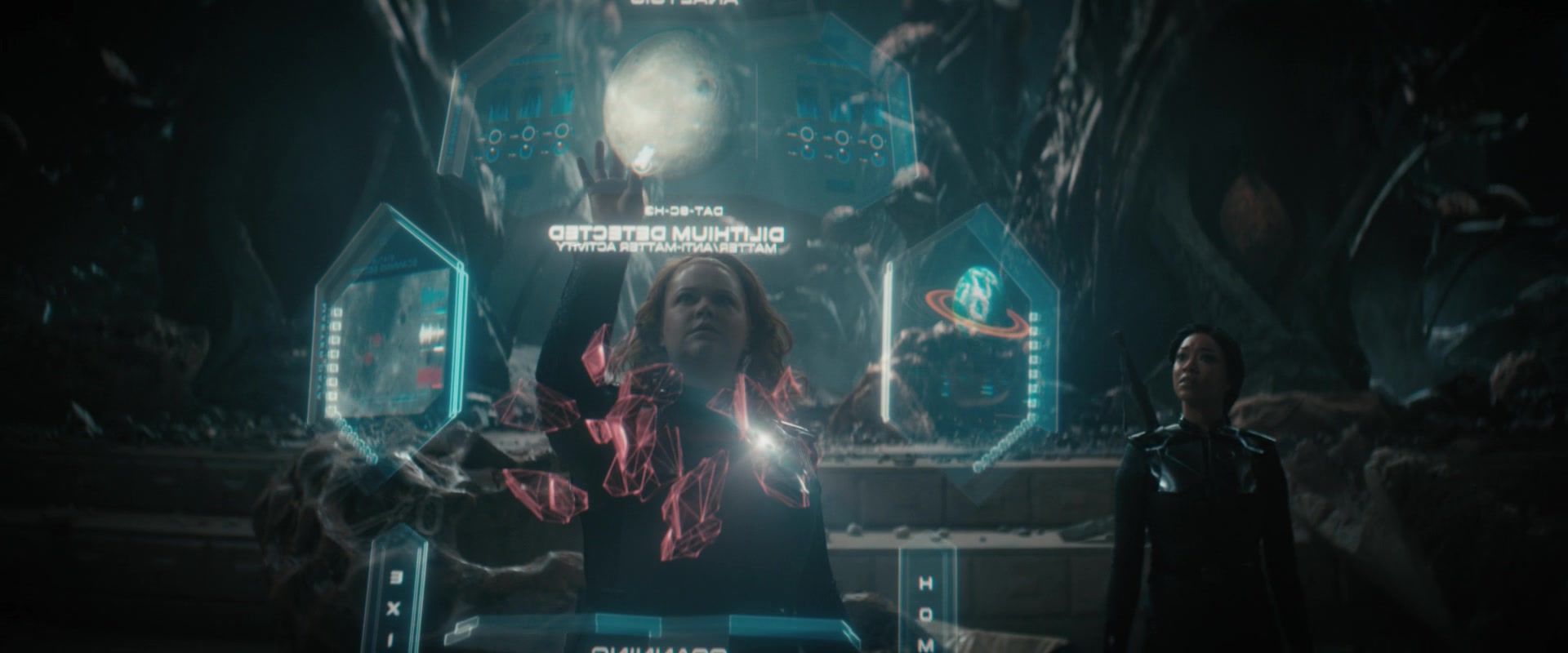
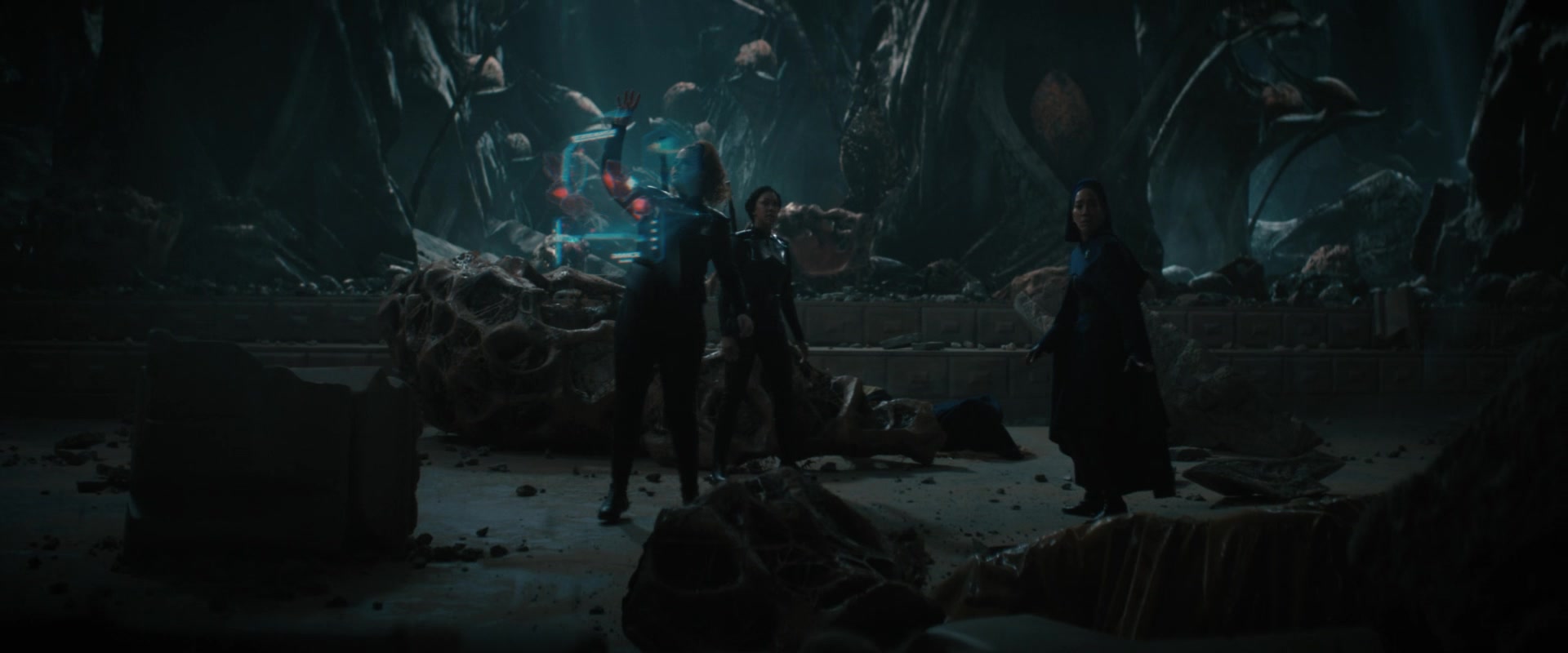
To integrate Unreal Engine with industry staples like Maya, Houdini, Substance, and Nuke, PXO rethought its asset pipeline. Instead of building separate high-res and low-res versions, the team adopted a fully Unreal-driven, procedural approach. This delivered high-resolution assets comparable to offline renders while cutting render times dramatically. We began utilizing more gaming techniques utilizing tile-able textures and RGB masks to control the details in a much more optimized manner.
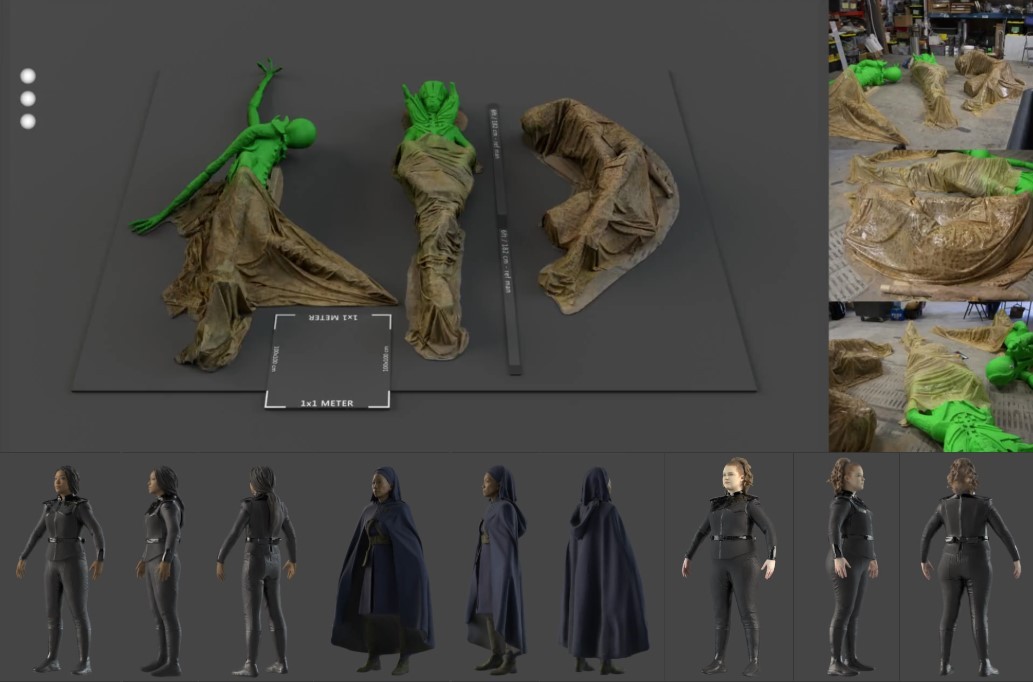
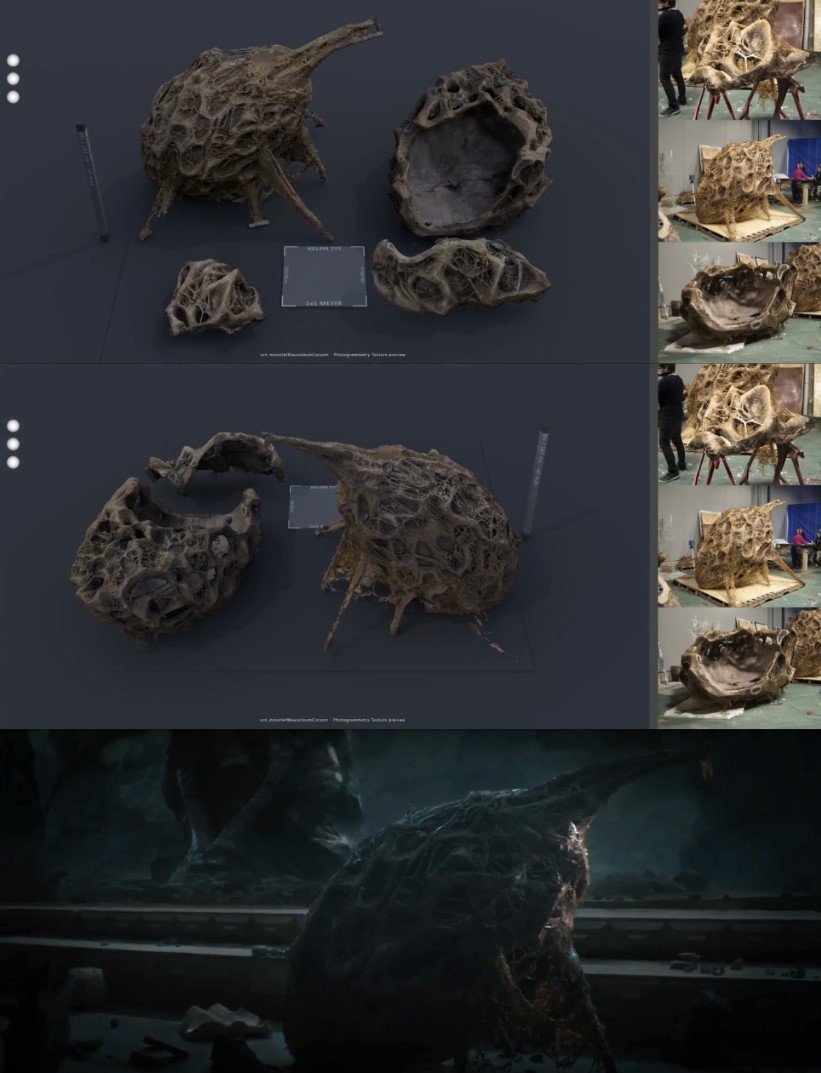
Moonlet Mausoleum Higher Floor

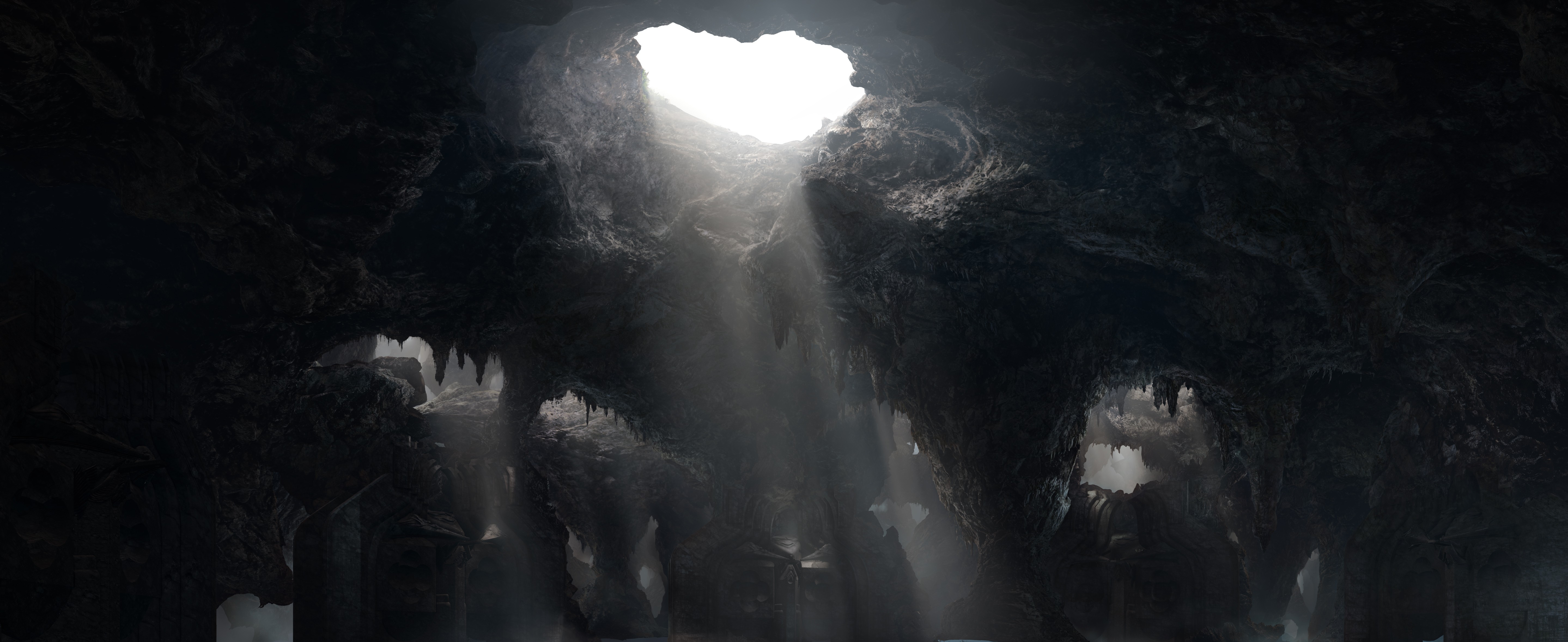
DMP Cavern with lighting as additive layers in the material while keeping flexibility of lighting during a limited time of UE 4.27
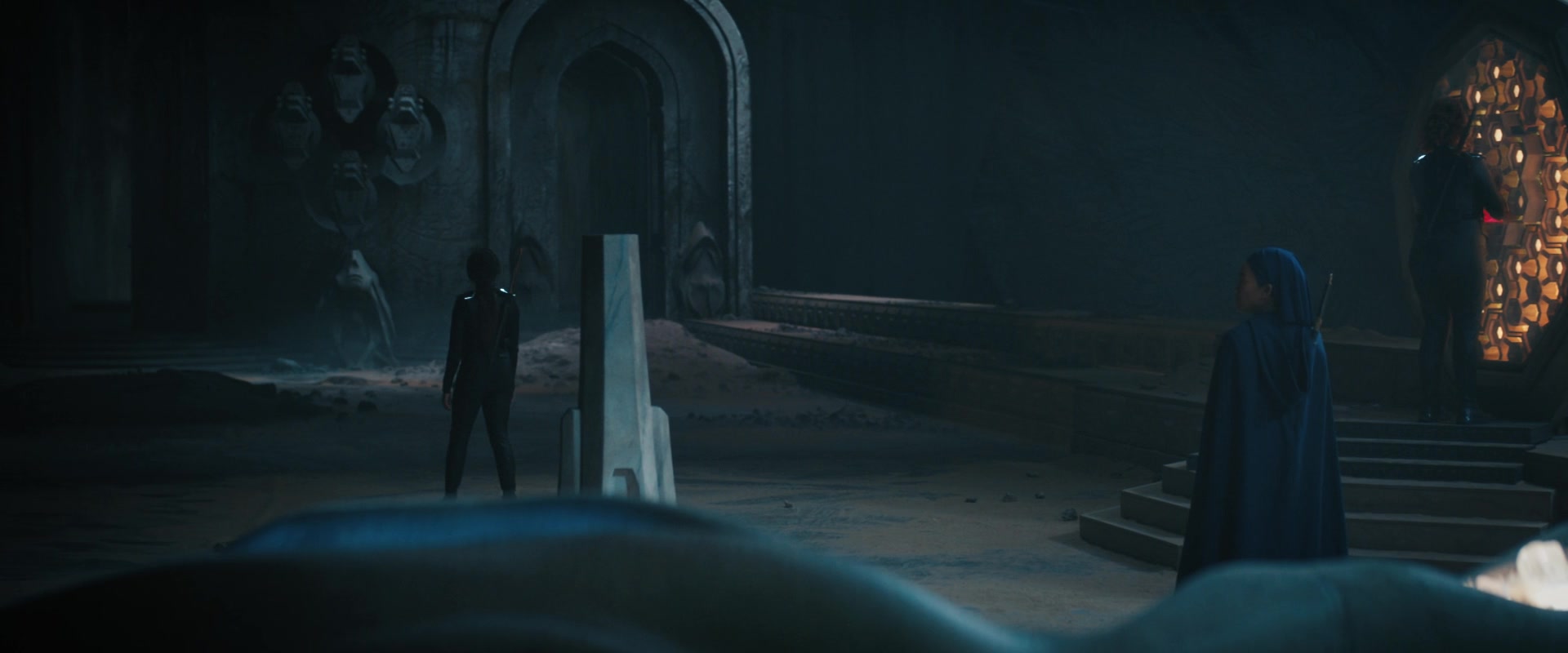
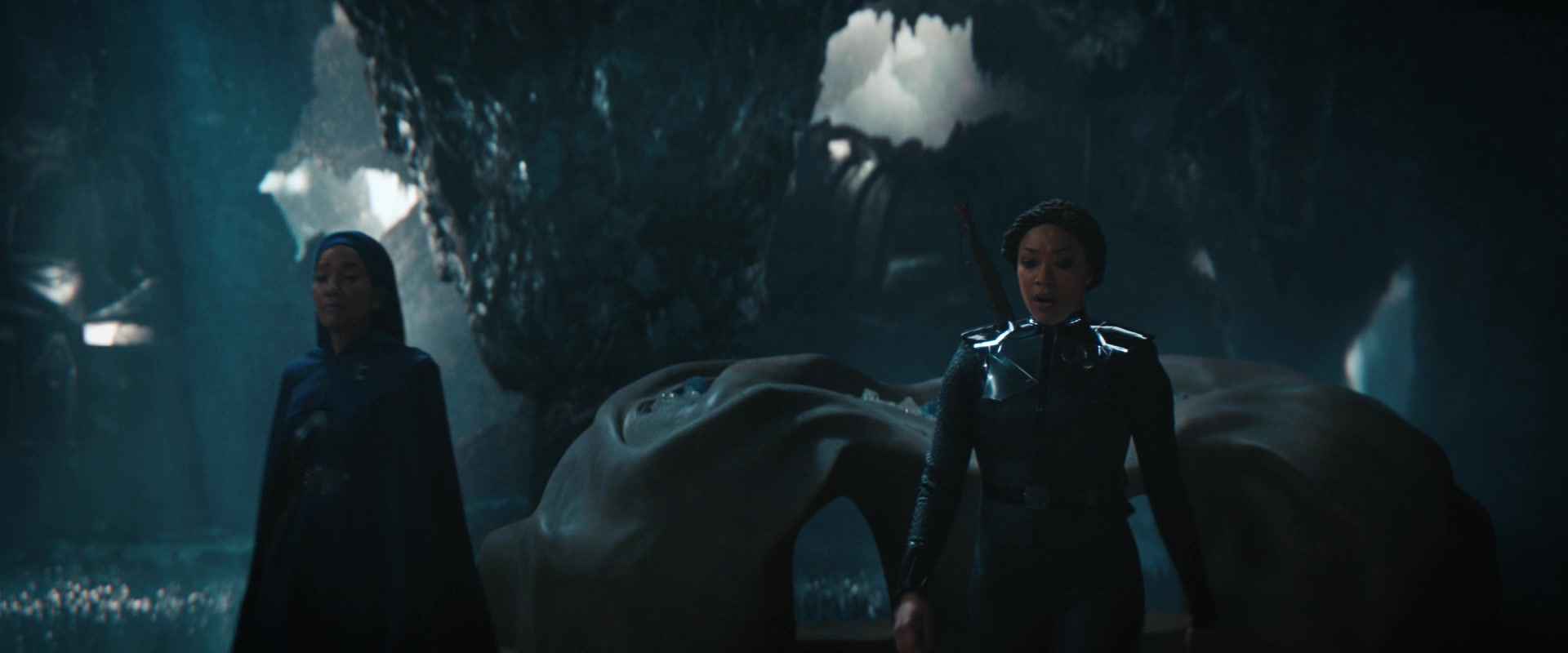
The massive cavern had to be filled with thousands of pods and rock columns, a challenge in the days of Unreal Engine 4.27 before Nanite was available.
To overcome this, we relied on matte painting techniques, converting the distant areas into proxy geometry and cards. By layering the scene like an onion—from high-resolution geometry in the foreground to simplified cards in the far background—we preserved performance while still conveying the scale and grandeur of the space within the limits of the technology.
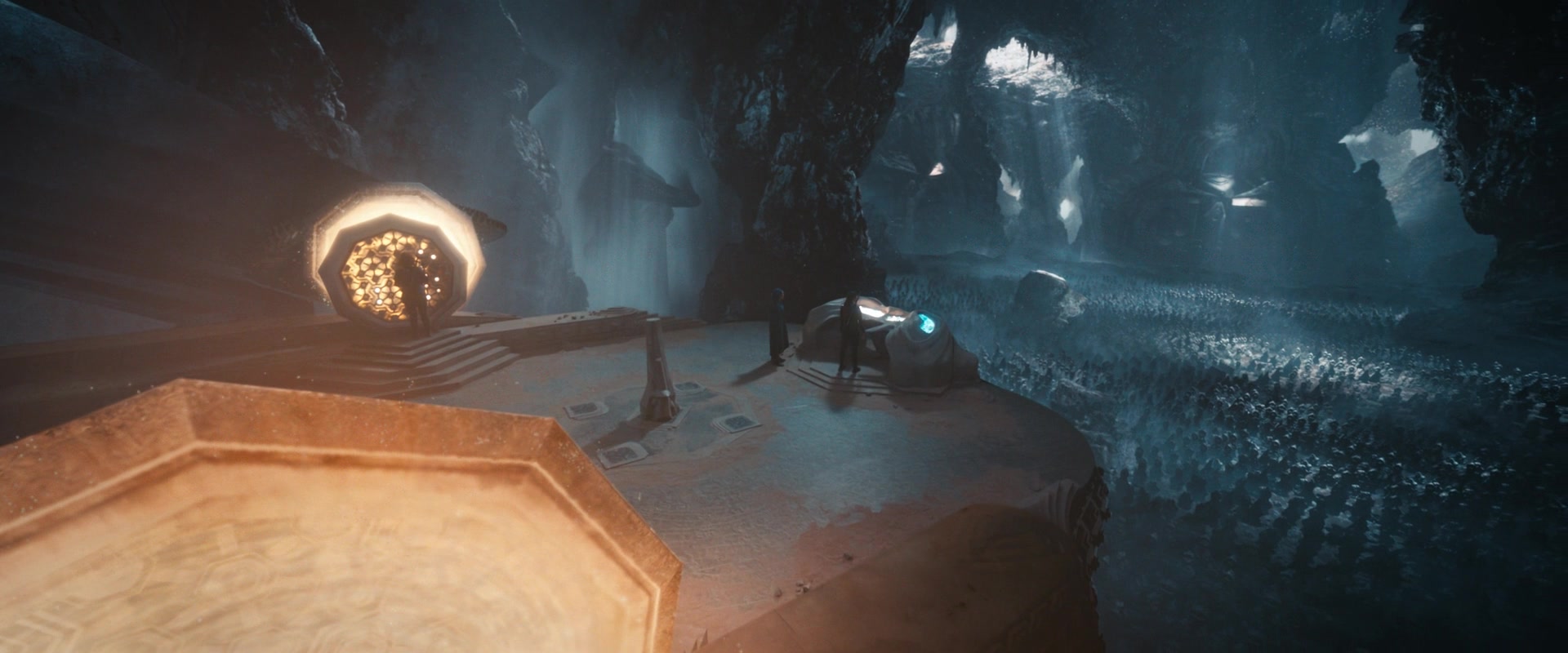
View from the higher floor looking at the vast cavernous space populated with many pods.
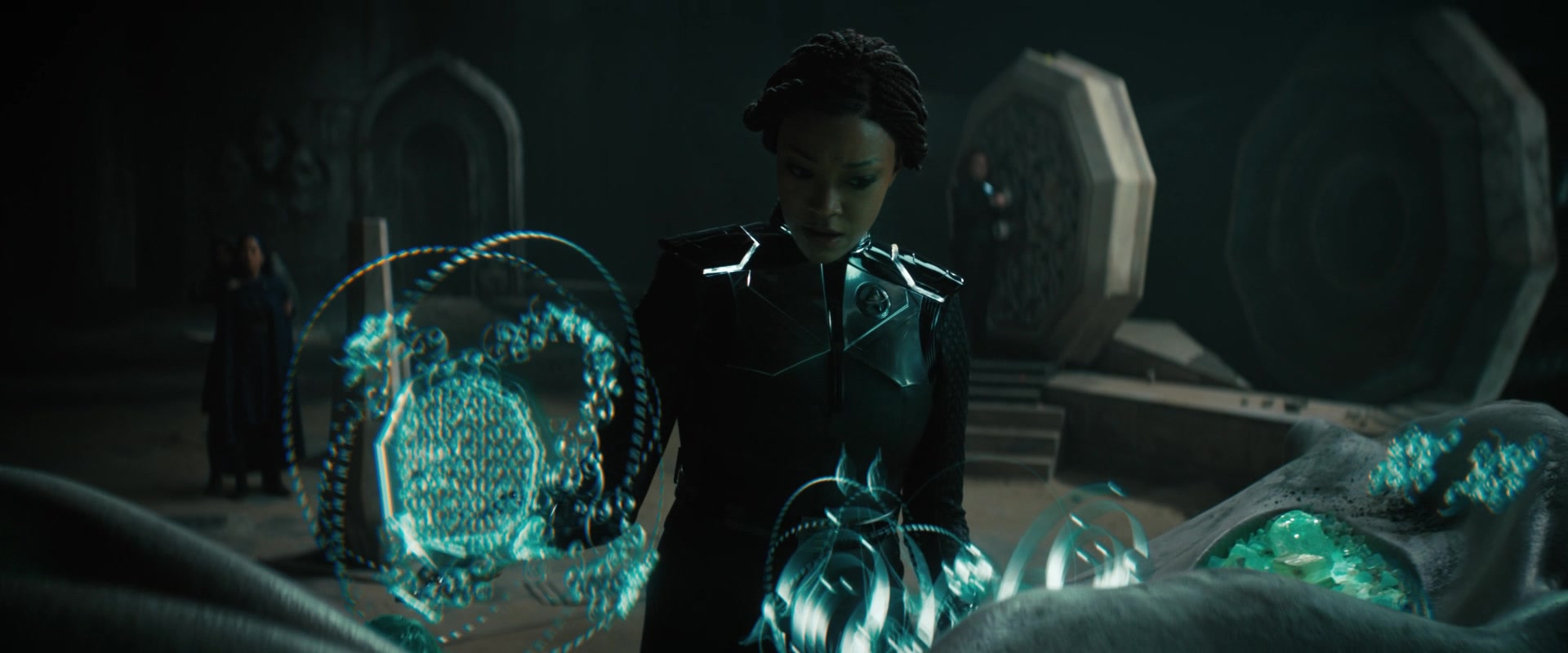
Discovery Shuttlebay
ディスカバリーシャトルベイ
The Discovery Shuttlebay is an iconic set that is familiar to us since season 1 of Star Trek : Discovery. We are proud to be able to now prepare it for the big LED volume for Virtual Production Shoot as well.
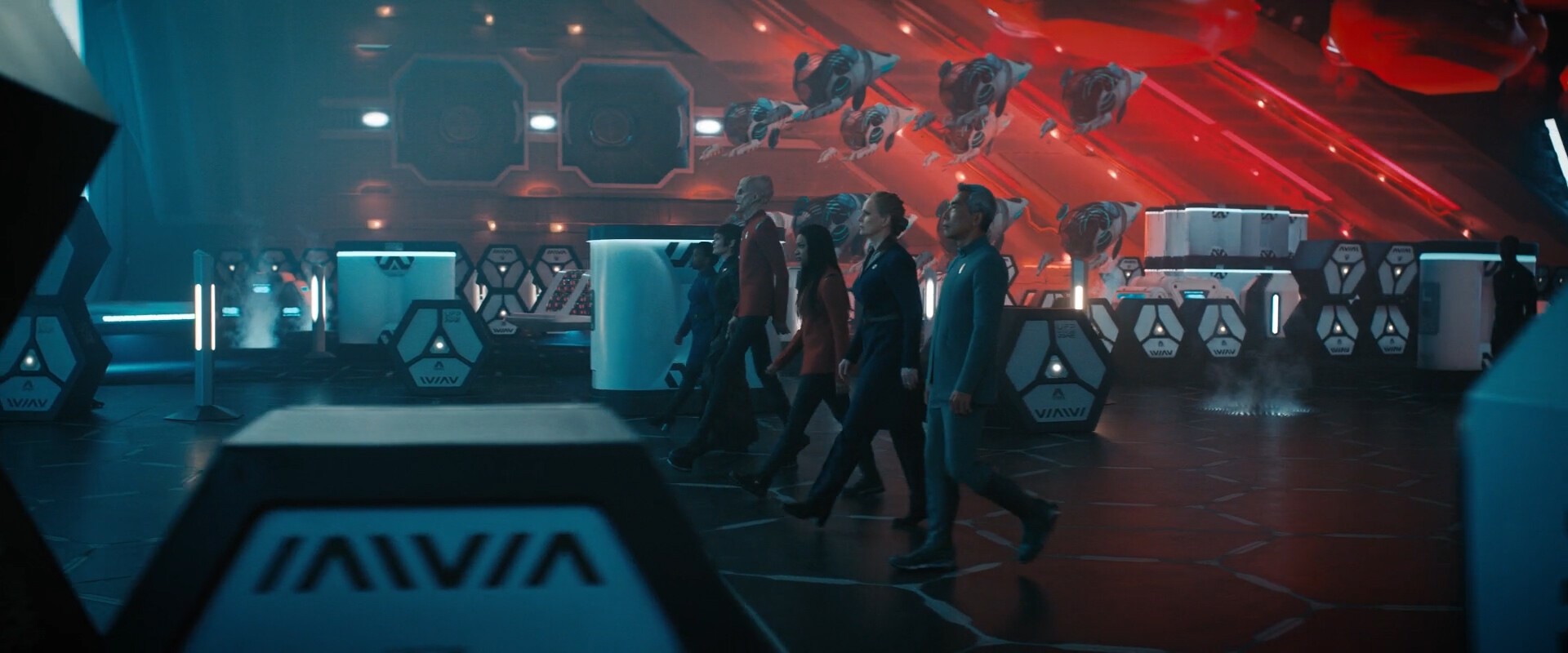
Discovery Shuttle Bay
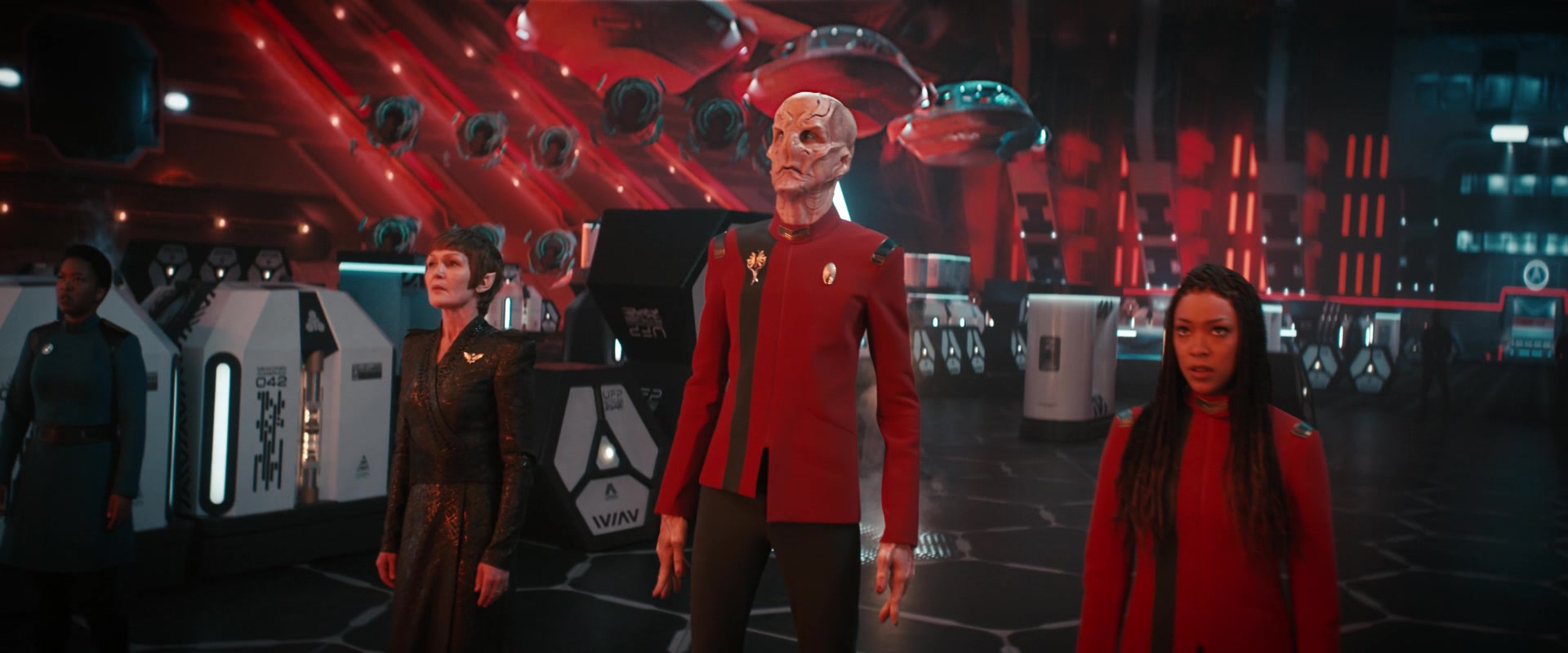
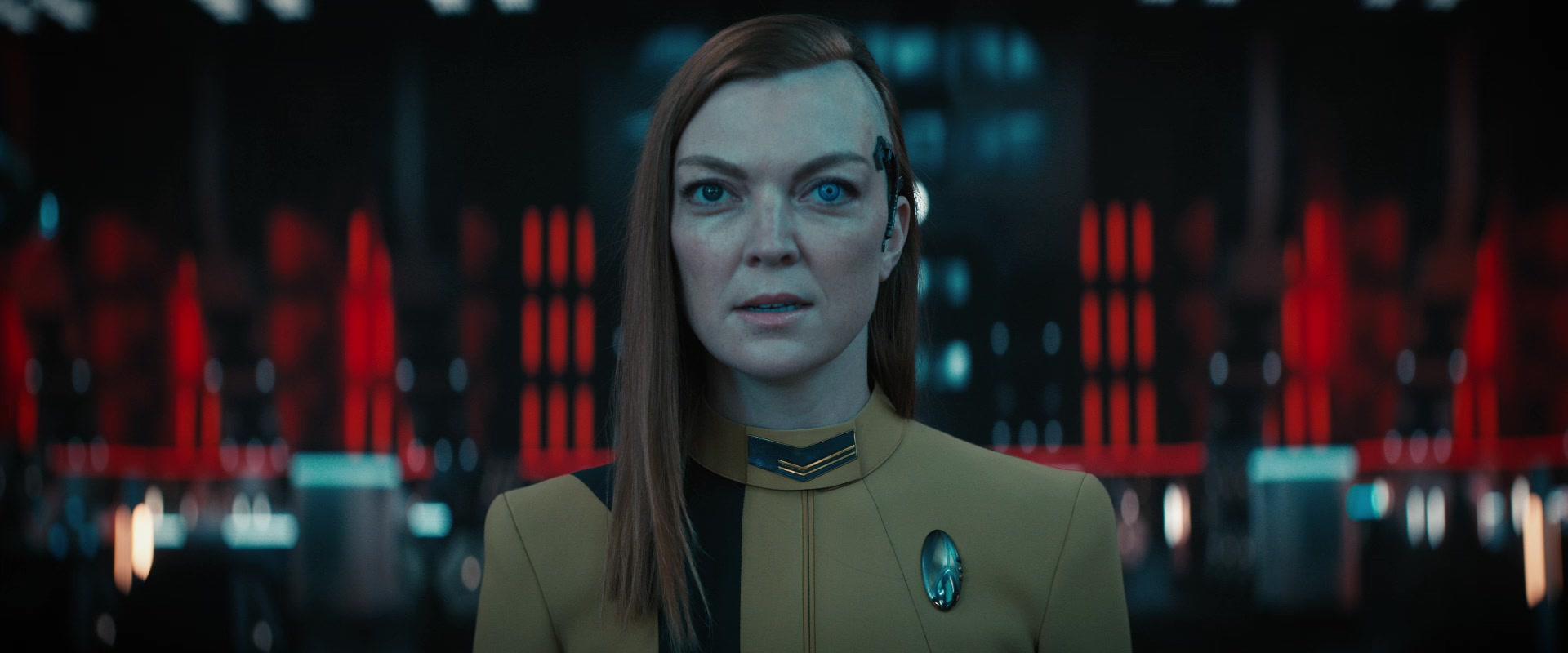
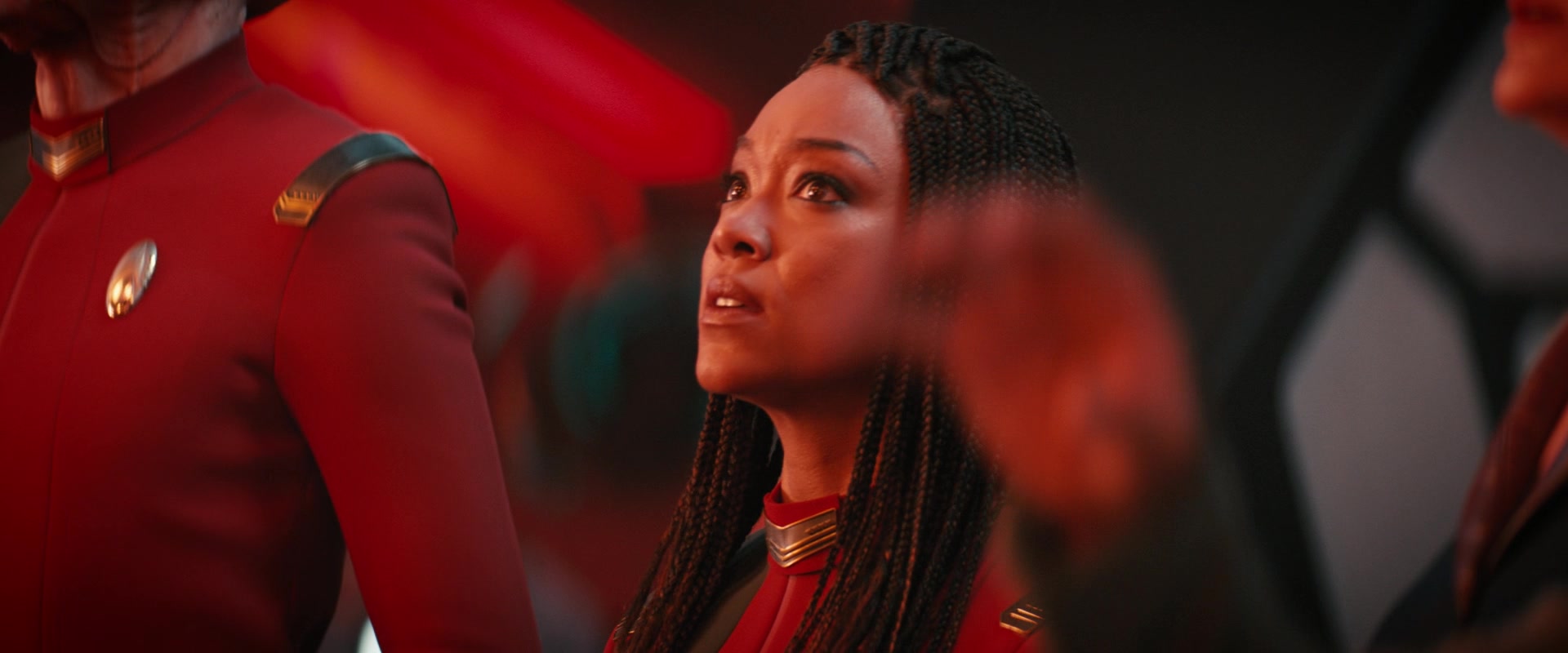
The Discovery shuttlebay is one of the show’s most iconic environments, serving as a central hub where action, drama, and character moments frequently unfold. Its versatility demanded countless lighting setups and atmospheric variations—ranging from docking sequences under stark illumination to intimate exchanges softened by moody shadows, enhanced with blinking panels, venting smoke, and layered effects. By building the shuttlebay as a real-time virtual production environment, the team ensured it could be revisited seamlessly across episodes and seasons, maintaining consistency while offering the flexibility to adapt instantly to new storytelling needs.
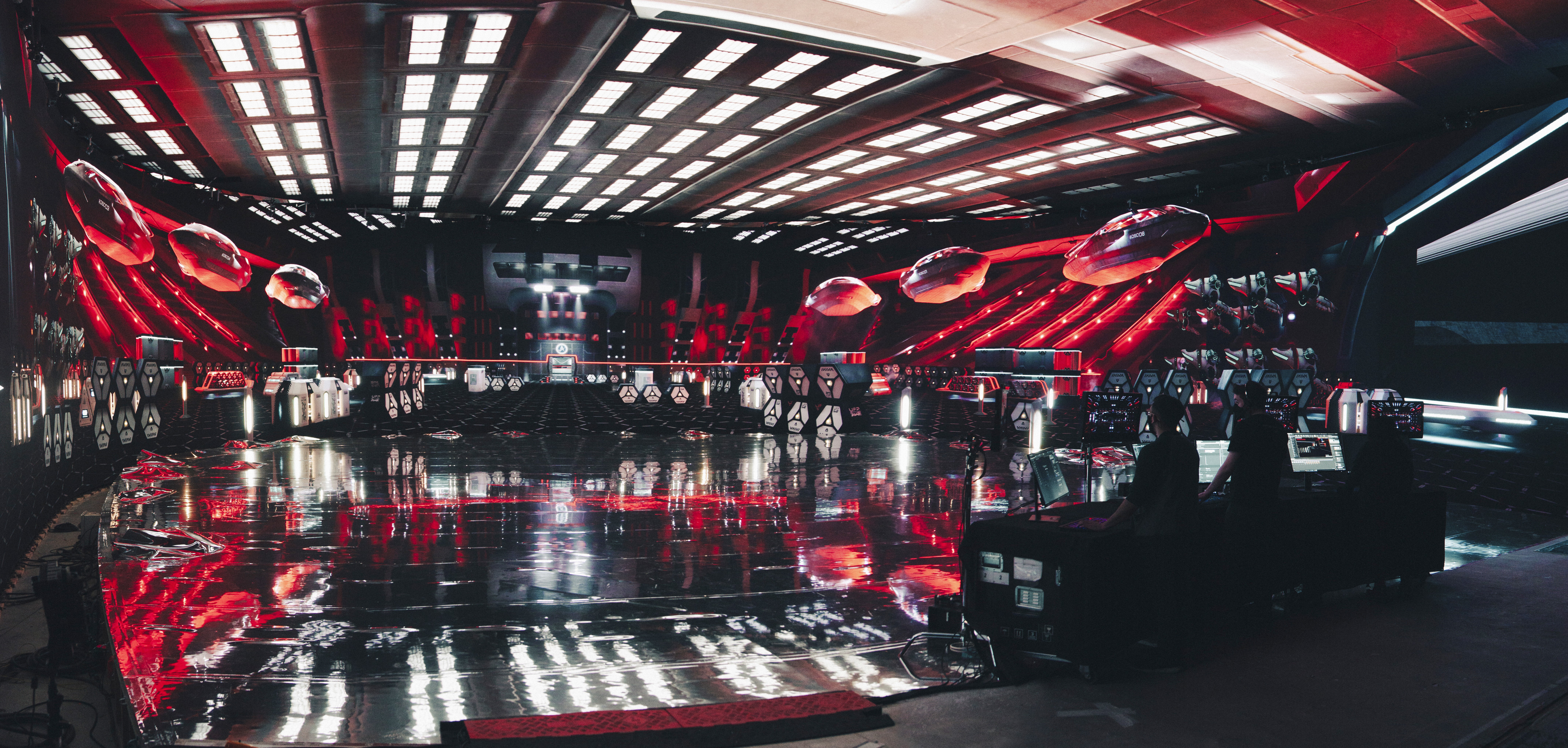
The Virtual Production team at the stage adjusting the shuttlebay.
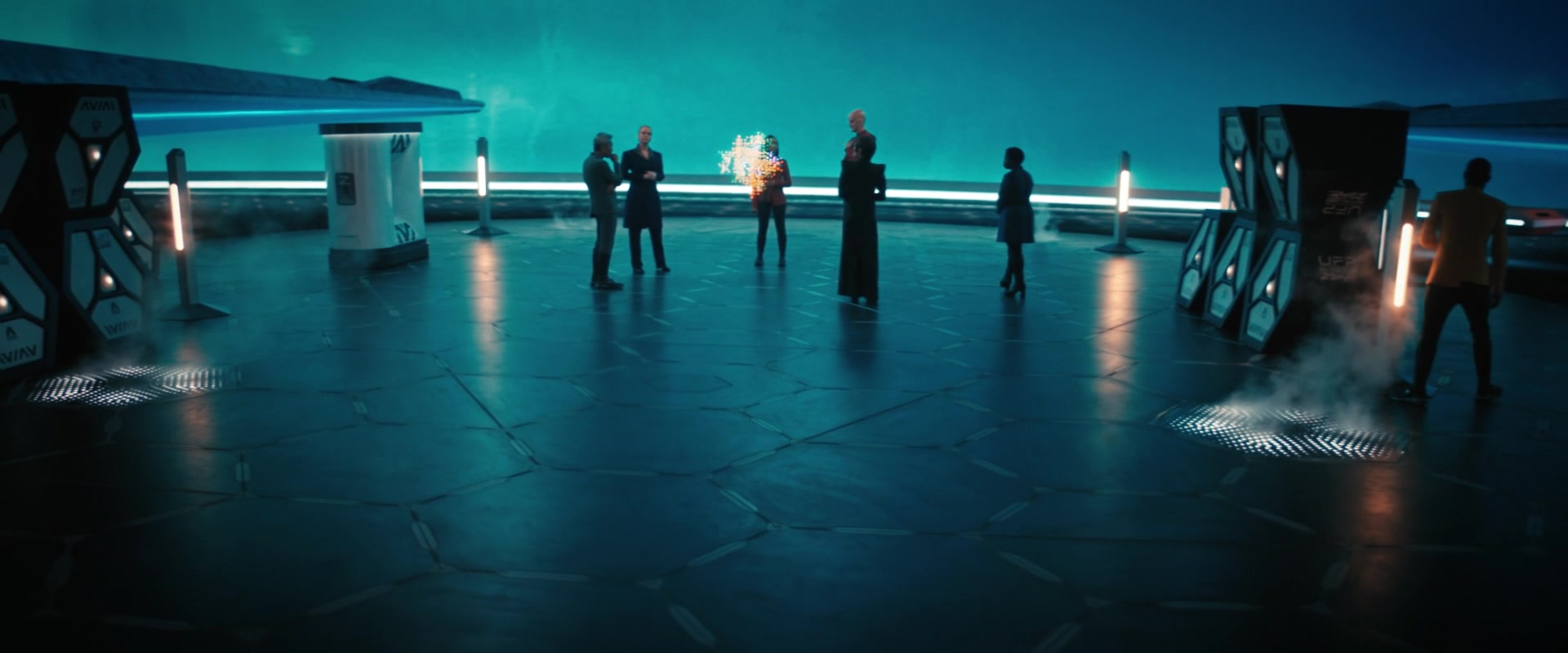
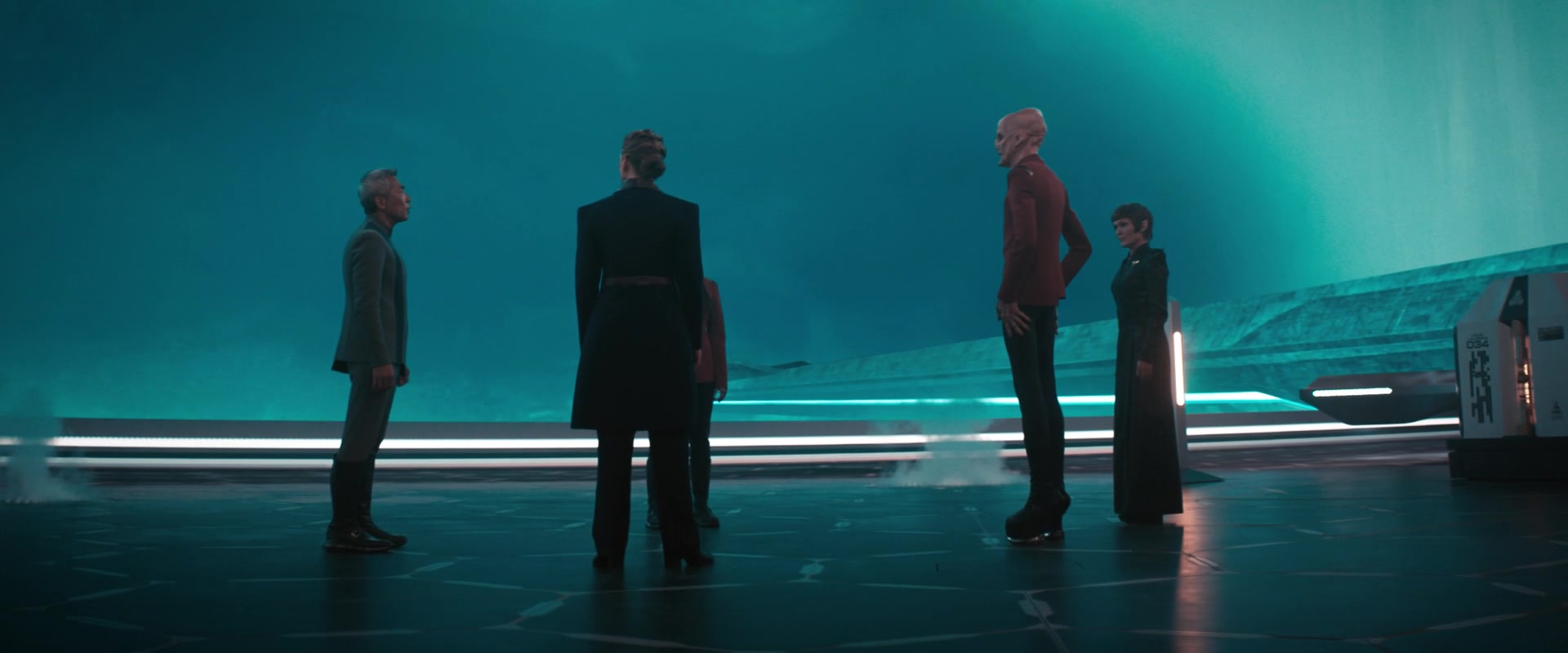
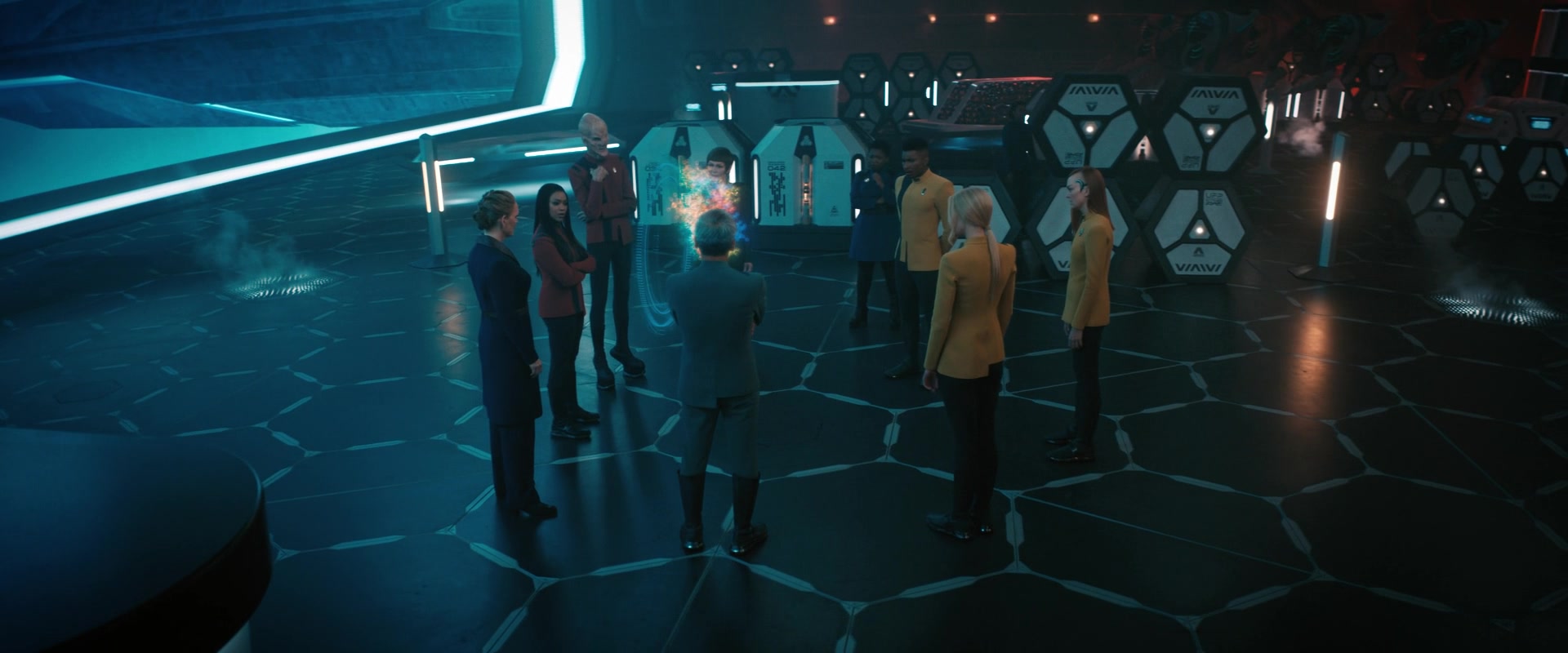
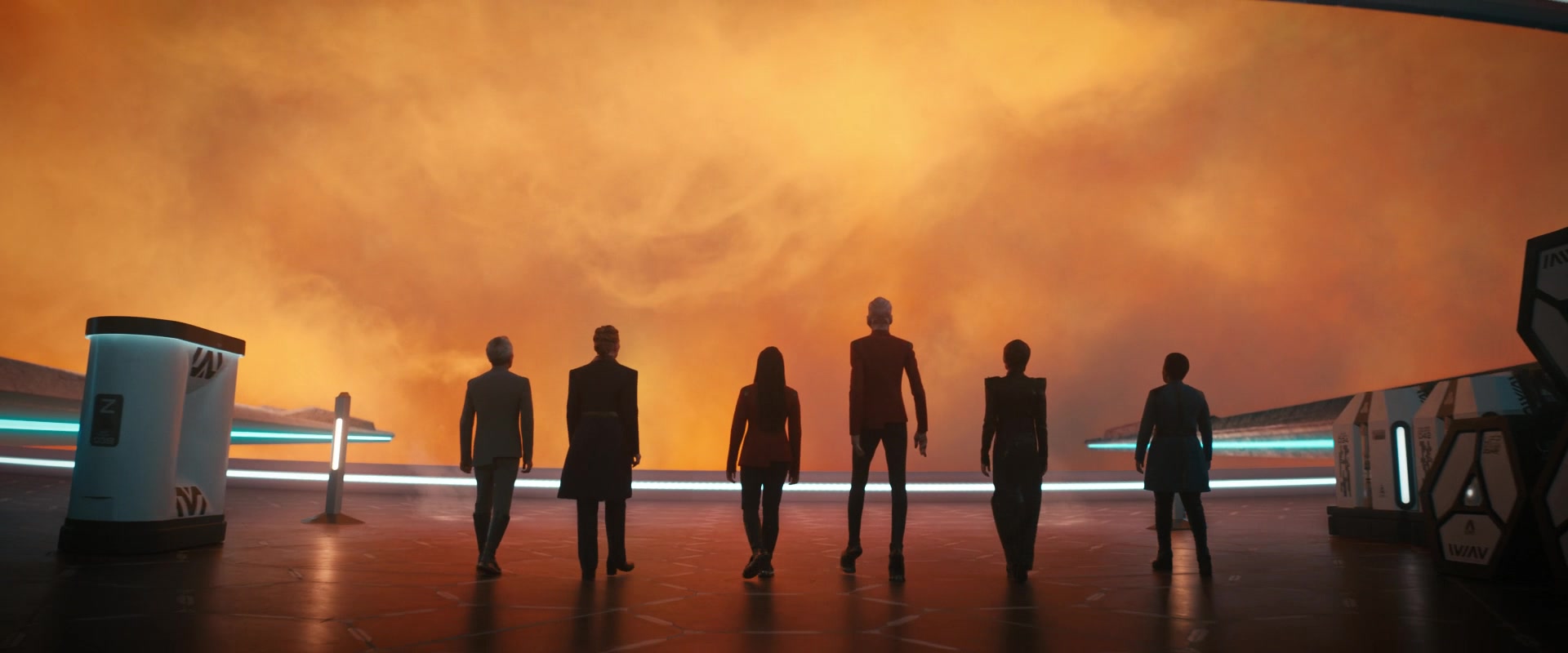
Throughout the series, Discovery journeys to countless destinations, and with virtual production it becomes simple to adjust the exterior—instantly transporting our characters to new worlds.
Gas Planet
ガスプラネット
The Gas Planet is the the final environment we worked on for season 4 and a massive challenge to build the level of complexity and scale and creating 2 areas within the space to wrap up the season.
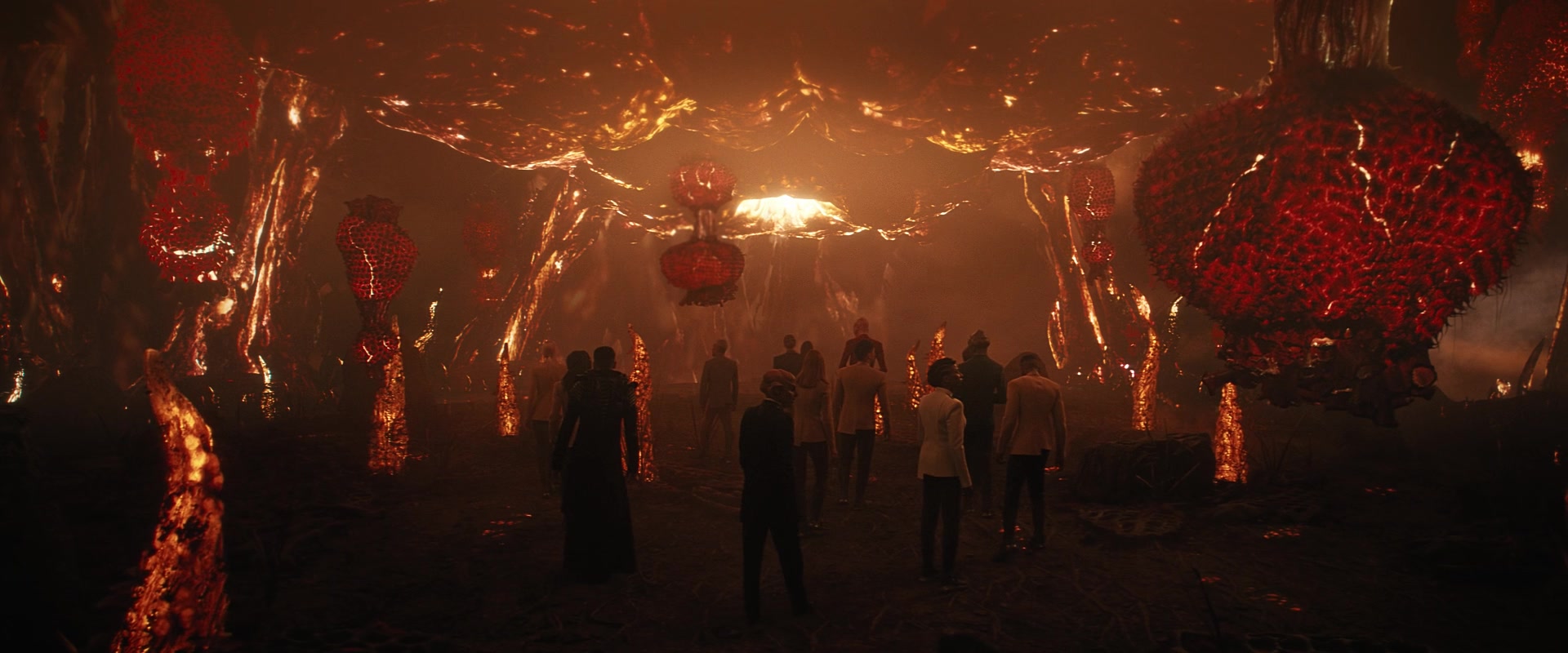
Gas Planet : Nursery
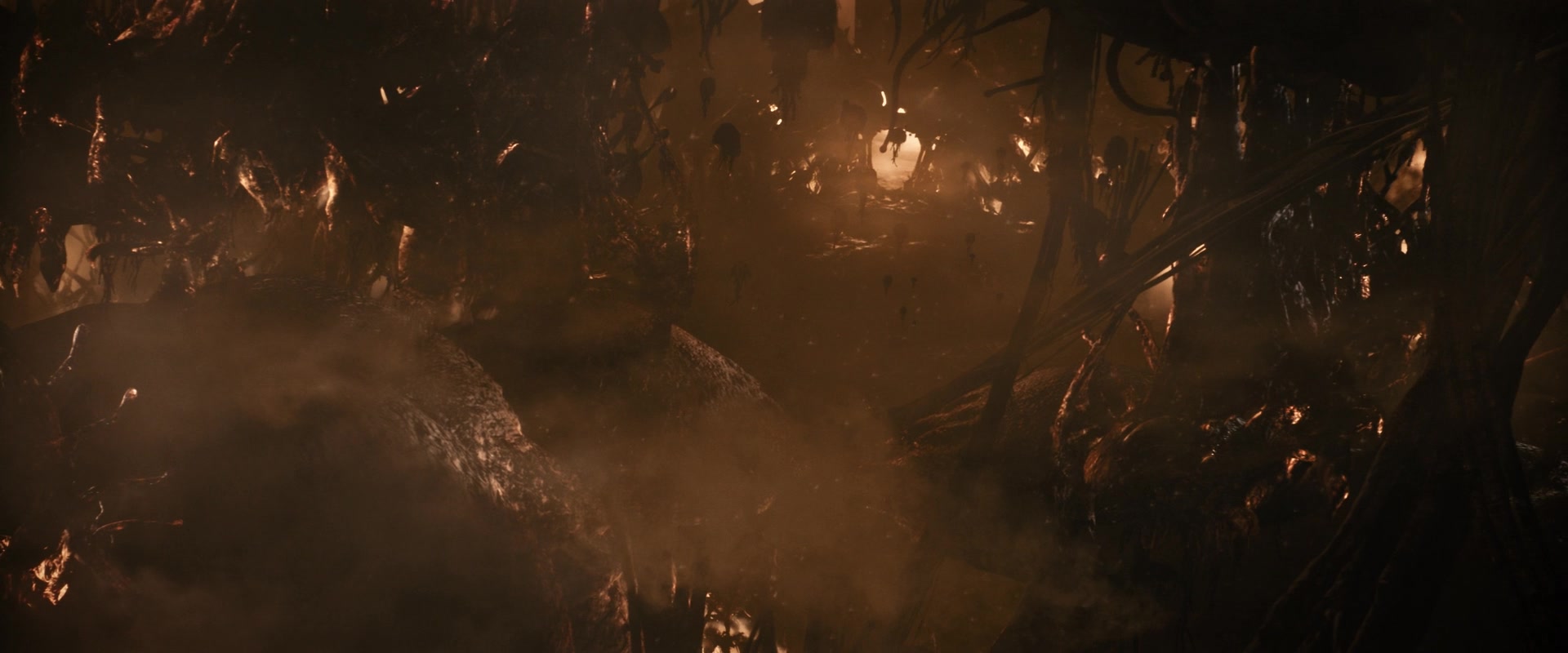
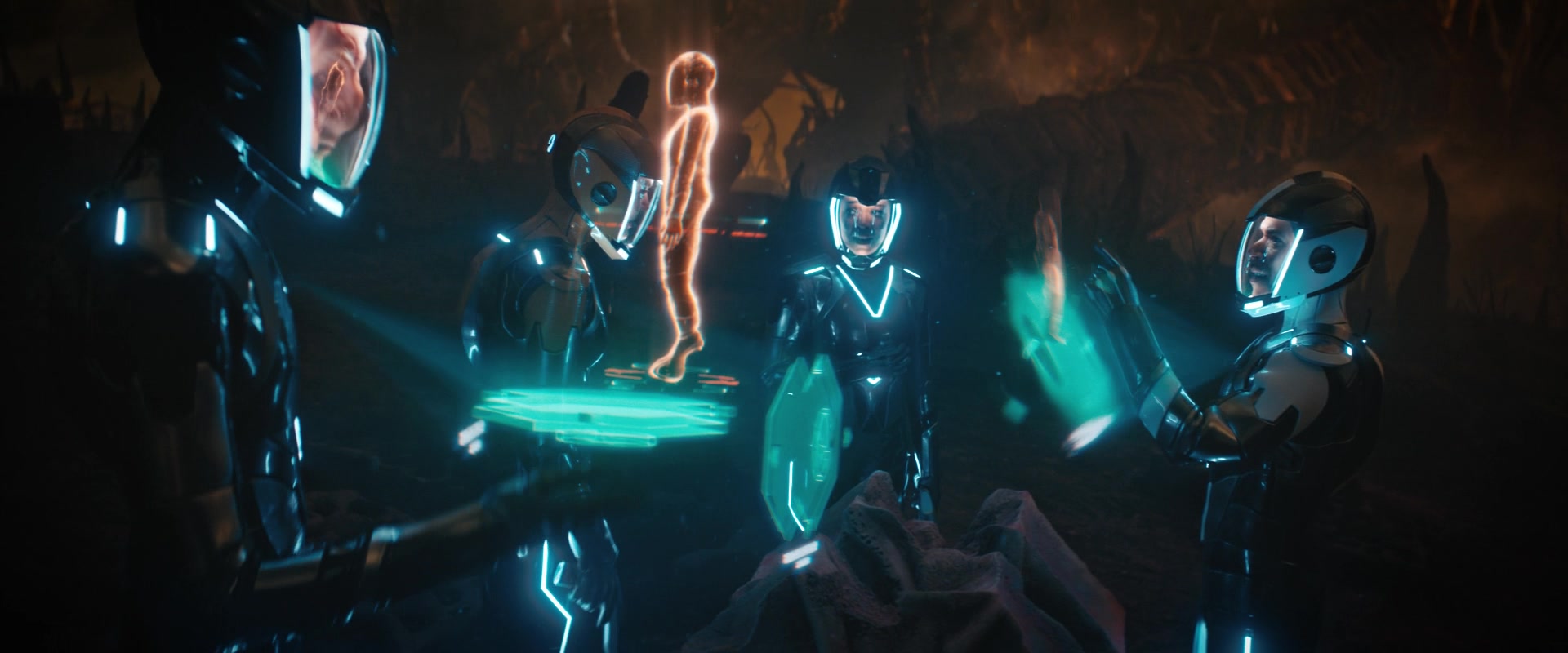
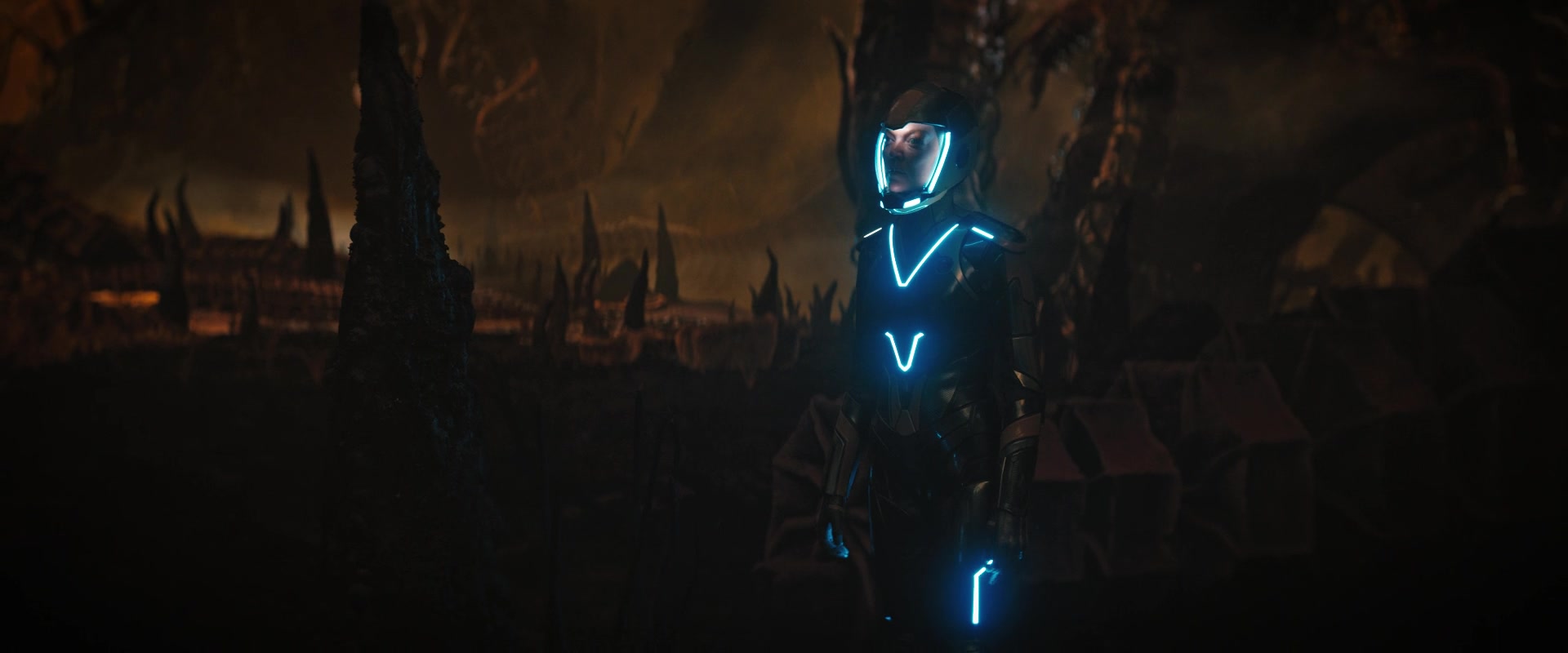
The first area inside the gas planet we worked on was known as “The Nursery”. This area has alot of massive alien plant growth that appears to be these giant structures that curls and twists and silhouetted by distant light and atmospherics, creating this ominous and mysterious vibes.
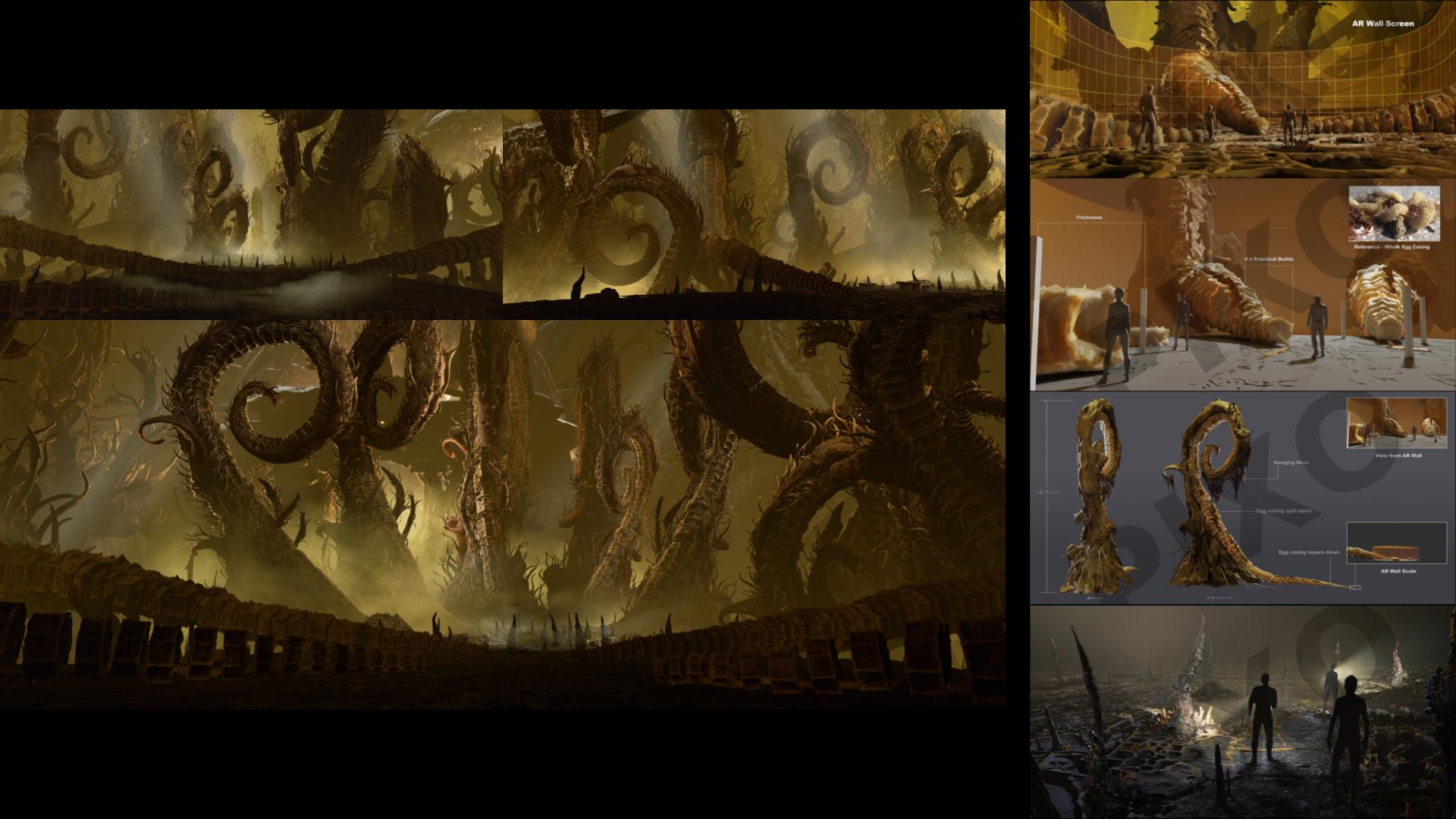
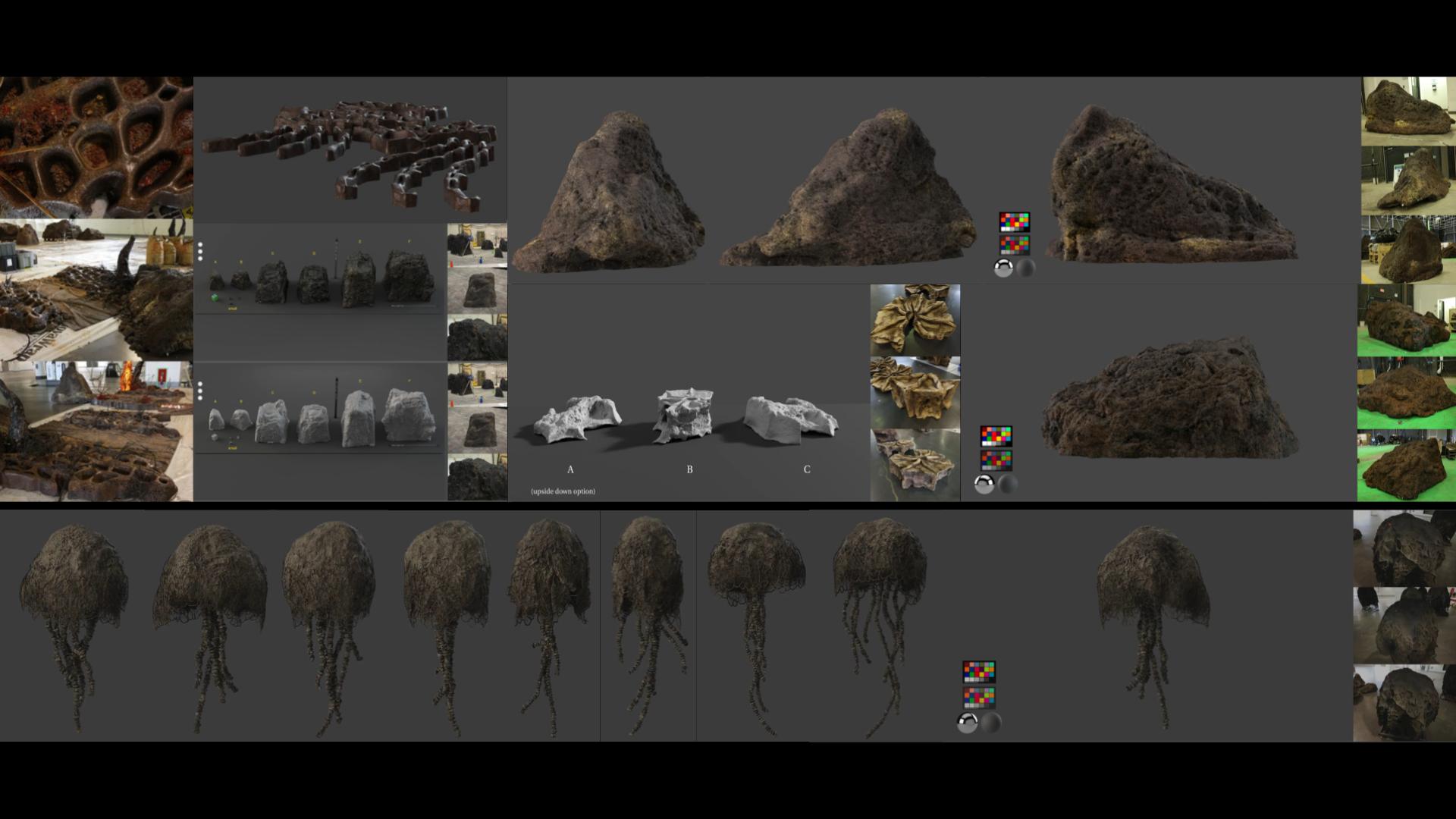
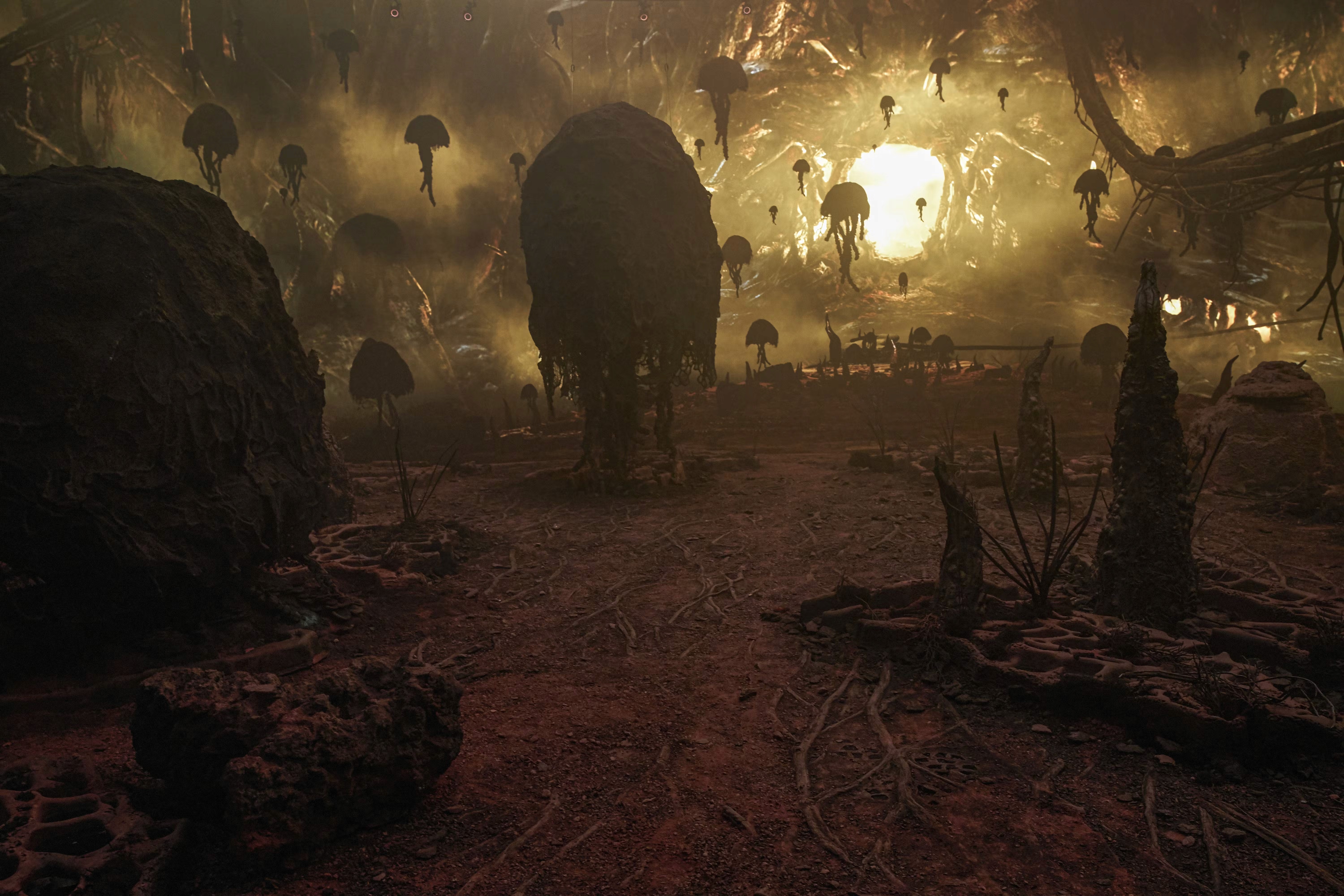
Gas Planet : Inner Chamber and Living vs Dead States
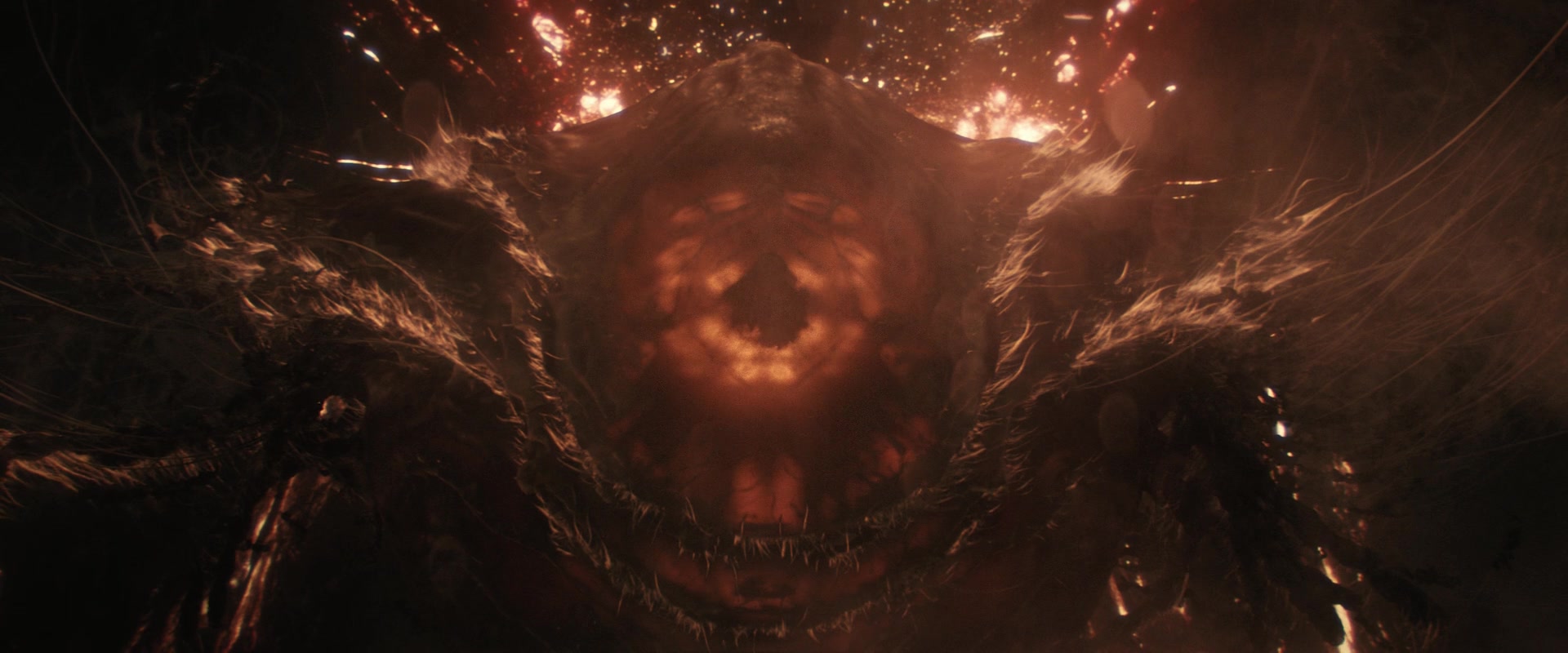
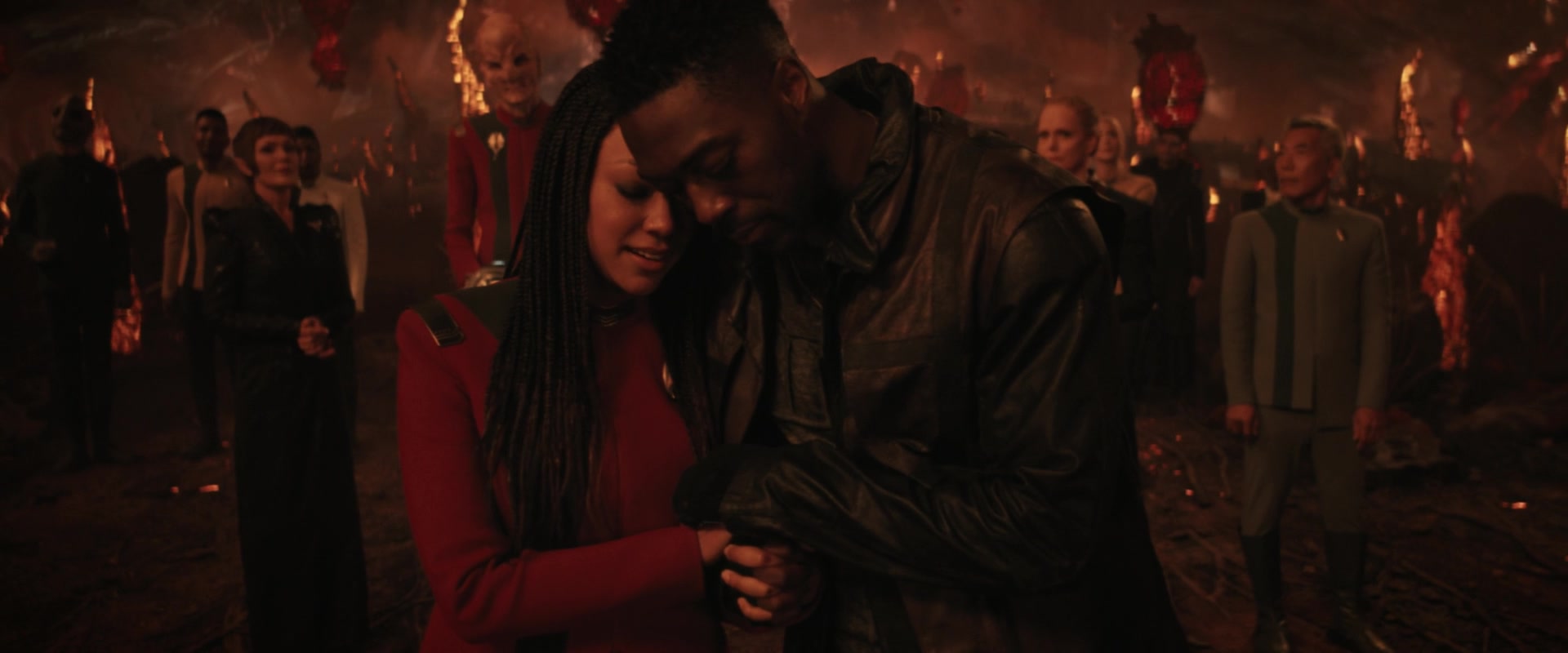
Another key environment was the Inner Chamber on the gas planet, where the characters first encounter the alien presence. At its center stood a towering mushroom-like structure that transitioned dramatically from a dormant ‘dead’ state to a vibrant, ‘living’ form, activating the entire space around it. As the chamber came alive, smaller fungi pulsed with light through their cores, while glowing energy coursed through the surrounding roots, creating a dynamic and otherworldly atmosphere that responded organically to the story’s moment.
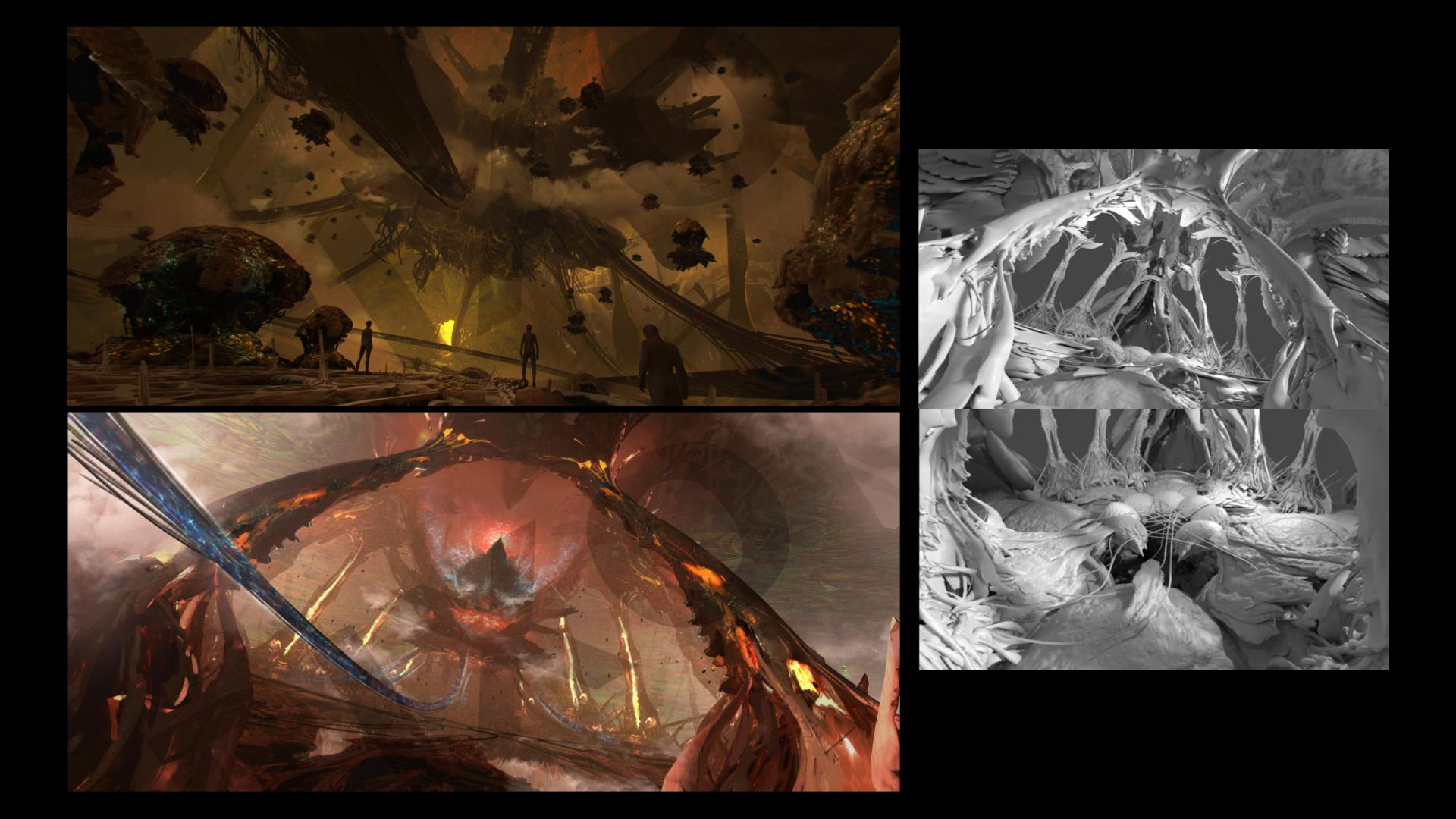
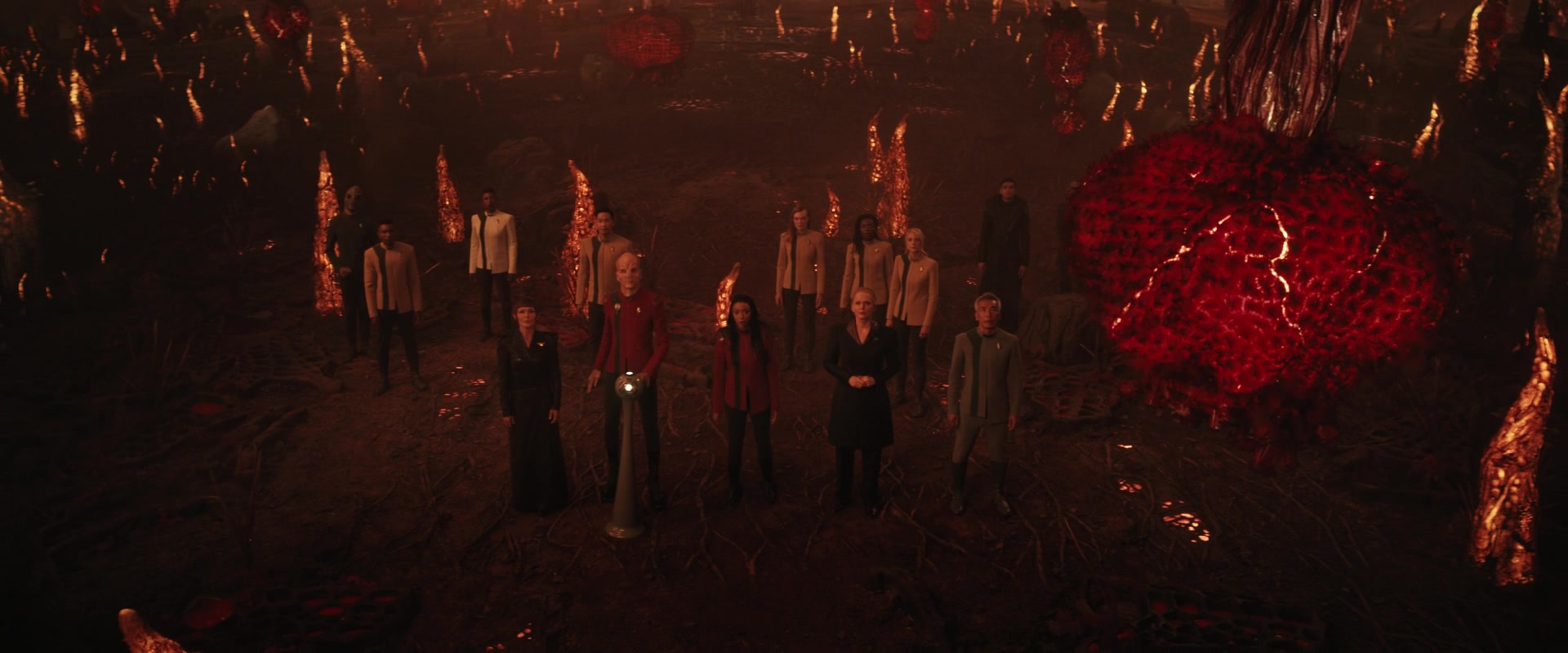
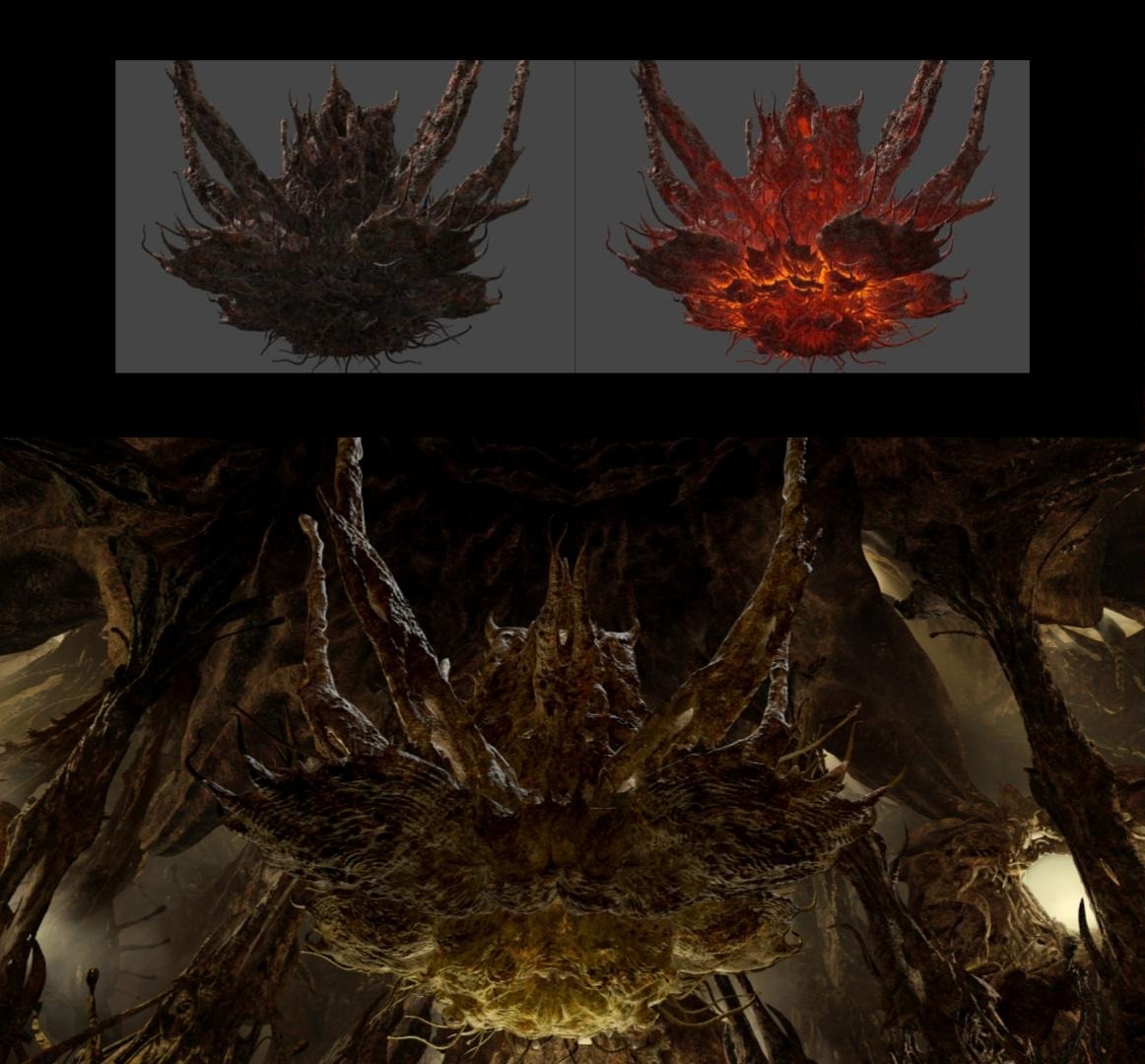
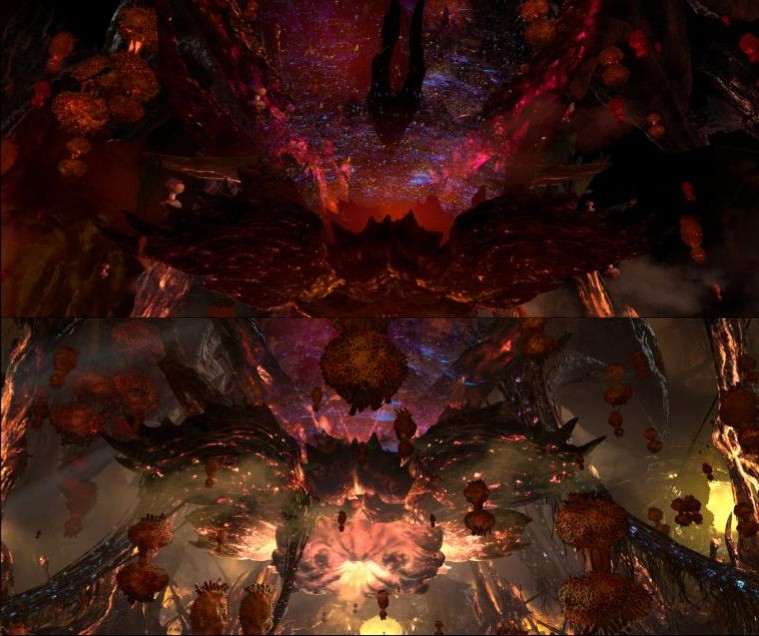
“When the core activates, it radiates with a backlit, subsurface scattering glow that pulses outward in waves. Particles emanate from its center, drifting through the space and reinforcing the sense of energy flowing out from within. This transformation turns the chamber into a living, breathing environment, visually amplifying the moment of awakening.
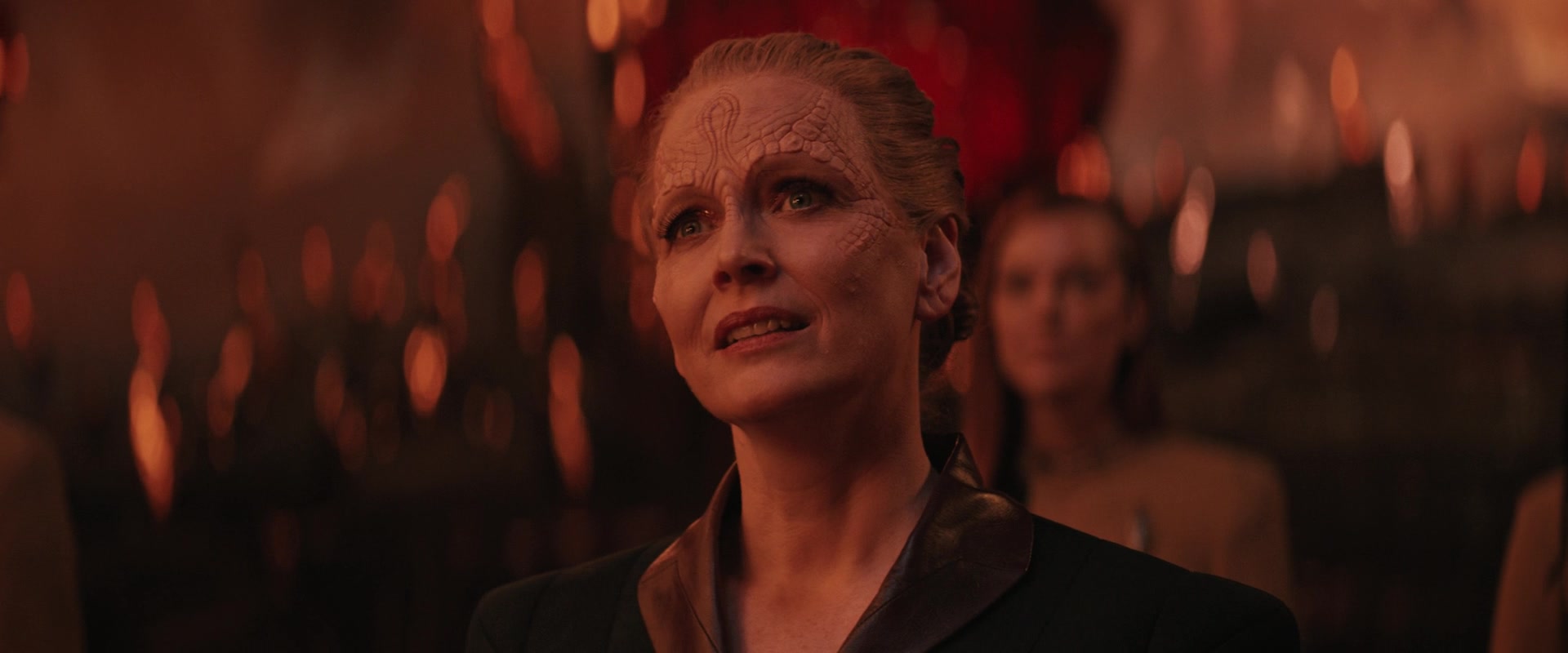
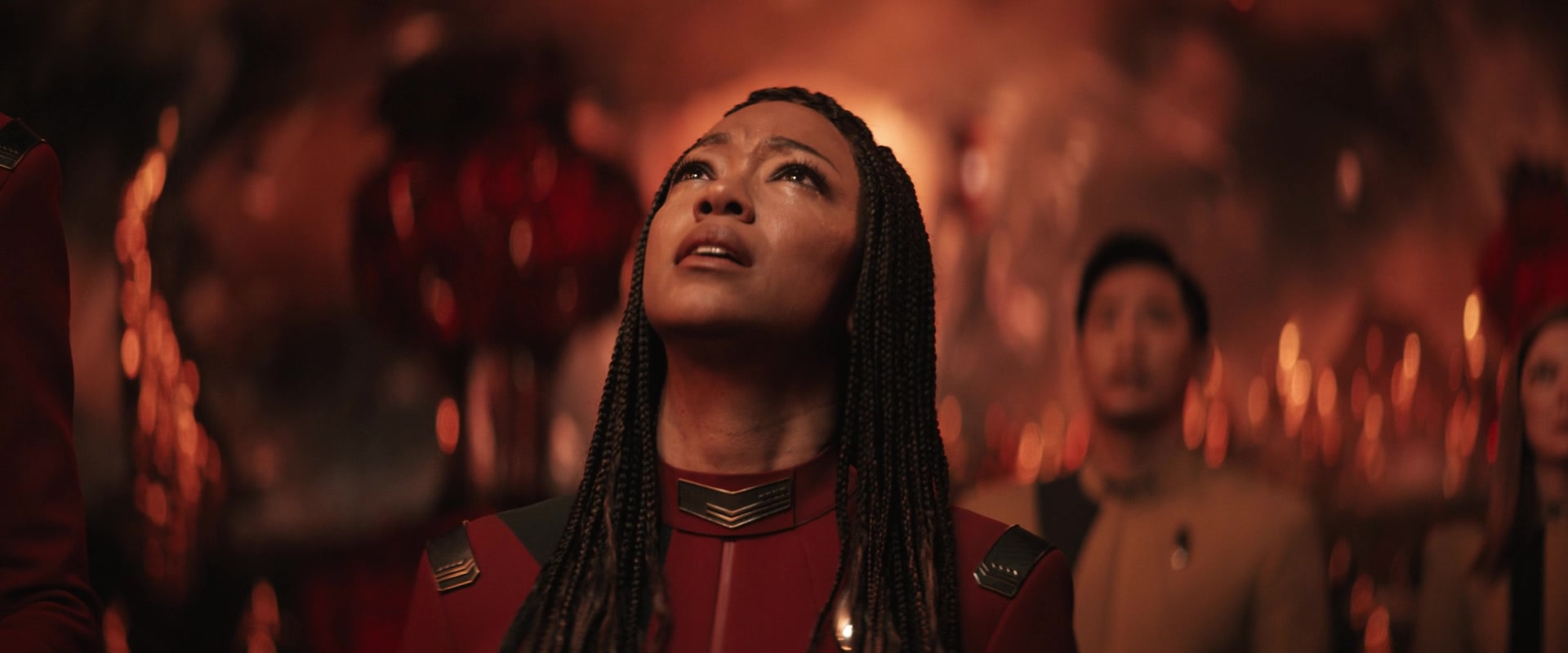
Virtual production has fundamentally changed how shows are made by enabling in-camera finals that bring visual effects directly into the shoot. Instead of waiting months for post-production to deliver finished shots, filmmakers can now capture polished, production-ready imagery on set in real time. This shift not only accelerates the delivery of episodes and films but also empowers directors, cinematographers, and actors to work with the final look and lighting during principal photography. By collapsing the gap between shooting and post, virtual production creates a faster, more collaborative pipeline where creative decisions can be made with confidence, ultimately streamlining schedules and reducing costs while raising the overall quality of the finished product.
Ni’Var Science Institute
ニヴァール科学研究所
Ni'Var, formerly Vulcan, was an inhabited M-class planet in the Vulcan system of the Alpha Quadrant. Though the planet had no moons, it did form a binary pair with T'Khut and was considered its sister planet.. It was the homeworld of the Vulcans, a warp-capable humanoid species.
Ni’Var’s landscape is heavily inspired by the desert of Wadi Rum and we have combined scanned mountains with procedural generated landscape from Gaea to create this alien version of this world.
It’s the very first landscape environment done for the LED volume at PXO and one that I first got my hands dirty inside of Unreal Engine. Utilizing the technique of DMP and reprojection onto lower resolution meshes to get the final results.
I created the base and master setup then gotten support from 2 other artists to tak on each direction's detail pass before combining them all and completing the setup in UE. Utilizing the technique of DMP and reprojection onto lower resolution meshes to get the final results..
In-Camera Finals were possible with the usage of Virtual Production
Federation HQ Shuttlebay
連邦本部シャトルベイ
The Federation HQ Shuttlebay in Star Trek: Discovery Seasons 4 and 5 is a sleek, high-tech hangar within the Federation’s mobile starbase, hidden in a nebula after the Burn. It serves as a central hub for shuttle arrivals, mission launches, and diplomatic briefings.
Holodeck Engaged
The Federation HQ Shuttlebay in Star Trek: Discovery Seasons 4 and 5 holds special significance as one of the first environments prepared entirely for real-time virtual production. Developed by Pixomondo (PXO), this set was designed for use on their cutting-edge LED volume stage in Toronto, marking a pivotal shift in the franchise's production techniques.
PXO's virtual production stage, often referred to as a real-life "Holodeck," features approximately 2,000 LED wall panels and 750 ceiling panels, all powered by Unreal Engine's nDisplay system. This setup allows for immersive, real-time environments that actors can interact with during filming, enhancing performance and reducing reliance on post-production compositing. Unreal Engine
The shuttlebay's design reflects the sleek, advanced aesthetic of the 32nd-century Federation, serving as a central hub for shuttle operations, mission briefings, and diplomatic engagements. Its creation using virtual production techniques not only streamlined the filming process but also elevated the visual storytelling, providing a tangible, interactive space that enriched the narrative experience.
This innovative approach to set design and production exemplifies Discovery's commitment to pushing the boundaries of television filmmaking, blending cutting-edge technology with the rich legacy of the Star Trek universe.
Panoramic view of FedHQ loaded on PXO’ s LED stage, from TV series “Star Trek : Discovery”
This environment truly demonstrates the power of Virtual Production: build once and revisit many times throughout a series, shooting numerous pages of script on the same set. Although the floor pattern posed significant challenges in matching and alignment, our team executed it seamlessly and the set was successfully utilized across multiple seasons.
On-set filmming for Star Trek : Discovery Season 4 on PIXOMONDO's Virtual Production Stage in Brampton, ON, Canada
Kaminar Council Chamber
カミナール評議会室
The Kaminar High Council was the governing body of the Kelpien and Ba'ul Alliance on the planet Kaminar in the 32nd century. The councilors met in a large chamber built underwater, with the terrestrial Kelpiens inside and the aquatic Ba'ul outside.
In Season 4 of Star Trek: Discovery, nearly every episode featured scenes filmed on PXO’s LED Volume Stage (AR wall)—from the familiar shuttle bay to the underwater Kaminar Council Chamber.
PXO’s Virtual Art Department began by blocking out environments with Epic Games Marketplace assets, later refined in Unreal Engine by a larger team with production input. Final details were completed about a week before filming, leaving only minor post-shoot touch-ups.
For environments like the Kaminar Council Chamber, we also designed alien fish, carefully shaping their silhouettes to ensure variety and visual interest from every angle.
This environment was created using UE4.27, at the time doing large crowds were challenging at the time and had to be comped.
Radvek Prison V Exterior & Interior
ラドヴェク V
Radvek V, also known as the Radvek asteroid belt or the Radvek chain, was an asteroid belt located in a multiple star system, at coordinates 05.98787.35480.98. It consisted of a series of interconnected asteroids fitted with force field atmospheric domes, and was primarily inhabited by the Akaali.
Radvek Prison V Exterior
Beyond the obvious advantages, PXO found several hidden benefits in using Unreal Engine for virtual production. Cleanup work was greatly reduced, since many shots could be captured in-camera as finals, with only select effects added in post.
The lighting team saw major gains too: what once took up to 14 hours for a lighting bake could now be done in just 30 minutes using Unreal Engine’s GPU Lightmass Baker.
Another big shift was collaboration. Instead of working on separate tiles and combining them later, artists could now work in the same scene simultaneously—resulting in more cohesive environments, stronger teamwork, and improved organization.
Unreal Engine has played a pivotal role throughout our entire virtual production and VFX pipeline at PXO, there really is no competition in the real-time space that integrates so well into existing industry standard packages. Unreal Engine seemed like an obvious choice.
Characters walks inside the prision and sees many cages where the prisoners are kept.
Radvek Prison V Interior
For the Radvek Prision environment, we mapped out exactly what had to be done by working directly with art department. Which section is going to be practically built versus the virtual content that will be loaded on the LED volume as well as the shield FX that will be completed in post VFX.
This environment is a good example of a technique we call "French Reverse" where the physical set is designed to be symmetrical, allowing us to quickly flip the virtual environment 180 degrees and shoot the opposite direction without having to move the physical set and maximizing the shoot efficiency via smart set design. Our Virtual Art Department worked hand in hand with the Art Department and Production Designer to come up with these cost effective ways to utilize Virtual Production.
Moonlet
月霊廟
The Moonlet Mausoleum is presented as a hallowed and ancient resting place, carved into a drifting fragment of a shattered moon. It serves as a sanctuary of remembrance where cultures preserve the memory of their dead in a setting that feels both sacred and alien. Our Virtual Art Department created both 2 key hotspots within the space, achieving one of the most difficult environment of the season that taught us alot about Virtual Production.
Moonlet Mausoleum Ground Floor
The Moonlet Mausoleum in Star Trek: Discovery Season 4 was a striking example of immersive worldbuilding through virtual production. Designed as a solemn, otherworldly memorial site nestled within a small celestial body, the set combined intricate digital environments with physical staging to evoke both grandeur and intimacy. Its ethereal lighting, vast spatial design, and layered details created a hauntingly beautiful atmosphere, underscoring the emotional weight of the scenes filmed there while showcasing the series’ commitment to cinematic-scale storytelling.
Carvings and details were seen throughout the space on walls, floors etc showcasing the rich ancient history of the location.
Designing the blend point for Virtual Production can be tricky. In this example we had to extend the steps and ground into the virtual space yet it came with a very intricate pattern carved onto the floor. Thankfully we were able to sprinkle some dust and dirt to help with the blend and essentially masked the seams.
The Moonlet environment was one that we learnt the most on during this season. It posed some of the most challenging issues in virtual production that the team had to overcome.
Characters gather in the center and activates the elevator that lift them into the higher levels.
To integrate Unreal Engine with industry staples like Maya, Houdini, Substance, and Nuke, PXO rethought its asset pipeline. Instead of building separate high-res and low-res versions, the team adopted a fully Unreal-driven, procedural approach. This delivered high-resolution assets comparable to offline renders while cutting render times dramatically. We began utilizing more gaming techniques utilizing tile-able textures and RGB masks to control the details in a much more optimized manner.
Moonlet Mausoleum Higher Floor
DMP Cavern with lighting as additive layers in the material while keeping flexibility of lighting during a limited time of UE 4.27
The massive cavern had to be filled with thousands of pods and rock columns, a challenge in the days of Unreal Engine 4.27 before Nanite was available.
To overcome this, we relied on matte painting techniques, converting the distant areas into proxy geometry and cards. By layering the scene like an onion—from high-resolution geometry in the foreground to simplified cards in the far background—we preserved performance while still conveying the scale and grandeur of the space within the limits of the technology.
View from the higher floor looking at the vast cavernous space populated with many pods.
Discovery Shuttlebay
ディスカバリーシャトルベイ
The Discovery Shuttlebay is an iconic set that is familiar to us since season 1 of Star Trek : Discovery. We are proud to be able to now prepare it for the big LED volume for Virtual Production Shoot as well.
Discovery Shuttle Bay
The Discovery shuttlebay is one of the show’s most iconic environments, serving as a central hub where action, drama, and character moments frequently unfold. Its versatility demanded countless lighting setups and atmospheric variations—ranging from docking sequences under stark illumination to intimate exchanges softened by moody shadows, enhanced with blinking panels, venting smoke, and layered effects. By building the shuttlebay as a real-time virtual production environment, the team ensured it could be revisited seamlessly across episodes and seasons, maintaining consistency while offering the flexibility to adapt instantly to new storytelling needs.
The Virtual Production team at the stage adjusting the shuttlebay.
Throughout the series, Discovery journeys to countless destinations, and with virtual production it becomes simple to adjust the exterior—instantly transporting our characters to new worlds.
Gas Planet
ガスプラネット
The Gas Planet is the the final environment we worked on for season 4 and a massive challenge to build the level of complexity and scale and creating 2 areas within the space to wrap up the season.
Gas Planet : Nursery
The first area inside the gas planet we worked on was known as “The Nursery”. This area has alot of massive alien plant growth that appears to be these giant structures that curls and twists and silhouetted by distant light and atmospherics, creating this ominous and mysterious vibes.
Gas Planet : Inner Chamber and Living vs Dead States
Another key environment was the Inner Chamber on the gas planet, where the characters first encounter the alien presence. At its center stood a towering mushroom-like structure that transitioned dramatically from a dormant ‘dead’ state to a vibrant, ‘living’ form, activating the entire space around it. As the chamber came alive, smaller fungi pulsed with light through their cores, while glowing energy coursed through the surrounding roots, creating a dynamic and otherworldly atmosphere that responded organically to the story’s moment.
“When the core activates, it radiates with a backlit, subsurface scattering glow that pulses outward in waves. Particles emanate from its center, drifting through the space and reinforcing the sense of energy flowing out from within. This transformation turns the chamber into a living, breathing environment, visually amplifying the moment of awakening.
Virtual production has fundamentally changed how shows are made by enabling in-camera finals that bring visual effects directly into the shoot. Instead of waiting months for post-production to deliver finished shots, filmmakers can now capture polished, production-ready imagery on set in real time. This shift not only accelerates the delivery of episodes and films but also empowers directors, cinematographers, and actors to work with the final look and lighting during principal photography. By collapsing the gap between shooting and post, virtual production creates a faster, more collaborative pipeline where creative decisions can be made with confidence, ultimately streamlining schedules and reducing costs while raising the overall quality of the finished product.
© CONTENT コンテンツ
(MJ-S10-02)
QUICK ACCESS クイックアクセス
Quick Access
© CONTENT コンテンツ
(MJ-S10-03)
SELECTED PROJECTS 選定されたプロジェクト
SELECTED PROJECTS
SELECTED PROJECTS